Short-Expiry Beauty Deals: When They Are Worth It and When to Skip
Short-expiry beauty deals can be excellent value or quiet waste. The difference is product type, usage pace, storage, and whether the discount matches the risk.
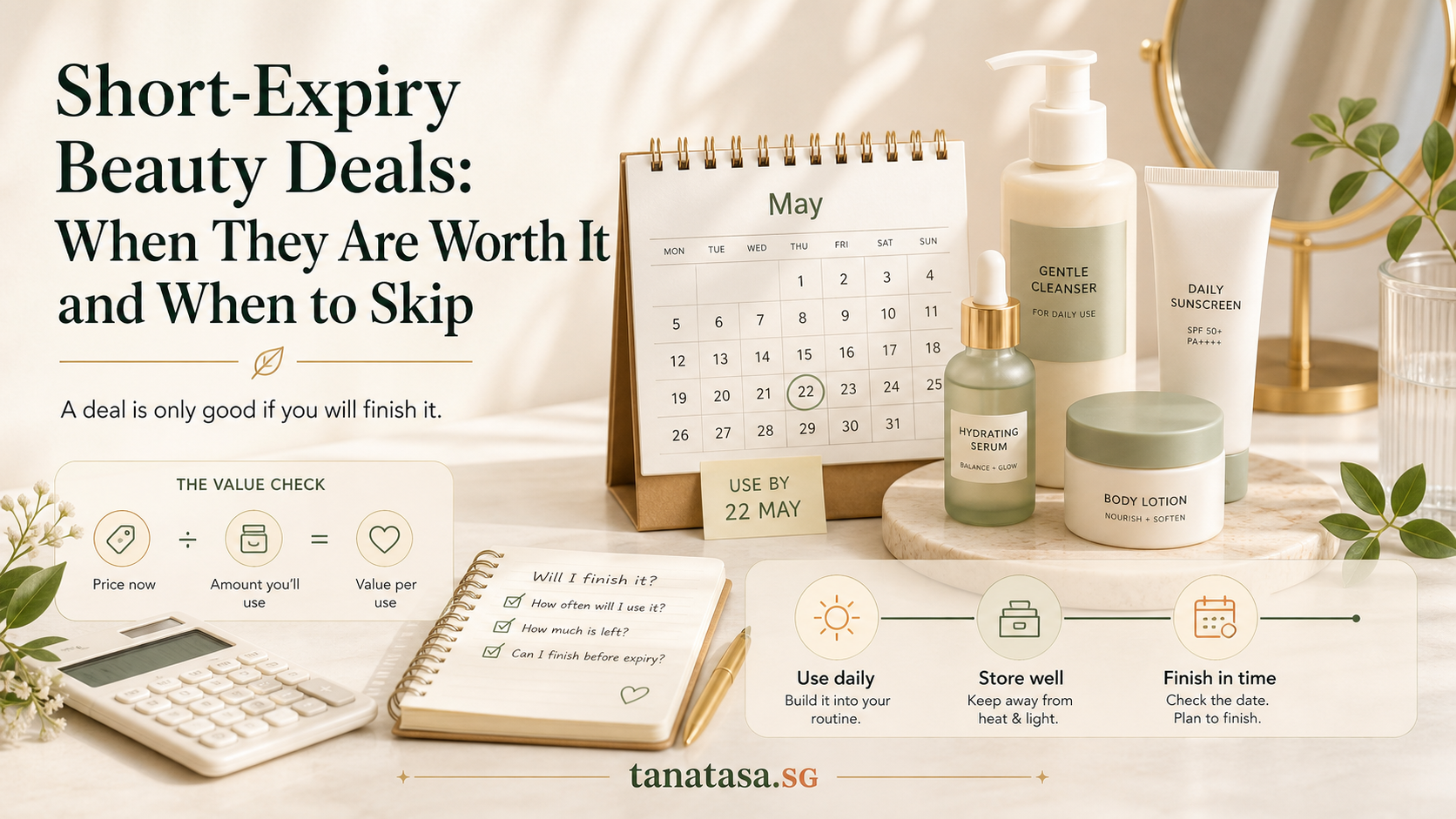
Short-expiry beauty deals are very Singapore-shopping-coded: the discount is attractive, the platform campaign is moving fast, and the practical part of your brain starts calculating whether you can finish everything before the date. Sometimes the answer is yes. Sometimes the answer is "this will live in the cupboard until it becomes guilt".
Short expiry is not automatically bad. It can be a fair way for stores to clear genuine stock transparently. It can also be a bad fit for products that need slow introduction, careful storage, or more time than your routine can realistically give them.
The useful question is not "is short expiry safe?" in a generic way. The useful question is: can I finish this specific product, in this size, for this use, within this timeline, without rushing my skin?
First, Understand What The Date Is Telling You
Beauty products can carry different date information depending on product type, market, and packaging. You may see an expiry date, manufacture date, best-before-style information, batch code, or a period-after-opening symbol. They do not all mean exactly the same thing in day-to-day use.
For a shopper, the practical point is simpler: unopened shelf life and opened product life are different. A product expiring in six months does not mean you should open it in five months and expect a long relaxed usage period. Once opened, exposure to air, fingers, bathroom humidity, and repeated use can change the situation.
This matters most when the product is large, used slowly, or sensitive to stability. A 500 ml body lotion used by a household is different from a 30 ml vitamin C serum used twice a week by one person.
Good Short-Expiry Candidates
The safest short-expiry buys are products you already use often and finish predictably.
Body wash, hand wash, basic body lotion, familiar cleanser, shampoo, conditioner, and everyday moisturiser can make sense if the discount is clear and the household usage pace is real. If four people use the same body wash daily, a short-expiry bottle may be completely practical. If you live alone and already have three body lotions open, it probably is not.
Sunscreen can also be a good short-expiry buy only when usage is high and the timeline is comfortable. A family using sunscreen for outdoor activities may finish tubes quickly. Someone buying a face sunscreen "just to try" should be more careful. Sunscreen is not a product to use casually after expiry, and it should not be stored carelessly in heat.
The best candidates share three traits: you know the product suits you, you use it frequently, and the amount can be finished without changing your routine in a stressful way.
Riskier Short-Expiry Buys
Short-expiry active skincare is more complicated. Retinoids, exfoliating acids, benzoyl peroxide, vitamin C, pigment treatments, and strong brightening serums often need slow introduction. A shorter timeline can quietly pressure you to use them more often than your skin can tolerate.
That pressure is the problem. If you buy a retinol expiring in four months and you are a beginner, you may feel tempted to use it nightly to "not waste it". Your skin may then become dry, flaky, or irritated, and the product becomes both wasted and uncomfortable.
Products for sensitive skin, baby care, eye area, compromised skin, or post-treatment recovery also deserve more caution. The discount should not be the loudest voice when the skin situation calls for lower uncertainty.
Fragrance, natural oils, and luxury creams are another grey area. They may be fine, but if you are buying mostly because the old price looks high and the sale price looks clever, ask whether you would have bought it at all without the expiry discount.
Do The Usage Maths Before Checkout
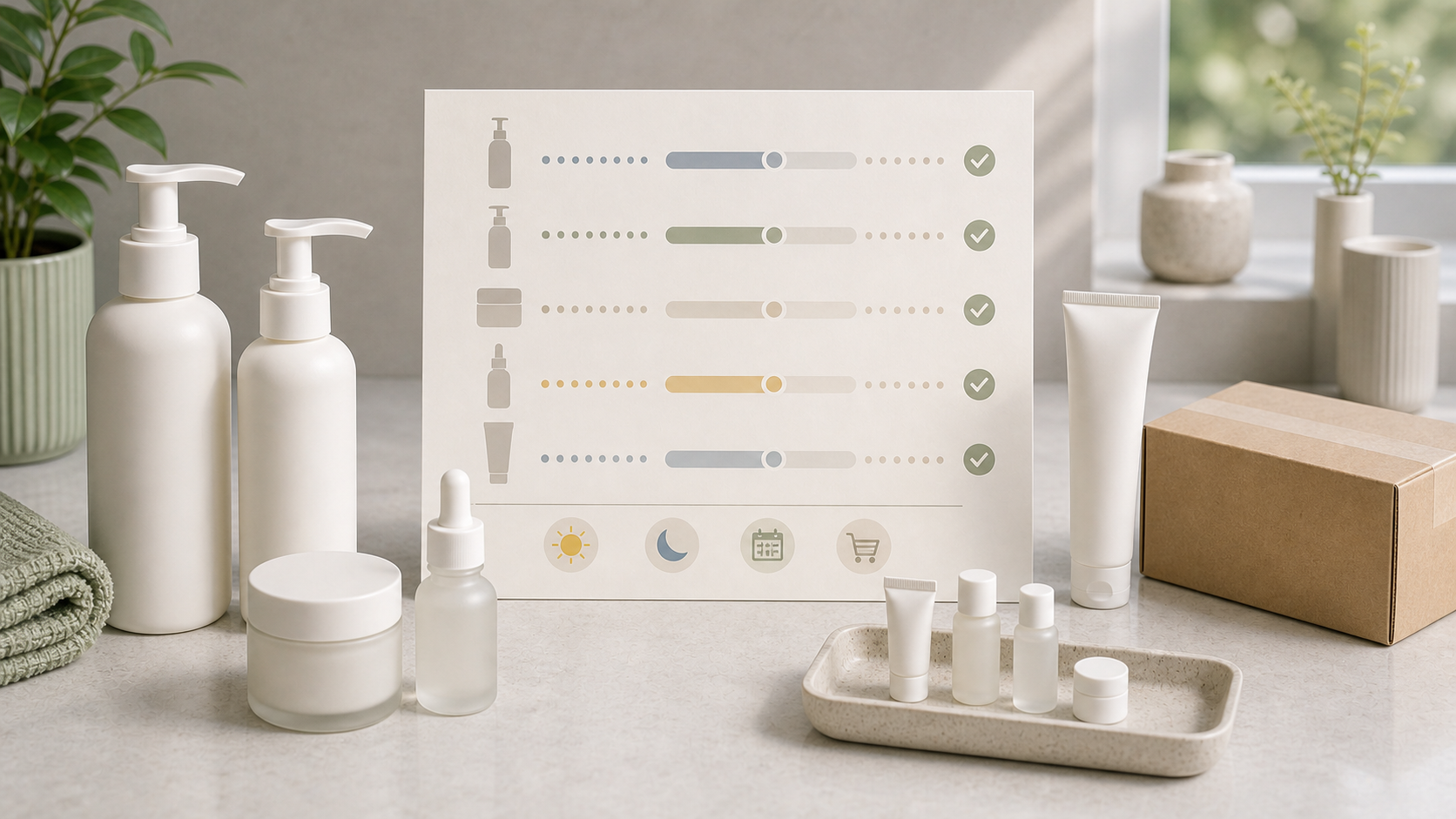
A simple calculation prevents a lot of waste.
Ask:
How many people will use this?
How often will it be used?
How much is used each time?
Is it already part of the routine?
How many similar products are already open?
Will I need to introduce it slowly?
Does the product need careful storage?
For example, a 400 ml body lotion used nightly may disappear quickly in a household. A 50 ml face cream used by one person may last months. A serum used twice a week may take longer than the expiry window allows. A cleanser used twice daily is easier to finish than a treatment mask used when you remember.
Do not let the discount do the maths for you. Platforms are excellent at making "only three left" feel more urgent than your actual bathroom shelf.
The Discount Should Match The Timeline
A short-expiry product should be priced honestly for the shorter usable window. If the discount is tiny, you are taking extra timing pressure without getting much value. If the discount is large and the listing is transparent, the deal may be fair.
Transparency matters. A good listing should state the expiry clearly, not hide it in a photo or reveal it only after checkout. If the product is old packaging, short expiry, no box, or part of a bundle split, the seller should say so plainly.
Be especially careful when listings mix normal-expiry and short-expiry stock under one product page. If the variant selector is confusing, message the seller or skip. Saving a few dollars is not worth guessing which date you will receive.
Storage Can Make Or Break The Deal
Short-expiry stock still needs normal care. Keep products away from direct sun, hot cars, steamy bathrooms where possible, and loose lids. Close caps properly. Avoid dipping fingers into jars with wet hands. If a product changes smell, colour, texture, or separates strangely, do not treat the printed date as permission to keep using it.
This is especially relevant for vitamin C, sunscreen, natural oils, fragrance-heavy products, and anything with a texture that can separate. Ordinary storage does not need to be dramatic, but it should be sensible.
If you know a product will sit near a window, in a gym bag, or in a bathroom that gets very warm, short expiry becomes less attractive.
Multipacks Need Honesty
Multipacks are where good intentions go to become clutter. Three bottles of a favourite body wash may be smart. Three jars of a new exfoliating cream are probably not.
Before buying a multipack, ask whether one item would already be enough. The discount often makes the extra units feel free, but they are not free if they expire, take up space, or push you into using more product than your skin needs.
Household products are better multipack candidates than personal active skincare. Shared basics move faster. Personal treatments move at the speed of one person's skin tolerance.
When To Skip
Skip the deal if:
It is a new active you need to introduce slowly.
The expiry date is unclear.
You already own similar unopened products.
The product is for a baby or compromised skin and the seller details are weak.
The discount is small but the timeline is tight.
You are buying because the deal feels clever, not because the product has a job.
You would need to change your routine aggressively to finish it.
There will always be another sale. There may not always be another calm skin week if you rush a product that should have been introduced slowly.
Bottom Line
Short expiry is not a red flag by itself. It is a fit question. A familiar daily staple with a clear date and a fair discount can be a smart buy. A strong active, vague listing, or oversized multipack can become waste very quickly.
The best short-expiry deal is one you finish comfortably, without changing your routine into a race against the label.