How to Buy Authentic Beauty Products Online Without Guessing
A cheap listing is not always a good deal. Learn how to check sellers, seals, batch codes, product photos, expiry dates, storage, and suspicious prices.

# How to Buy Authentic Beauty Products Online Without Guessing
Buying beauty products online is convenient, but it also asks you to make small trust decisions. Is this seller reliable? Is the price too good? Is the product fresh? Are the photos real? Was it stored properly? Is the seal intact?
Most purchases go fine. But skincare, sunscreen, makeup, haircare, and personal care products touch your skin, eyes, and lips. Authenticity and storage matter. A suspiciously cheap serum or expired cream is not a bargain if it irritates your skin or does not perform properly.
You do not need to become a detective for every purchase. You need a practical checklist before you pay.
Start with the seller
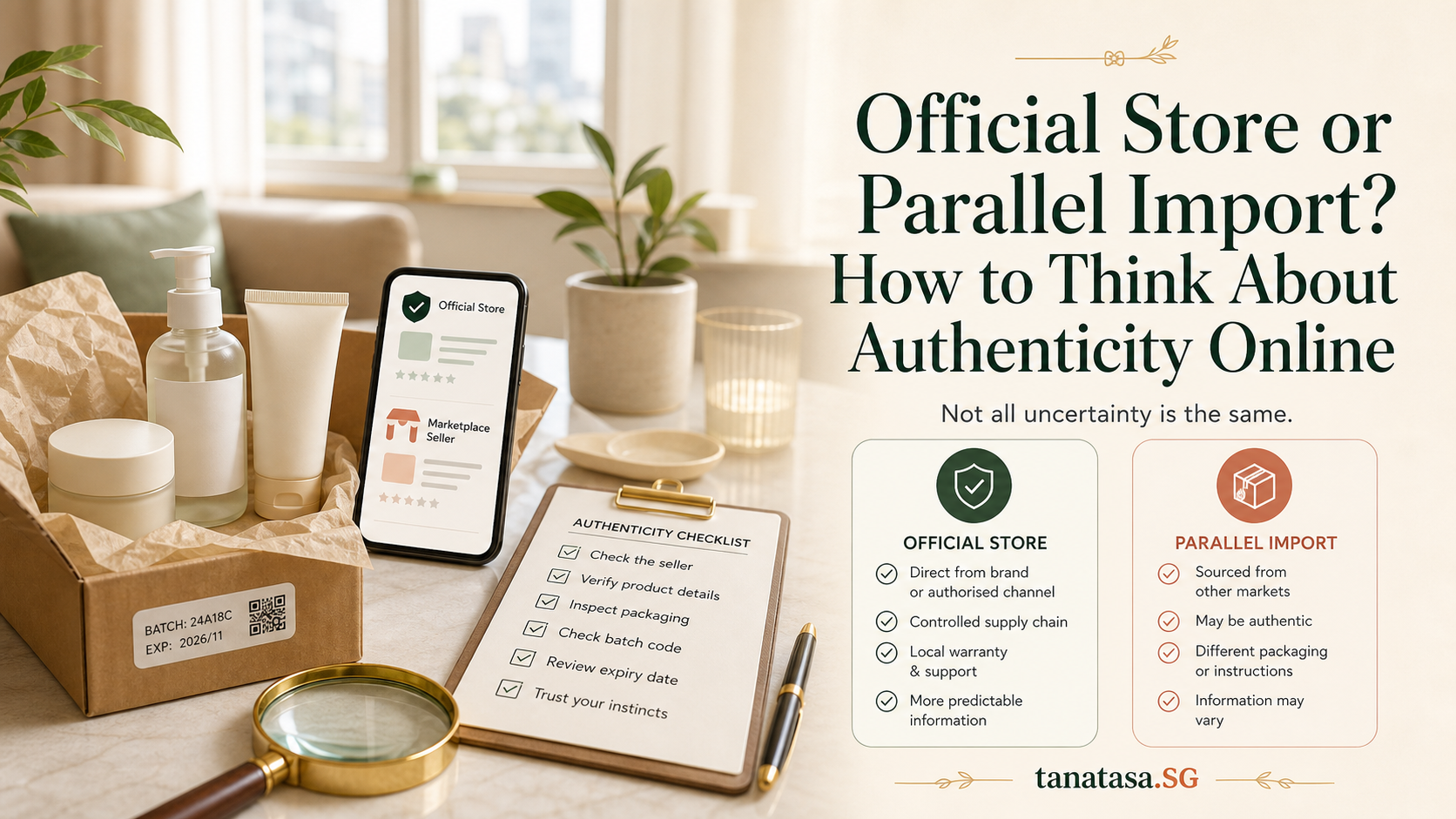
The seller matters as much as the product listing. Prefer official brand stores, authorised retailers, established pharmacies, reputable beauty retailers, or sellers with clear business details and consistent product history.
Marketplace platforms can be useful, but not every seller on a marketplace is equal. Check how long the seller has been active, what else they sell, whether product categories make sense, and whether reviews look specific rather than generic.
A seller offering everything from luxury skincare to random electronics at unbelievable prices deserves more caution.
Be careful with prices that are too low
Discounts happen. Clearance happens. Bundles happen. But extreme discounts on popular products should make you pause.
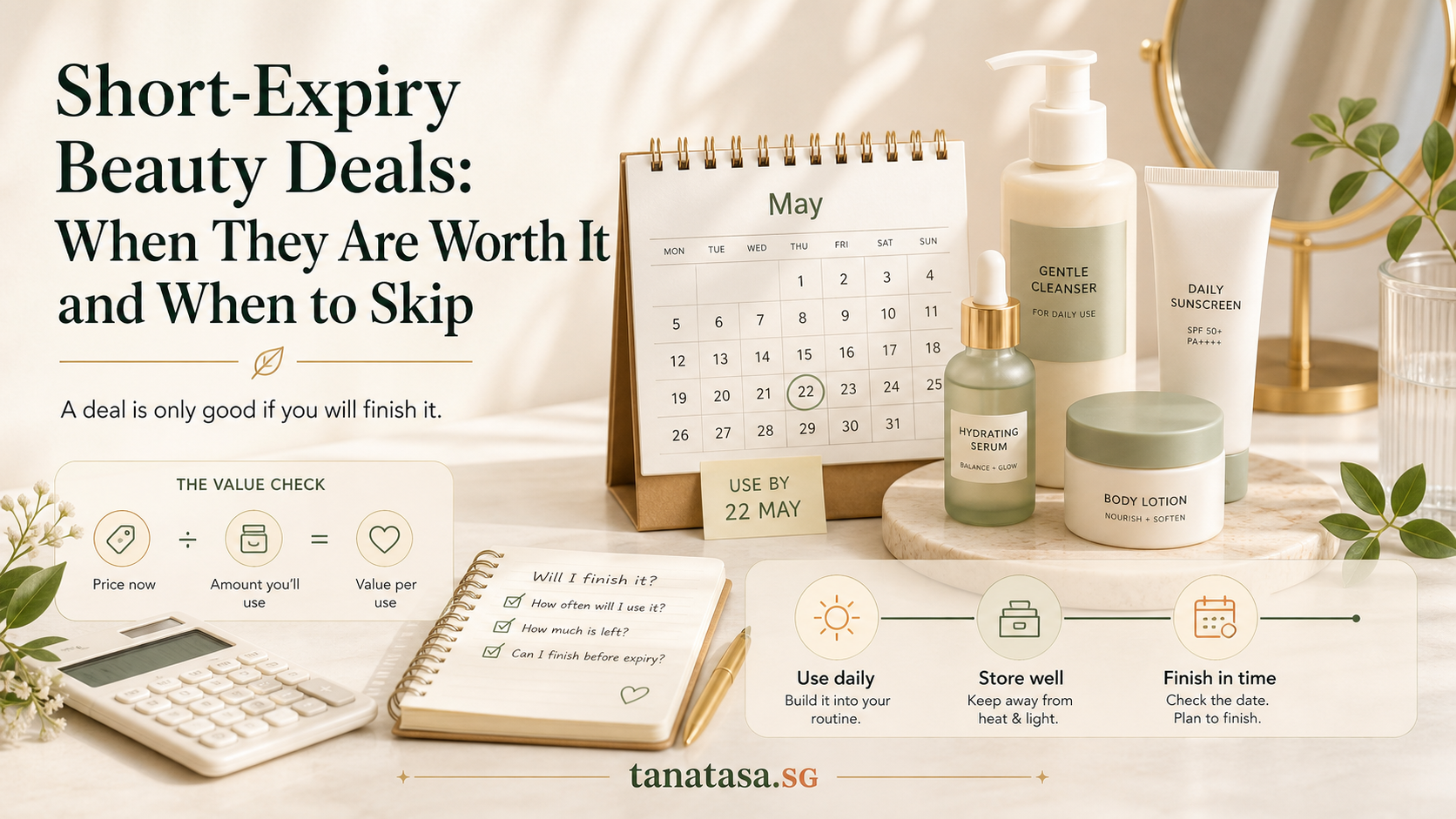
Ask why the price is low. Is it near expiry? Old packaging? Parallel import? Damaged box? Travel size? Different market version? If the listing does not explain, ask before buying or choose another seller.
A low price is not automatically fake. But a low price with vague photos, no expiry details, and a seller with little history is not reassuring.
Look at product photos carefully
Good listings should show the actual product or clear official images. For higher-risk purchases, actual photos are better: box, seal, batch code, expiry date, ingredient label, and product size.
Be cautious if photos are blurry, heavily edited, inconsistent, copied from many sources, or missing the packaging details you need. Also be cautious if the product name, size, or packaging differs from the official version without explanation.
Packaging changes happen, so differences do not automatically mean fake. But unexplained differences are worth checking.
Batch codes and expiry dates
Batch codes help identify production batches. Expiry dates or period-after-opening symbols help you understand freshness. Not every product shows expiry in the same way, but sellers should be able to provide clear information when relevant.
For products with active ingredients, sunscreen filters, natural oils, or delicate textures, freshness matters. Old products may smell different, separate, change colour, or perform poorly.
If a seller refuses to show batch or expiry details for a product where freshness matters, choose carefully.
Check seals and packaging integrity
Seals, shrink wrap, safety stickers, inner lids, and boxes help protect products from tampering. Not every product has every seal, and packaging varies by brand. But the listing should match what is normal for that product.
When the item arrives, check whether the box looks opened, the seal is broken, the pump is dirty, the tube is swollen, or the texture seems separated. Take photos before using if something looks wrong.
Do not use a product that smells rancid, looks mouldy, has changed colour strangely, or seems tampered with.
Reviews: useful but imperfect
Reviews can help, especially when they mention packaging, expiry date, delivery condition, and repeat purchases. But reviews can also be generic, incentivised, or unrelated to authenticity.
Look for reviews with photos and specific details. Be cautious when every review sounds the same, focuses only on delivery speed, or avoids mentioning the product itself.
A high rating is reassuring, but not enough by itself.
Storage and delivery matter
Beauty products can be affected by heat, sunlight, and long storage. This is especially important for certain actives, oils, fragrances, and products with delicate textures.
You cannot control the entire supply chain, but you can choose sellers who appear organised and professional. Avoid listings that look like old warehouse clearance with no storage details. When products arrive, do not leave parcels sitting in heat longer than necessary.
If a product arrives hot, leaking, separated, or smelling unusual, document it and contact the seller before using.
Parallel imports and different market versions
Parallel-import products may be authentic but sourced from another market. Packaging, language, ingredients, and regulatory labels may differ. This is not automatically bad, but you should know what you are buying.
If you have sensitive skin, ingredient differences matter. A product from another market may have a different formula, fragrance, texture, or preservative system.
Check the listing carefully. If the seller does not specify the market version, ask.
What to avoid buying casually
Be extra cautious with products used near the eyes, products for babies or children, strong actives, sunscreens, prescription-like products, injectables, peels, and anything claiming medical results.
For these categories, reliable sourcing matters more than saving a few dollars. If a product can cause meaningful harm when fake, expired, contaminated, or misused, buy from a safer channel.
When the product arrives
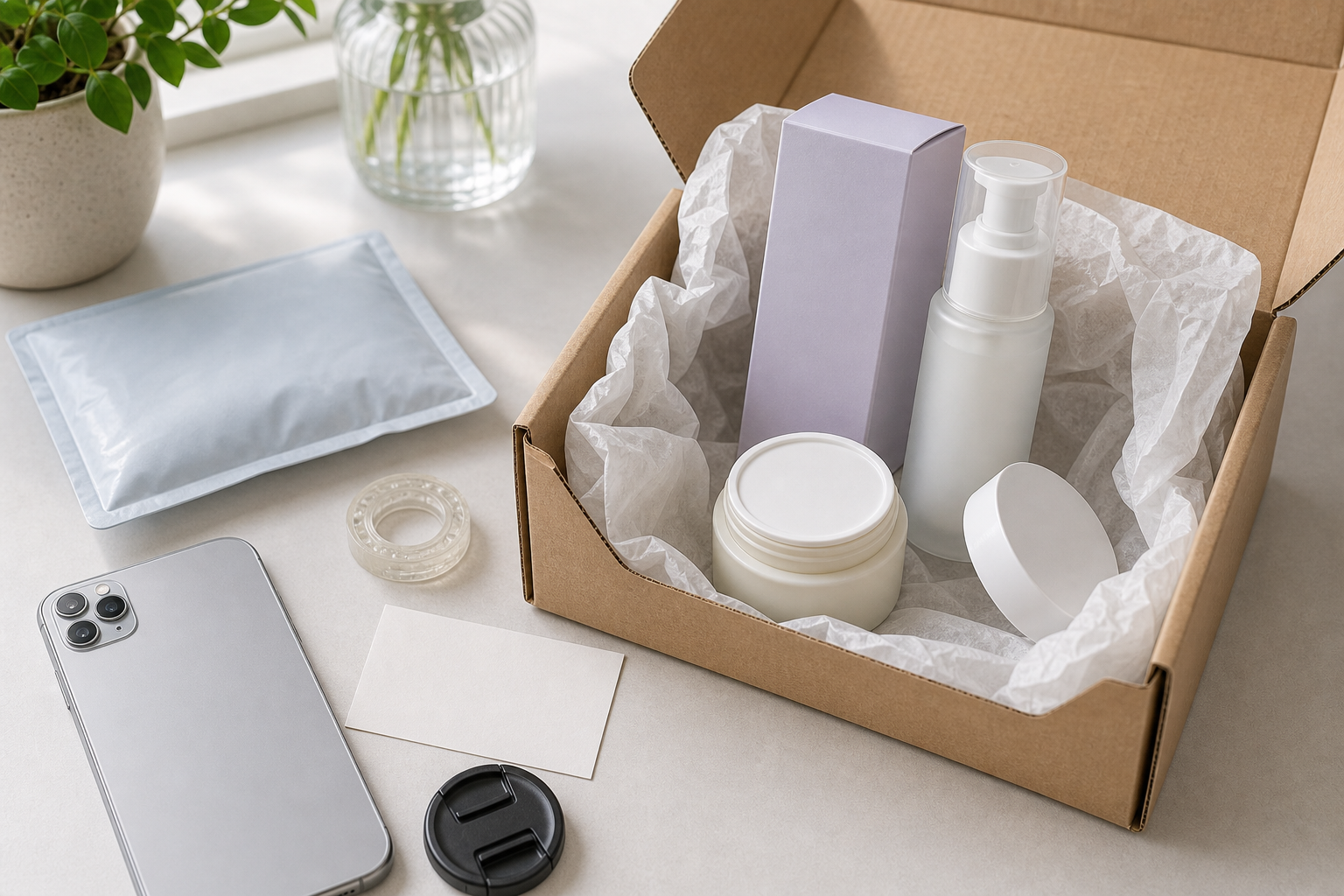
Before opening everything, check:
Product name and size.
Packaging condition.
Seal and inner cap.
Batch code or expiry information.
Texture, smell, and colour if previously familiar.
Whether the product matches the listing.
If something feels wrong, stop. Take photos. Contact the seller or platform. Do not use first and investigate later.
The bottom line
Buying beauty products online does not have to be risky, but it should not be blind. Choose reliable sellers, question extreme prices, check photos, confirm freshness, inspect seals, and pay attention when the product arrives.
A good deal should still make sense. If the listing feels vague, rushed, or too cheap to explain, it is okay to skip it.
Your skin does not care how much you saved if the product is old, fake, or poorly stored. Buy with curiosity, not panic, and let the boring checks protect you.