When to Throw Away Beauty Products: Expiry, Smell, Texture, and Opened Too Long
Beauty products do not last forever. Learn how to judge expiry dates, period-after-opening symbols, smell, texture changes, contamination risk, and when it is safer to throw something away.

# When to Throw Away Beauty Products: Expiry, Smell, Texture, and Opened Too Long
Most beauty products do not suddenly become dangerous at midnight on an expiry date. But they also do not stay fresh forever. Over time, formulas can separate, oxidise, lose performance, grow contaminated, smell strange, dry out, or become more irritating.
The tricky part is that many people keep products for emotional reasons. It was expensive. It is discontinued. It is almost full. It was bought overseas. The packaging is beautiful. It might still be useful one day.
Sometimes keeping it is fine. Sometimes it is not worth the risk. A practical product clean-out is less about perfection and more about knowing when a formula has stopped being trustworthy.
Expiry date and period-after-opening are different
Some products have an expiry date printed on the box, tube, crimp, base, or label. This gives a manufacturer’s guidance on how long the unopened product should remain stable when stored properly.
Many products also show a small open-jar symbol with “6M,” “12M,” “24M,” or similar. This is the period after opening: how long the product is recommended for use once opened.
Both matter, but neither can judge every real-life situation. A product left in a hot car, used with dirty fingers, stored in a damp bathroom, or repeatedly exposed to air may deteriorate faster.
Products used near the eyes deserve stricter rules
Mascara, liquid eyeliner, lash glue, and products used close to the eyes should be replaced more cautiously than body lotion or shampoo. The eye area is delicate, and contaminated products can cause irritation or infection.
Mascara is especially risky because the wand goes from tube to lashes and back again. If it smells off, dries out, clumps strangely, changes texture, or causes stinging, throw it away. Do not add water or saliva to revive it.
Eye products are not the place to be sentimental.
Smell is a useful warning sign
If a product smells sour, rancid, musty, metallic, fermented, or noticeably different from when you bought it, treat that as a warning. Oils and natural butters can go rancid. Fragrance can change. Preservative systems can weaken.
Some products naturally smell unusual from the start, especially fragrance-free formulas with raw ingredient scents. The key is change. If the smell has shifted in a way that makes you hesitate, do not ignore that instinct.
For lip products, smell and taste changes are especially noticeable. A lipstick or gloss that smells waxy-rancid or tastes strange should go.
Texture changes matter too
Throw away products that separate and do not remix as expected, become grainy, watery, stringy, unusually thick, lumpy, curdled, or gritty when they were not designed to be that way.
Some formulas separate slightly and can be shaken before use, especially certain sunscreens, foundations, or natural products. Follow the label if it says to shake. But if the texture has clearly changed from normal, be cautious.
For creams in jars, watch for water pooling, colour changes, mould, or a surface film. For liquid makeup, watch for oil separation, pigment clumps, or a smell change.
Colour changes can signal oxidation
Vitamin C serums, oils, foundations, concealers, and lip products may change colour over time. Some colour change is oxidation, which can reduce performance or make the product less pleasant to use.
L-ascorbic acid vitamin C serums are especially known for turning yellow, orange, or brown as they oxidise. A slightly pale straw colour may be normal for some formulas, but dark orange or brown usually means the serum has degraded significantly.
Oxidised does not always mean immediately dangerous, but it may mean the product no longer does what you bought it to do.
Water-based products are more vulnerable
Products with water usually need preservatives because water supports microbial growth. This includes moisturisers, serums, toners, essences, gels, mascaras, liquid foundations, and many creams.
Anhydrous products, such as some oils or balms, may not grow microbes as easily, but they can still become rancid, contaminated, gritty, or unpleasant.
Natural, handmade, or preservative-light products may have shorter lifespans. If a product tells you to refrigerate it or use quickly after opening, take that instruction seriously.
Jars need cleaner habits
Jars are not automatically bad, but they are easier to contaminate than pumps or tubes because fingers touch the product directly.
Use clean hands or a clean spatula. Close the lid properly. Avoid leaving jars open in a steamy bathroom. Do not share jar products if the formula is used on irritated or acne-prone skin.
If a jar product changes smell, colour, or texture, throw it away even if there is plenty left.
Bathroom storage is convenient, not always ideal
Bathrooms are humid and temperature-shifty. That does not ruin every product immediately, but it is not ideal for delicate formulas, active ingredients, perfumes, or products you want to last.
Store products away from direct sunlight, heat, and damp areas when possible. Keep lids closed. Do not leave products in cars, gym bags, or sunny windowsills for long periods.
If you buy backups, store unopened items in a cool, dry place and avoid building a stash that takes years to finish.
Products to replace sooner
Replace mascara, liquid eyeliner, lash products, and contaminated applicator products sooner. Be cautious with acne treatments, actives, vitamin C, prescription creams, and anything used on broken or irritated skin.
Throw away products immediately if they develop mould, a bad smell, unusual texture, strange colour, bubbling, gas pressure, or visible contamination.
Also throw away anything that repeatedly stings, burns, or causes a reaction even if it is not expired. A fresh product can still be wrong for your skin.
Products that may last longer
Powder products such as eyeshadow, blush, bronzer, and setting powder may last longer when kept dry and used with clean brushes. But they can still become hard-panned, dusty, contaminated, or irritating.
Solid pencil products can sometimes be sharpened to expose a fresher surface, but if they smell off, drag painfully, or irritate the eyes or lips, replace them.
Body wash, shampoo, and conditioner are often used up before expiry becomes an issue, but large bottles kept open for years should still be checked.
Build a simple tracking habit
Write the opening month on products you use slowly, especially mascara, actives, eye products, and products without clear packaging dates. A small sticker or marker on the bottom is enough.
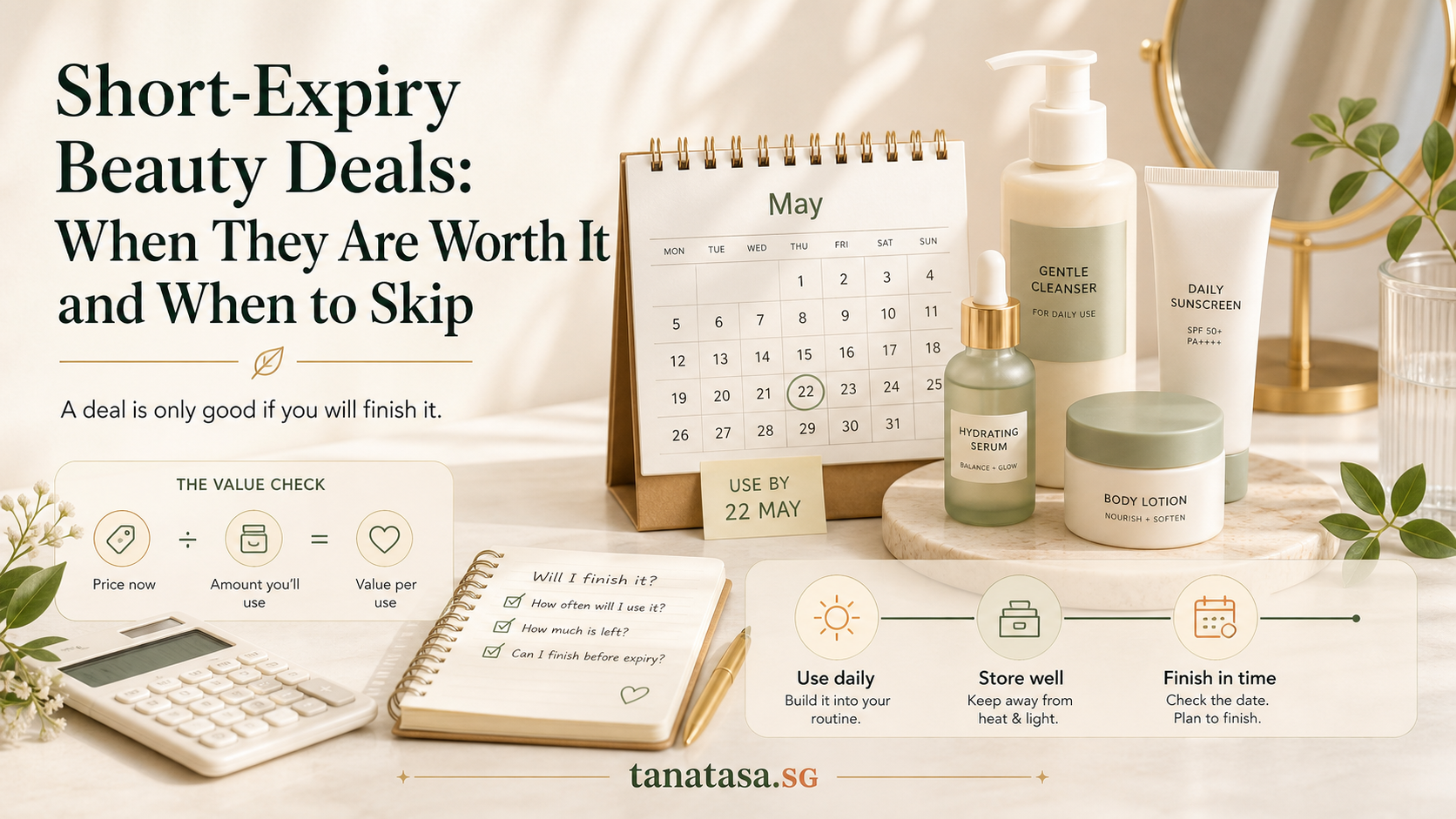
When you open a new product, avoid opening three similar backups at the same time. One open serum is easier to finish than five half-used serums expiring together.
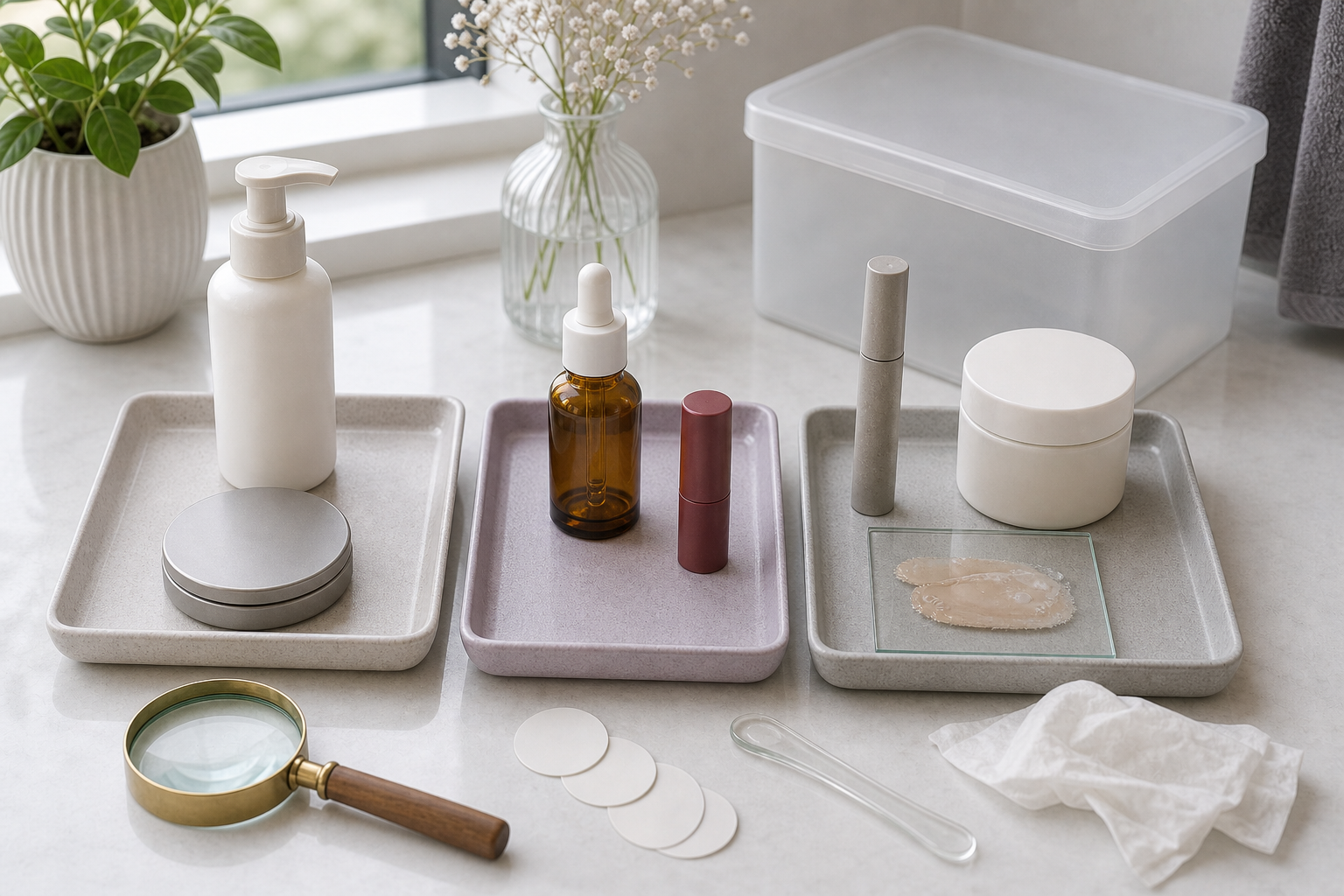
During a clean-out, sort into three groups: safe to keep, use soon, and throw away. The “use soon” group should be realistic. If you did not like the product before, you probably will not suddenly finish it just because it is expiring.
The practical takeaway
Beauty products are meant to be used, not preserved like museum objects.
Check expiry dates, opening time, smell, texture, colour, storage, and where the product is used. Be stricter with eye products and anything applied to irritated skin. Do not revive old formulas with water or wishful thinking.
Throwing away a questionable product can feel wasteful, but using a spoiled or irritating one can cost your skin more.