Watsons, Guardian, Sephora, Shopee: How to Shop Skincare Without Getting Pulled Everywhere
A practical guide to shopping skincare across Watsons, Guardian, Sephora, brand stores, Shopee, Lazada, TikTok Shop, and official stores without letting every channel pull you in a different direction.
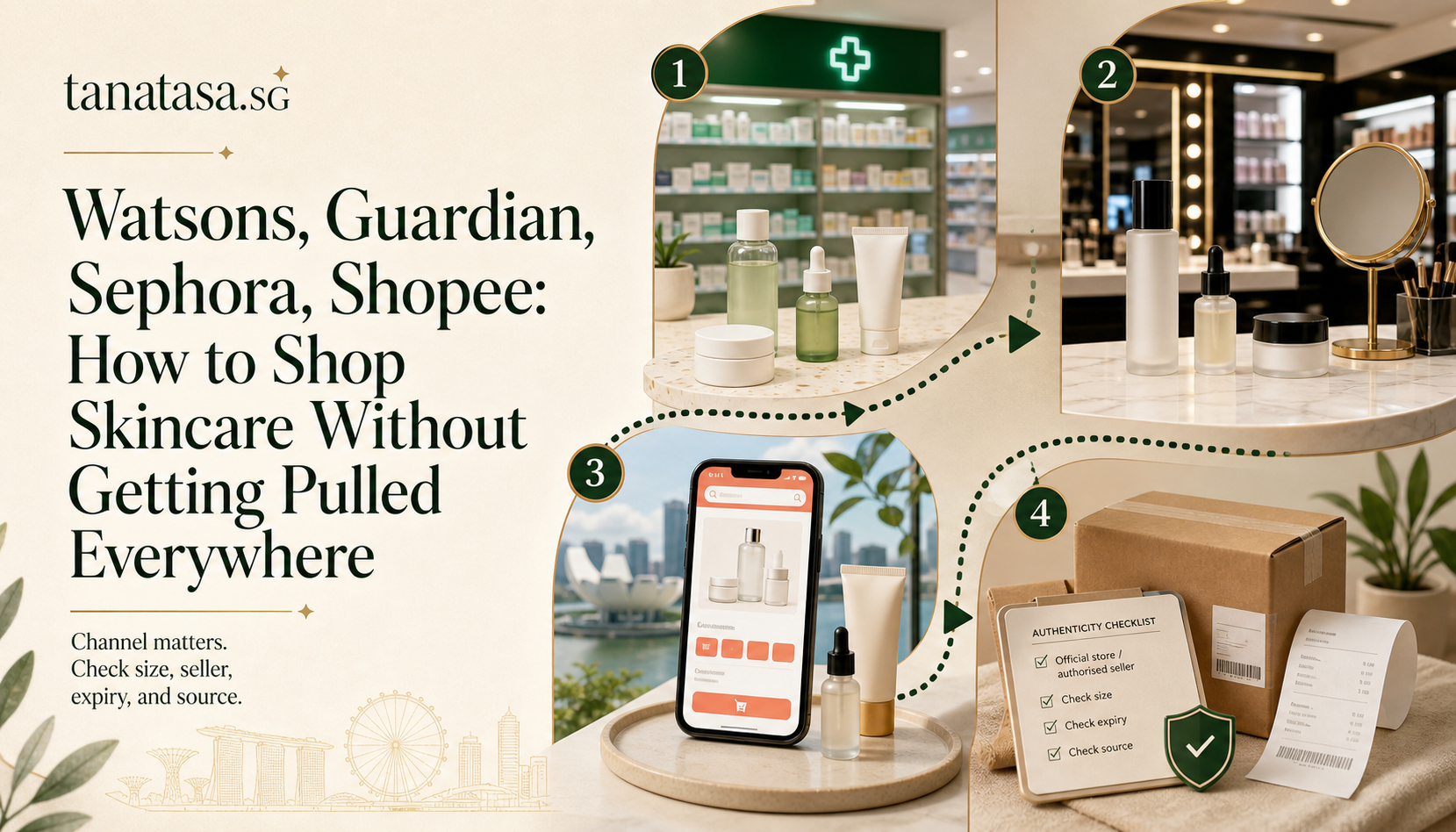
Singapore beauty shopping is convenient in a very specific way: almost every route is open at once. You can pick up cleanser at Guardian after lunch, compare sunscreens at Watsons while waiting for someone, swatch a serum at Sephora on the weekend, add a refill from Shopee at midnight, and then see the same product pushed again on TikTok Shop the next morning.
That convenience is useful. It is also why skincare shopping here can feel oddly tiring. The problem is not that there are too few options. The problem is that pharmacy shelves, beauty specialty stores, brand boutiques, marketplaces, livestream deals, and parallel import listings all ask you to make a different kind of judgement, but they often look like they are selling the same thing.
The calmer way to shop is not to declare one channel good and another bad. It is to know what each channel is good at, where the blind spots are, and how much checking a product deserves before it reaches your face.

Start With The Job, Not The Store
Before comparing prices, decide what the purchase is meant to do. A boring cleanser refill is not the same decision as a first retinol. A sunscreen you use daily is not the same decision as a scented body mist. A baby moisturiser is not the same decision as a lip tint.
The higher the skin risk, the more you should care about clarity: exact variant, expiry context, seller reliability, storage confidence, return path, and whether the product is meant for your concern. The lower the risk, the more flexible you can be about deal-hunting.
This is where many carts go wrong. A shopper starts with one reasonable need, then every channel adds its own temptation. Pharmacy aisle says "buy two". Marketplace says "flash deal". TikTok says "viral". Sephora says "new launch". Brand store says "exclusive bundle". None of those are wrong by themselves, but they are not the same question as: what does my routine actually need?
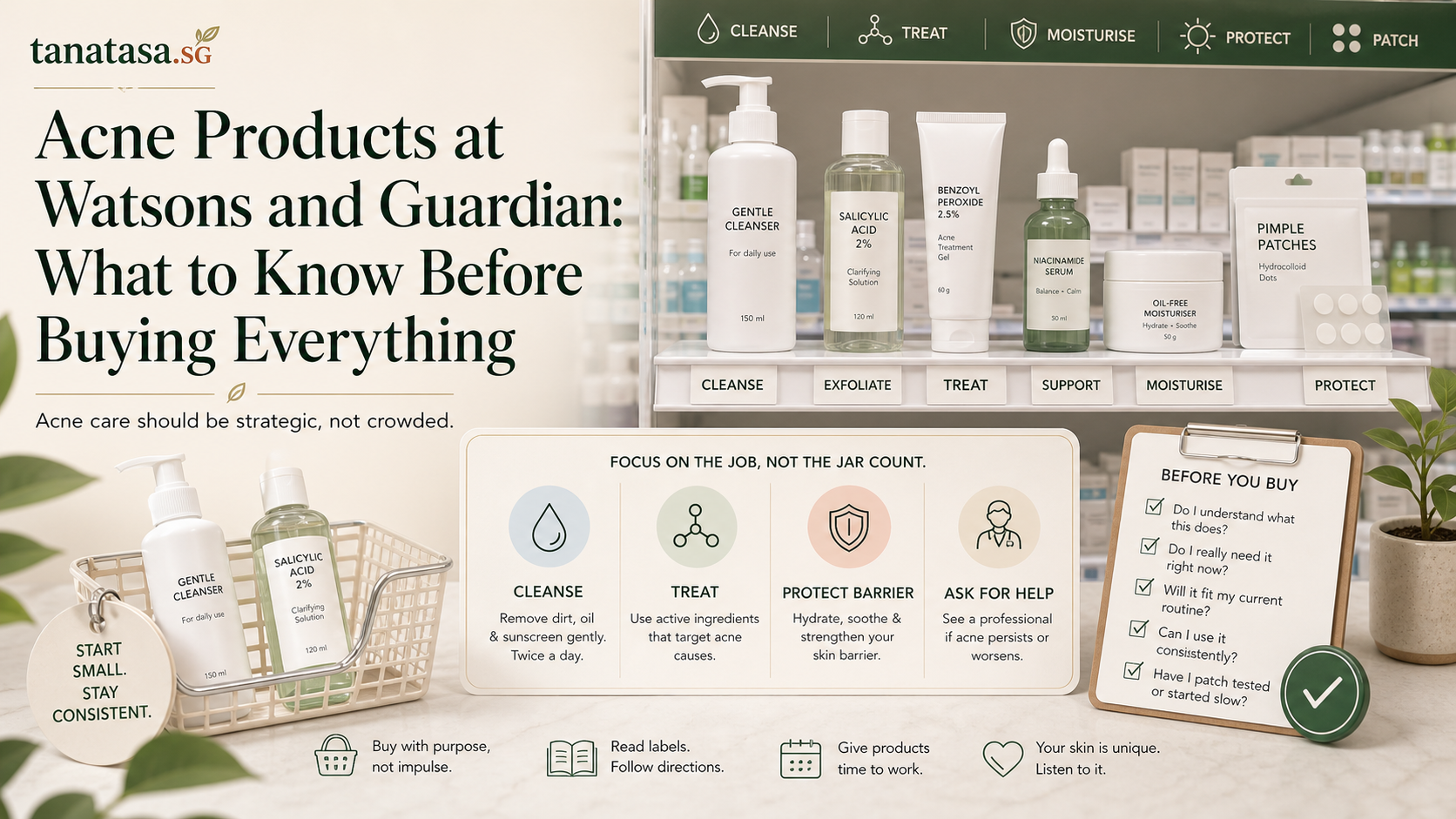
Watsons, Guardian, And Unity Are Good For Routine Decisions
The pharmacy chains are strongest when you want practical products with clear category logic: cleansers, moisturisers, body lotions, sunscreen, scalp shampoos, pimple patches, lip balm, basic first-aid-adjacent skincare, and familiar dermocosmetic brands.
The advantage is physical comparison. You can look at textures, sizes, labels, prices, and promotions without waiting for delivery. For products you already know, pharmacy chains are also useful for quick restocking. If your moisturiser runs out on a weekday night, you do not need a philosophical shopping journey.
The limitation is that shelves can still be overwhelming. Similar-looking products may sit side by side with slightly different claims: hydrating, brightening, calming, barrier repair, oil control, acne care, sensitive skin. Do not let the shelf decide your routine sequence for you. If you came for a cleanser, buy a cleanser. You do not need a toner, ampoule, and sleeping mask just because they are placed nearby.
Pharmacy promotions also need simple maths. A two-for-one deal is only value if the household will finish both within a comfortable time. A larger bottle is only value if you use that texture consistently. A discounted active is only value if you can introduce it slowly rather than rushing because the bottle is sitting there.
Sephora Is Better For Discovery, But Discovery Has A Cost
Sephora is useful when texture, finish, colour, scent, and brand experience matter. This is especially true for moisturisers, complexion products, lip products, prestige skincare, fragrance, hair treatments, and anything where a product can look good online but feel wrong in real life.
The value of Sephora is not only the product range. It is the ability to compare finish and feel. Does the sunscreen pill under makeup? Does the moisturiser sit too shiny? Does the serum feel tacky? Does the scent bother you after ten minutes? These questions are easier in person.
The risk is that discovery can turn into routine clutter. Prestige skincare often has beautiful textures and persuasive claims, but your skin still needs a limited number of jobs done well: cleanse, moisturise, protect, and treat specific concerns where needed. A more expensive serum does not automatically deserve space if it duplicates what your routine already does.
Use Sephora for things that benefit from testing. Be slower with products that contain strong actives or big promises. A product can feel luxurious on the back of your hand and still be too much for your face when used every night.
Brand Stores Reduce Uncertainty, But Do Not Remove Judgement
Official brand stores, whether on their own websites or inside marketplaces, are useful when you want confidence about local assortment, current packaging, gift-with-purchase mechanics, and customer support. For newly launched products, expensive products, or products often counterfeited, that lower uncertainty can be worth paying for.
But official does not mean automatically suitable. It only tells you more about source and support. You still need to ask whether the product fits your skin, your routine, and your budget.
This matters for sets and bundles. Brand stores often make bundles look very attractive, and sometimes they are. But a bundle is value only if the extra products are products you would actually use. A cleanser, moisturiser, and sunscreen bundle can be sensible. A bundle that adds three strong actives to a beginner routine may be more shelf decoration than skincare progress.
Shopee, Lazada, And TikTok Shop Need More Seller Reading
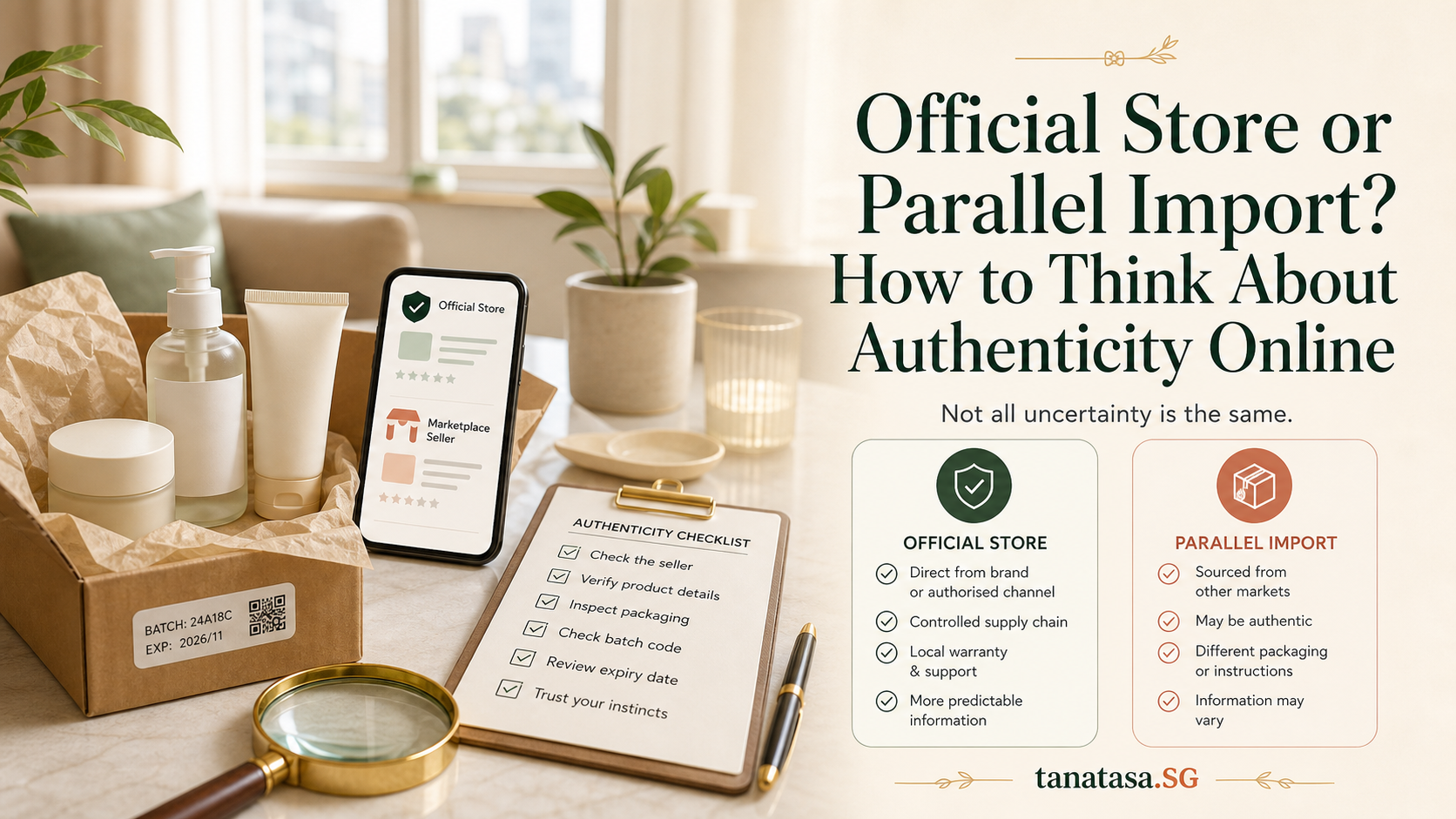
Marketplaces are not one thing. An official store, an authorised distributor, a reputable third-party seller, a parallel importer, and a mystery listing can all sit on the same platform. Treat the platform as the mall, not the source.
For lower-risk items, marketplaces can be excellent: body wash refills, cotton pads, familiar moisturisers, hair care you already use, or household staples where the listing is clear. For higher-risk categories, slow down. Sunscreen, baby care, eye-area products, retinoids, acids, vitamin C, and anything used on irritated skin deserve better checking.
Read the listing like a person who has been disappointed before. Is the size clear? Is the variant clear? Does the selected option match the photo? Are expiry dates mentioned when relevant? Is the seller an official store or clearly described? Are reviews talking about the actual variant you want, or just fast delivery? Is the price low for an explainable reason?
TikTok Shop adds another layer because content and commerce sit together. A good video can explain a product well, but virality is not suitability. If a product is being sold through urgency, countdowns, and dramatic claims, pause long enough to ask whether it solves your actual concern.
Parallel Imports Are Not Automatically Fake
Singapore shoppers often see overseas versions, Japanese or Korean packaging, US or European labels, and products that look slightly different from the local shelf. That does not automatically mean fake. Parallel imports can be genuine products brought in through another route.
The question is uncertainty. A parallel import may have a different ingredient list, regulatory label, language sticker, batch code style, expiry timeline, or packaging. For some products, that is acceptable. For others, especially sunscreen, baby products, sensitive-skin products, or expensive actives, you may prefer the clarity of an official or authorised channel.
Do not reduce the decision to fear. Reduce it to fit. If the product is familiar, the seller is reputable, the variant is clear, and the price difference is meaningful, a parallel import may be reasonable. If you are buying something for compromised skin or daily UV protection, paying for lower uncertainty can be the smarter value.
The Price Check Should Include Risk
Lowest price is not the same as best value. A cheaper listing may be cheaper because it is a smaller size, older packaging, short-expiry stock, a bundle split, an overseas version, a different concentration, or a seller with less support.
That does not make the deal bad. It means the deal needs an explanation. A good listing should make the explanation obvious. "Short expiry, use by October" is clear. "Old packaging, formula unchanged" is clear if you trust the seller. "Randomly 60 percent cheaper, no expiry shown, one generic image for six variants" is not clear.
Value also includes the cost of getting it wrong. If a discounted moisturiser does not suit you, that is annoying. If a discounted sunscreen is questionable, that is a bigger problem. If a baby product arrives with unclear expiry, the savings may not feel like savings anymore.
Build A Channel Strategy For Your Own Routine
A good shopping rhythm can be simple:
Buy routine staples from the channel that is most reliable and convenient for that product.
Test texture-sensitive products in person when possible.
Use official stores for launches, high-value products, and categories where uncertainty bothers you.
Use marketplaces for clear listings, known products, and real price comparison.
Treat viral products as candidates, not instructions.
Avoid opening several new products at once just because different channels made each one look urgent.
This is not about being strict. It is about reducing noise. Once you know where each type of purchase belongs, skincare shopping becomes less reactive.
A Practical Example
Say your skin is getting congested and your moisturiser is running out. One path is to buy a new cleanser, acid toner, clay mask, serum, moisturiser, and sunscreen because every platform suggested something. A better path is to separate the jobs.
Restock the moisturiser from a reliable channel because that is a known staple. If you want to address congestion, choose one treatment product and introduce it slowly. If you are unsure about texture, test in person. If you buy online, check the seller and variant carefully. Then keep the rest of the routine stable long enough to know whether the change helped.
That is the difference between shopping a routine and shopping a mood.
Bottom Line
Singapore gives you many ways to buy skincare. The skill is not finding the single best channel. The skill is matching the product risk to the channel, reading listings properly, and refusing to let every promotion rewrite your routine.
Good skincare shopping should feel clear by the time you check out: what the product is, why you are buying it, where it is coming from, and how it fits into the routine you already have.