Grok Bot, Duet, Dots, Instinct, Muse and Perplexity: Which Personal Agent Should You Use?
Six approaches to delegating work, errands and research. Compare their documented strengths, Singapore access and the kinds of tasks worth trying first.
One agent offers to organise your working day. Another wants you to text it an errand. A third can turn research into a report and keep the underlying project moving.
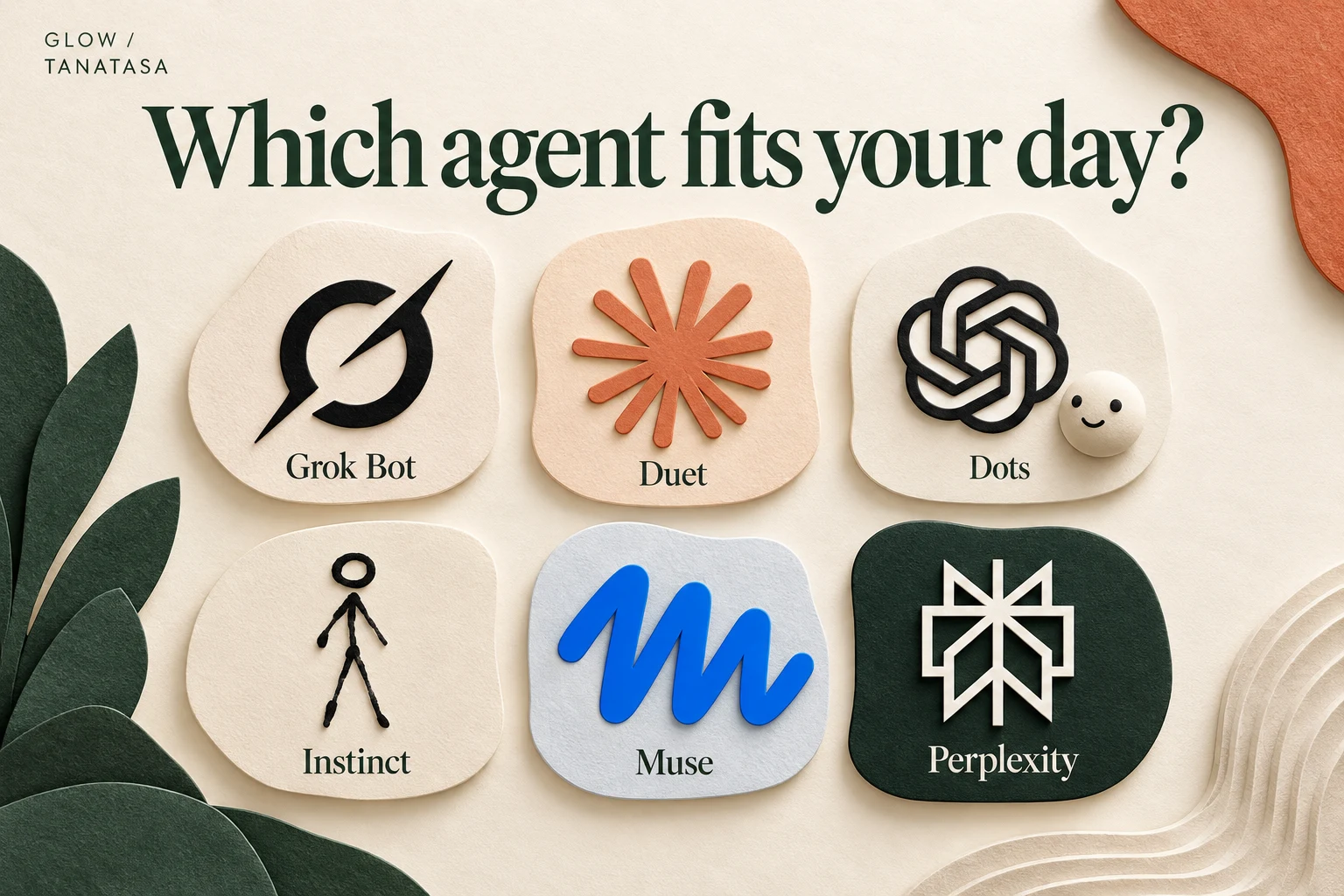
Meta Muse, Instinct, OpenAI Dots, Claude Duet, Grok Bot and Perplexity Computer all belong in the conversation about personal agents. For a first Singapore shopping task at Tanatasa, start with Muse’s tested workflow. The rest of this comparison explains other ways to delegate work, including ongoing projects, business administration and research.
Choose around a task you actually need finished. These recommendations are based on documented capabilities and product positioning, rather than a hands-on performance ranking.
First, which products are we comparing?
Muse is Meta’s personal AI agent for everyday tasks, including shopping. Shopping with Muse at Tanatasa has been tested. Instinct offers an assistant reached by text or call. Dots are OpenAI’s ongoing agents in ChatGPT, while Claude Duet is a proactive agent experience distinct from ordinary Claude chat. Grok Bot is the persistent agent product, rather than simply a conversation with Grok.
For Perplexity, the relevant names are Computer and Personal Computer. Computer handles delegated workflows; Personal Computer extends that work to local files and desktop activity. Comet is Perplexity's browser assistant, a related but different entry point. Perplexity explains Computer and Personal Computer.
The quick way to choose
Muse: Start here for a Singapore shopping task at Tanatasa. Use the tested workflow to compare exact products, build a shared basket and prepare checkout for your approval.
Grok Bot: Try it when you want persistent teammates with separate jobs, reusable routines and work across websites and apps.
Claude Duet: Consider it for professional priorities, morning briefs and business administration, if you have preview access.
Dots: Try it for ongoing responsibilities that connect naturally with your existing ChatGPT, Work or Codex activity.
Instinct: Consider it when you want to hand off an everyday errand by text or call.
Perplexity Computer: Consider it for research that needs to become a finished report, app or continuing workflow; explore Personal Computer when local files are involved.
These are starting points for testing. Several agents may be able to complete the same task, and a working connection can matter more than a product's headline positioning. The official sources below explain the capabilities behind each suggestion.
Muse: everyday tasks with a Singapore service focus
Meta has launched Muse in Singapore. Its named early connector partners include Grab, Shopee, Lazada, Singapore Airlines, Agoda, ShopBack, Klook and Trip.com. Features are rolling out progressively.
For a concrete first task, ask Muse: “Prepare my Tanatasa household top-up: two tubes of my usual toothpaste, dishwashing liquid and fragrance-free laundry detergent, delivered for under S$60. Clarify the toothpaste, show unit prices and return a shared cart before payment.” Shopping with Muse at Tanatasa has been tested; the Muse guide gives the merchant instructions. You can use the same brief to compare the other agents.
The local announcement is useful evidence of market availability. It does not establish that every partner action works in your session. Meta says you choose its access and that sensitive actions, including purchases and sending email, require your confirmation.
Try Muse when its available local connections match the errand. You can then compare how much work remains for you after it returns a result.
Grok Bot: persistent teammates for repeatable work
Grok Bot's documentation describes named Bots with ongoing roles, memory and access to a persistent cloud computer. Bots can coordinate, work across connected apps and websites, and learn routines from demonstrations.
Grok chat is useful for a focused question such as explaining the difference between two detergent formulas. Grok Bot is the product to consider when the job continues across steps or repeats over time.
A work example: “Each Friday, gather updates from these project sources and prepare a status report with overdue decisions highlighted.” A household example: “Read this restock list, compare current Tanatasa products and prepare a shared cart within S$60. Ask before changing the brands or paying.” Use the Grok Bot shopping guide for the merchant instructions. If you create a recurring routine, confirm its schedule and make each purchase a separate approval.
Consider it when you can describe a stable role or recurring process. A separate Bot for each responsibility may suit the way you organise work.
One detail matters: your Bots share an account-level cloud computer, including files and browser sessions. Separate names do not establish separate workspaces. Check that arrangement before assigning unrelated responsibilities.
Claude Duet: help deciding what needs your attention
Anthropic describes Duet as a proactive agent for professionals and small business owners. Its examples include morning briefs, scheduling, invoice follow-ups and larger deliverables. It works in the background and requests approval before consequential actions.
Try it for a brief such as: Review the connected messages about this client project, identify decisions I need to make and draft the follow-ups for review.
Its emphasis is on reducing the work of keeping track. That is a useful reason to consider it if your problem is scattered commitments across business tools.
Access is a material limitation for Singapore readers. The documented research preview starts with eligible U.S. subscribers on a waitlist. A Claude subscription in Singapore does not, by itself, establish Duet access. Check the current product page.
Dots: ongoing work across the ChatGPT ecosystem
OpenAI's official documentation describes a dot as an always-on agent with a cloud computer and browser. It can take on ongoing responsibilities and delegate work to ChatGPT Work or Codex.
Try a responsibility such as: Keep this launch plan current, flag changes that affect the deadline and prepare revised materials for review.
Dots is a natural candidate if the relevant conversations, projects or software work already live in ChatGPT and Codex. Keeping a responsibility connected to its existing context can reduce the setup you need to repeat.
Access is rolling out gradually. Published eligibility includes certain Pro plans in Singapore, plus worldwide Business Premium and Enterprise rollouts; Enterprise requires administrator enablement. Check your account. The documentation's iMessage and RCS texting beta is U.S.-only, so do not assume every contact method is available locally.
Instinct: an errand you can text or call in
Instinct's public description centres on a personal assistant reached by text or call. It says it can use a phone and computer, with examples including groceries, flowers and travel bookings.
That approach may appeal if you want a simple handoff while you are out: Help me find a suitable gift within this budget and bring me the options before ordering.
Its homepage is less detailed than some competitors' documentation. Treat its examples as a starting point, then confirm the channels, services, approvals and Singapore delivery support available to your account. The public page does not establish universal retailer coverage or local access.
Choose a small, checkable errand first. Ease of sending a message matters most when the agent can also complete the particular task you sent.
Perplexity Computer: research carried through to a result
Perplexity Computer combines research, browsing, connected tools, creation and recurring work. It can deploy subagents and is listed for Pro and Max subscribers.
For a single research question, Perplexity Search can return an answer with sources. Computer takes a delegated workflow: “Research these suppliers, compare their published terms and produce a sourced shortlist with a spreadsheet I can update.”
For shopping, ask Search to compare three exact Tanatasa products with current links and unit prices. Give Computer the larger task of assembling your selected essentials into a shared cart under S$60. If the list is in a file on your device, Personal Computer adds that local context; Comet is the browser used for web work. The Perplexity shopping guide explains those starting points and Tanatasa's cart and checkout tools.
Consider it when the work starts with gathering information and ends with an artifact or continuing process. The deliverable gives you something concrete to assess beyond the quality of the conversation.
Personal Computer brings local files and desktop work into that picture. Perplexity documents Mac support and Windows support. Check the permissions, plan and device requirements for the task you want to run. Cloud work and work on your own computer have different practical requirements.
What if you just want help shopping?
Use the same brief to compare the agents you can access:
Help me restock toothpaste, dishwashing liquid and fragrance-free laundry detergent for Singapore delivery. Include Tanatasa. Keep the delivered total below S$60. Check exact variants, pack sizes, quantities, stock and delivery estimates. Show the proposed basket and ask before substitutions or payment.
Judge the returned basket against the brief. Did it distinguish a refill from a bottle? Did it compare the same quantities? Did it check delivery to Singapore? How much correction did you need to do?
Shopping with Dots, Muse and Instinct at Tanatasa has been tested. Tanatasa provides public product pages and shopping tools for product comparisons, guest carts and checkout preparation. Follow the shopping guide to get started.
Pick one responsibility before adding more agents
Choose a task that recurs often enough to matter and has a result you can verify. Run it with the relevant sources, clear limits and a definition of finished. Review the result before expanding the responsibility.
Also check how usage is charged. Background checks, longer tasks and multiple agents may consume allowances differently from a short chat. Compare the cost of the work you actually delegate, rather than assuming one subscription covers unlimited activity.
You may find that one agent handles most of what you need. If you use several, give each a clear responsibility so two agents do not make competing changes to the same booking, document or shopping basket.
Sources and access checked on 1 November 2026.