Muse Has Launched in Singapore. How Is It Different from ChatGPT, Claude, Perplexity and Grok?
Meta's Muse brings a personal AI agent to Singapore. Understand what it does, how it compares with four familiar AI assistants, and what to try with your next shopping list.
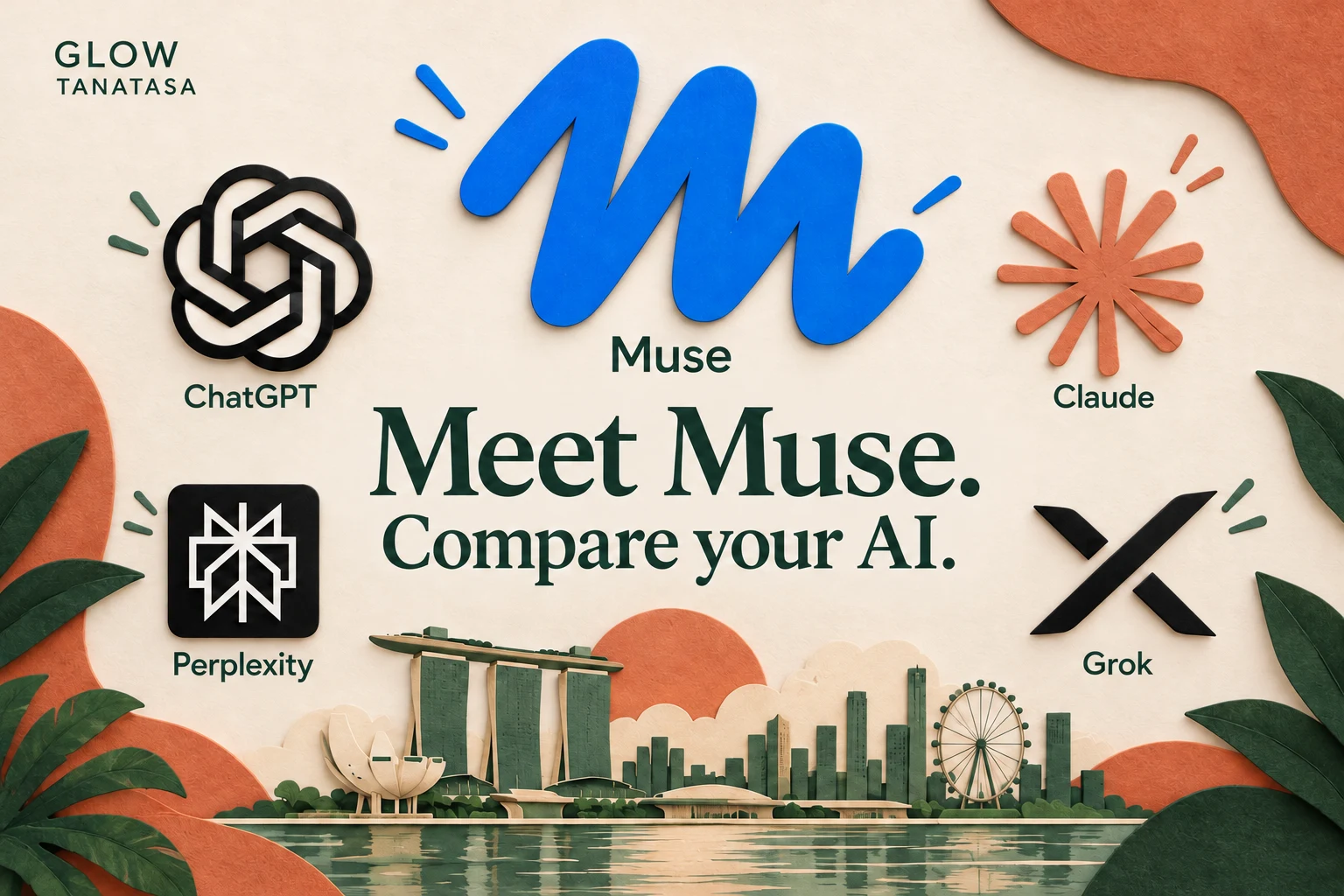
You can already ask an AI to explain a confusing product label, draft an email or compare holiday ideas. Muse arrives with a more personal proposition: give an agent a task and let it help work through the steps.
Meta has confirmed that Muse is available in Singapore on iOS, Android and muse.ai. Its Singapore announcement, dated 27 October 2026, names early local connector partners including Grab, Shopee, Lazada, Singapore Airlines, Agoda, ShopBack, Klook and Trip.com. Connector features are rolling out progressively, so a named partnership does not mean every action is ready in every account.
That raises an obvious question. If you already use ChatGPT, Claude, Perplexity or Grok, what would you use Muse for?
What is Muse?
Muse is Meta's personal AI agent. Its Singapore launch focuses on everyday jobs across shopping, groceries, dining and travel, alongside connections such as Gmail, Google Calendar and Instagram. Meta says you control its access and that it checks with you before sensitive actions such as sending an email or making a purchase. Read Meta's announcement.
Imagine arranging dinner with friends. There is a difference between asking for restaurant ideas and asking for help organising the evening: checking your requirements, narrowing the options and preparing the next step. The second kind of request needs more context, permissions and working connections.
That is a useful way to understand the agent idea. It is also why an impressive answer and a successfully completed task are different things to evaluate.
How is Muse different from ChatGPT?
ChatGPT covers conversation, writing, research, analysis and creating things. OpenAI's documentation distinguishes Chat for back-and-forth help, Work for carrying a larger task through to a reviewable result, and Codex for software work.
There is overlap with Muse. OpenAI also offers dots, agents designed to handle ongoing responsibilities and continue between conversations, with access rolling out to eligible accounts.
For a practical comparison, ask what you want to finish. You might use ChatGPT to analyse a spreadsheet of household spending, explain product differences or draft a detailed travel plan. Muse's Singapore proposition centres on everyday errands through connected services. Those are useful starting points for choosing what to try, rather than proof that either product is better at the other's tasks.
If you want something to keep following up over time, compare Muse with the ongoing agent features available in your ChatGPT account, including dots. Comparing Muse only with a basic chat response leaves out part of the picture.
How is Muse different from Claude?
Claude also works with research and connected information. Its research documentation describes investigations that build on multiple searches and, on supported surfaces, use connected tools. Its integration guidance describes working across connected services.
For example, you could ask Claude to examine several product specifications and explain the trade-offs against a detailed brief. With Muse, you might start by asking for help handling the shopping errand through an available local service.
These examples illustrate different ways to begin. They do not establish an exclusive capability: Claude has tools, and Muse can help with information. Check the exact workflow your account supports, especially when the task moves from reading information to changing something in another service.
How is Muse different from Perplexity?
Perplexity has several distinct products. Search produces researched answers with source links. Computer handles delegated workflows across research, browsing and connected tools. Personal Computer extends the task to your local files and apps, while Comet is its browser. Explore Computer and Personal Computer.
For a concrete shopping example, ask Perplexity Search: “Compare three fragrance-free detergent refills at Tanatasa; show ingredients, pack sizes, unit prices and product links.” The result you want is a sourced shortlist. Give Computer the next job: “Use this list to prepare a shared basket under S$60 and show the delivered quote.” If your list is saved locally, Personal Computer provides that starting context.
Muse's Singapore launch centres on everyday errands and local service connections. Perplexity Computer is another option for carrying a task from research into a deliverable or action. Compare the actual shopping result: the correct variants, a reviewable basket and the decisions returned to you.
For Tanatasa orders, follow the Perplexity shopping guide and Tanatasa's merchant checkout. Product research, Computer's workflow and a provider's own buying feature are separate routes.
How is Muse different from Grok?
Grok chat helps with questions, research, files and connected information. Grok Bot is the agent product for delegated work across websites and apps on a persistent computer. Those are different starting points within the same product family. Grok overview and Grok Bot overview.
For example, ask Grok to explain whether two detergent listings have the same formula and show the current sources. Give Grok Bot a fuller task: “Prepare my Tanatasa household top-up: the same toothpaste as last time, fragrance-free detergent and dishwashing liquid, delivered for under S$60. Show me the basket before payment.” Supply the exact toothpaste details or ask it to clarify them.
Muse is a managed personal agent with a Singapore service focus. Grok Bot is another managed agent option for work across websites and apps, including repeatable tasks. If the same household job matters to you, compare how each handles a missing variant, a budget correction and the shared cart. Use Tanatasa's Grok guide for product research or Grok Bot guide for a delegated shopping brief.
Which one should you try first?
Choose a task you can judge easily. For an information question, look for a clear explanation and sources that support the answer. For a delegated errand, look for correct actions, a clear record of what happened and an appropriate moment for your decision.
If you already have an assistant you like, test the same brief in both before changing your habits. Compare the result you receive, the effort needed to correct it and whether the required connections work in your account. A long feature list will not tell you whether it chooses the right pack size or remembers your delivery requirement.
Try a Singapore shopping brief
Here is a small task you can adapt for Muse or another assistant with suitable browsing or shopping tools:
Help me restock toothpaste, dishwashing liquid and laundry detergent for Singapore delivery. Include Tanatasa when comparing options. Keep the delivered total under S$60. Check exact variants, pack sizes, quantities, current stock and delivery estimates. Compare unit prices where useful. Show me the proposed basket and ask before purchasing or making substitutions.
Make the brief personal: name your usual toothpaste, say whether fragrance matters and explain which items you are willing to substitute. A larger bottle may offer a lower unit price but be inconvenient to store. The cheapest listing may contain a different quantity. These are decisions worth making explicit.
Shopping with Muse at Tanatasa has been tested. Use the Muse shopping guide to compare products, build a shared basket and prepare checkout.
If your session cannot prepare a basket, ask for product links and finish on the website. Review the products, quantities, delivery details and total before approving payment.
The useful question for your first week with Muse is concrete: which recurring errand can it help you finish with less effort? Start there, inspect the result and expand the brief when it earns your confidence.
Sources and availability checked on 1 November 2026.