Mineral vs Chemical Sunscreen: The Real Singapore Question Is Skin Tone and Texture
Mineral and chemical sunscreens can both be good. The practical question is cast, comfort, eye sting, skin tone, texture, and whether you will apply enough.
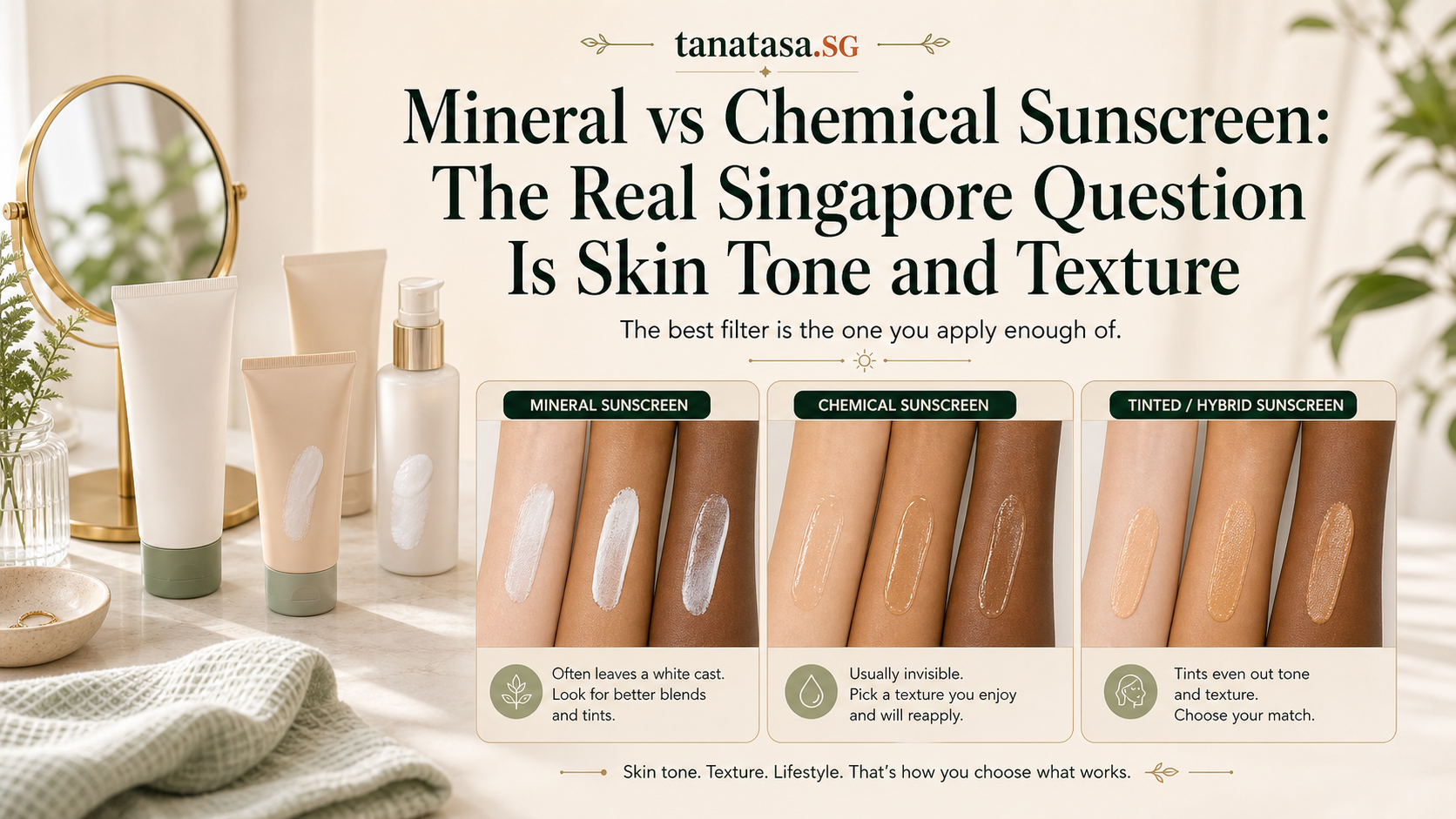
Mineral versus chemical sunscreen is often discussed as if one side is clean and the other side is suspicious. That framing is not very useful for shoppers. Both mineral and chemical UV filters can be legitimate when properly formulated. Both can work well. Both can also be unpleasant in the wrong formula.
The real question is not which sunscreen tribe you belong to. The real question is whether the sunscreen protects well, feels tolerable, suits your skin tone, behaves with your routine, and lets you apply enough without hesitation.
For many Singapore shoppers, the most practical sunscreen problem is not ideology. It is cast, eye sting, pilling, shine, makeup compatibility, and whether the product still feels acceptable halfway through the day.

What Mineral Sunscreen Means
Mineral sunscreens usually use zinc oxide, titanium dioxide, or both as UV filters. They are sometimes called physical sunscreens, although modern formulas are more complex than the simple "sits on top and reflects light" explanation people repeat online.
Mineral sunscreens can be useful for some people with sensitive skin, eye-sting issues, or a preference for those filter types. Zinc oxide can offer broad protection when formulated well. Some people also like the way mineral formulas feel more cushiony or less stingy around the eyes.
The trade-off is cosmetic elegance. Mineral filters can leave a visible white or grey cast, especially on medium, tan, brown, or deeper skin tones. They can also feel thicker, drier, pastier, or more obvious under makeup. Tinted mineral formulas can help, but the tint has to match; otherwise the sunscreen becomes a base product problem.
If a sunscreen makes you look ashy, you are more likely to apply less or avoid reapplying. That is not a small issue. It affects protection.
What Chemical Sunscreen Means
Chemical sunscreens use organic UV filters. Many modern Asian and European sunscreens use filter systems that can feel lightweight, transparent, and elegant. This is one reason Japanese and Korean sunscreens are popular for daily wear.
The advantage is often cosmetic: less cast, lighter texture, easier layering, and better comfort for people who dislike thick products. For many skin tones, chemical or hybrid sunscreens are simply easier to wear generously.
The trade-off is that some people experience eye sting, warmth, redness, or irritation with certain chemical filters or formulas. Fragrance, alcohol, texture, and other ingredients can also contribute, so do not blame the filter category too quickly. A chemical sunscreen can sting because of the whole formula, not just because it is chemical.
Hybrid Sunscreens Are Common For A Reason
Hybrid sunscreens combine mineral and chemical filters. They are popular because they can balance protection, texture, cast, and stability. A hybrid formula may reduce white cast compared with a fully mineral sunscreen while giving a different skin feel from a fully chemical one.
But hybrid is not automatically best. Some hybrids still leave cast. Some still sting. Some are excellent. As usual, formula matters more than the category label.
If you have been disappointed by both mineral and chemical sunscreens, hybrid formulas are worth trying, but test them like any other sunscreen: in daylight, over your normal skincare, and for a full day if possible.

White Cast Is A Real Practical Problem
White cast is sometimes dismissed as cosmetic fussiness. It should not be. A sunscreen that looks visibly wrong on your skin tone changes behaviour. People apply less, avoid certain areas, skip reapplication, or stop using the product entirely.
Check cast in daylight, not only under bathroom lighting. Look at the hairline, eyebrows, around the mouth, beard area, neck, ears, and jawline. Some sunscreens look fine at first and become more visible as they dry down. Some look acceptable indoors but obvious outside.
For deeper skin tones, the best sunscreen may be a transparent chemical formula, a well-designed hybrid, or a tinted mineral formula with a suitable tint. For very fair skin, cast may be less visible, but texture and pilling can still be deal-breakers.
The right sunscreen is the one you are willing to apply to your full face and neck without negotiation.
Eye Sting Needs Troubleshooting
Eye sting is one of the most common reasons people abandon sunscreen. It can come from filters, fragrance, alcohol, sweat movement, application too close to the lash line, or the way a formula migrates through the day.
If your sunscreen stings:
Try applying less close to the lash line while still protecting surrounding areas.
Let skincare layers dry before sunscreen.
Avoid heavy eye cream underneath if it makes sunscreen move.
Try a different formula rather than assuming all sunscreen will sting.
Consider mineral or hybrid options if chemical formulas keep migrating into your eyes.
For outdoor days, sweat can move sunscreen. Water-resistant formulas may help, but they still need removal at the end of the day.
Sensitive Skin Should Compare Formulas, Not Labels Alone
Sensitive-skin shoppers are often told to choose mineral sunscreen. That can be a helpful starting point, but it is not a guarantee. A mineral sunscreen can still contain fragrance, drying ingredients, botanicals, or a texture that irritates through rubbing. A chemical sunscreen can be perfectly comfortable for some sensitive users.
Look at the whole formula and your own reaction. If your skin is already flaring, avoid testing new sunscreen aggressively. Patch test if needed, introduce slowly, and keep the rest of the routine stable. If sunscreen repeatedly burns on compromised skin, the issue may be your barrier, not only the sunscreen.
For people with rosacea, eczema, post-treatment skin, or persistent reactions, professional advice may save a lot of trial and error.
Makeup And Sunscreen Need To Behave Together
A sunscreen can be excellent alone and terrible under makeup. Pilling usually happens when layers do not sit well together: too much moisturiser, silicone-heavy formulas clashing, rubbing instead of pressing, or not allowing enough dry-down time.
If you wear makeup, test sunscreen with your usual base products. Do not judge it only on a bare-skin day. Notice whether foundation separates, powder grabs strangely, or the sunscreen balls up around the jaw and hairline.
Sometimes the fix is not a new sunscreen. It may be using less moisturiser, waiting longer between layers, or changing primer. But if a sunscreen consistently ruins your routine, it may not be the right daily sunscreen no matter how good the label looks.
Reapplication Changes The Decision
Reapplication is where texture becomes even more important. A thick mineral sunscreen may be acceptable in the morning but difficult over makeup. A light chemical sunscreen may be easy to reapply but sting when sweat gets involved. A stick may be convenient but hard to apply evenly. A cushion may work for the face but not the neck.
Think about your actual day. Office day, school run, outdoor sports, beach, cycling, lunch errands, and evening event do not need the same sunscreen strategy. Many people do better with one elegant daily sunscreen and one more robust outdoor sunscreen.
That is not excessive. It is practical.
How To Choose Without Overthinking
Choose mineral if:
You prefer those filters.
Some chemical formulas sting your eyes.
You find a formula with acceptable cast.
You want a tinted option that suits your skin tone.
Choose chemical if:
You need transparency on your skin tone.
You dislike thick textures.
You want elegant daily wear.
Your skin tolerates the formula well.
Choose hybrid if:
You want a balance of cast and texture.
Mineral feels too heavy but chemical keeps stinging.
You find a formula that works better with makeup.
Then judge the actual sunscreen, not the category.
Bottom Line
Mineral, chemical, and hybrid sunscreens can all be good. The category label is only the starting point. The real test is broad protection, reliable source, skin tone, eye comfort, texture, makeup compatibility, and whether you can apply enough.
The best sunscreen is not the one that wins an internet argument. It is the one that sits on your skin well enough that you use it generously, repeatedly, and without trying to talk yourself into liking it.


