How to Choose Sunscreen for Deeper Skin Tones Without a White Cast
White cast is not a small cosmetic issue when it stops people from using sunscreen. Here is how deeper skin tones can shop more realistically for wearable formulas.

# How to Choose Sunscreen for Deeper Skin Tones Without a White Cast
White cast is often talked about like a minor inconvenience. For deeper skin tones, it can be the reason a sunscreen never leaves the drawer.
A sunscreen can have an excellent label, beautiful ingredients, and glowing reviews, but if it makes the face look grey, purple, chalky, or mismatched from the neck, it will not be used consistently. Wearability is not vanity. It is part of whether the product works in real life.
Choosing sunscreen for deeper skin tones means thinking about filters, tint, undertone, finish, amount, and where the product will be worn.

White cast is a real usability issue
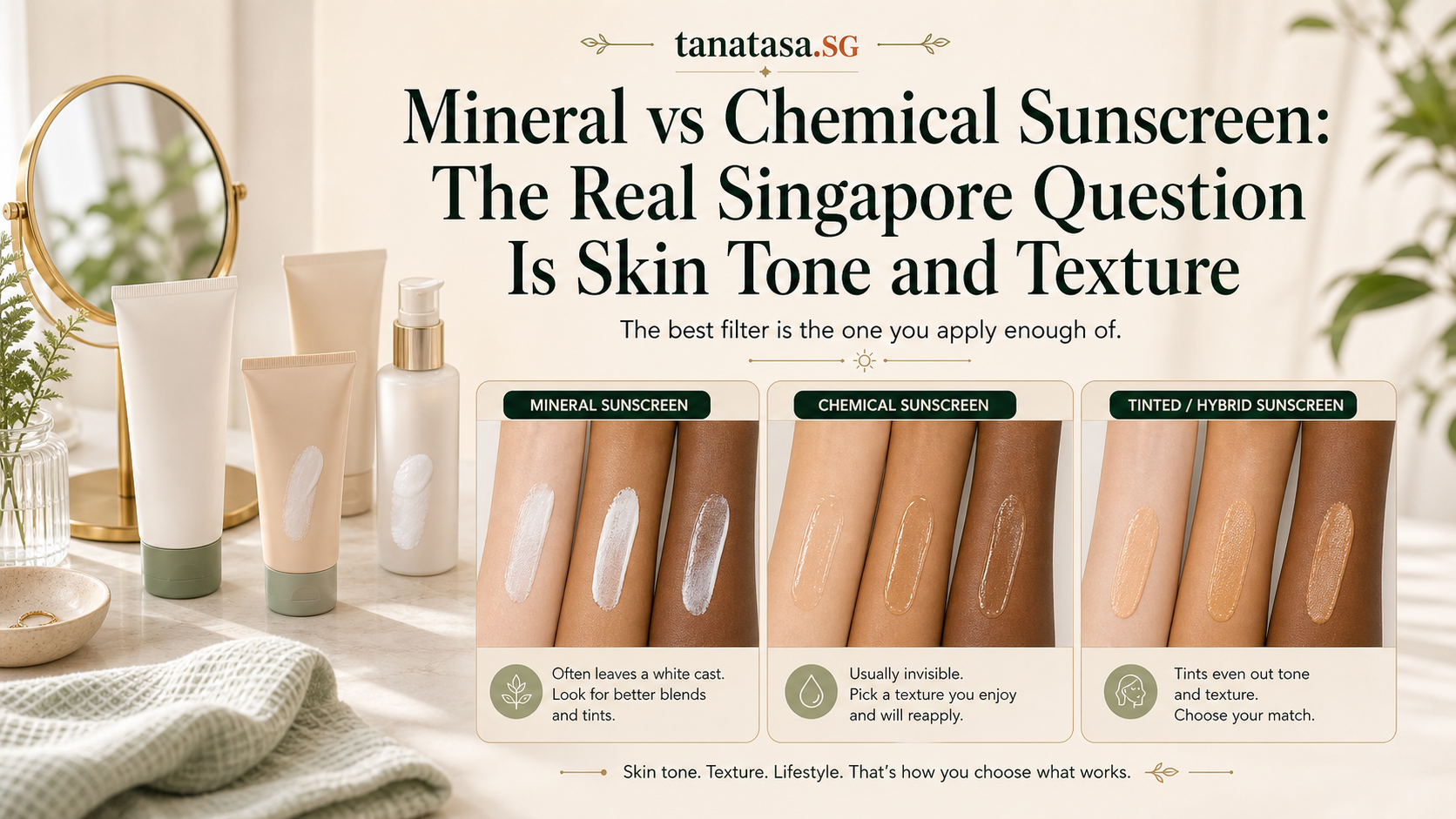
White cast happens when sunscreen leaves a pale film on the skin. It can come from mineral filters like zinc oxide and titanium dioxide, certain formulations, powders, or how much product is applied.
On fair skin, a slight cast may look brightening. On medium to deep skin, the same cast can look ashy or obvious. It may also make facial hair, eyebrows, hairline, dry patches, and textured areas stand out.
If a sunscreen looks bad at the amount you need to apply, it is not practical for you, even if reviews are positive.
Mineral sunscreens are not automatically unwearable
Mineral sunscreens have a reputation for white cast, but not all mineral formulas are equally chalky. Some use improved dispersion, tint, smaller particle technology, or elegant bases that reduce obvious whiteness.
Still, many untinted mineral sunscreens remain difficult on deeper skin tones. This is not user error. It is a formula limitation.
If you prefer mineral filters, look for reviews and swatches from people with similar skin depth and undertone. A product that looks invisible on one person may not look invisible on another.
Chemical and hybrid formulas may be easier
Many chemical-filter sunscreens have a more transparent finish because they do not rely on opaque mineral particles in the same way. Hybrid formulas may also be more wearable than fully mineral options.
This does not mean chemical sunscreens are always better. Some sting eyes, feel greasy, or irritate sensitive skin. But if white cast is your main barrier, transparent chemical or hybrid formulas may be worth exploring.
The best category is the one your skin can tolerate and your face can wear.
Tinted sunscreen can help, but shade range matters
Tinted sunscreen can reduce white cast by adding pigment. It may also help uneven tone, redness, or pigmentation concerns. But many tinted sunscreens come in limited shades.
A "universal tint" may look beige, peach, grey, orange, or too light depending on your skin. Some tints are designed for fair-to-medium skin and are not actually universal.
For deeper skin tones, shade depth and undertone matter. A tint that is deep enough but too red, too yellow, or too grey can still look wrong.
Undertone is part of the match
Sunscreen shade mismatch is not only about light or dark. Undertone matters too.
A warm tint may turn orange. A cool tint may look grey. A neutral tint may work for some and flatten others. Olive undertones can be especially hard to match because many beige tints pull peach or pink.
When reading reviews, look for people who mention undertone, not only skin tone. Photos in natural light are more useful than heavily filtered swatches.
Finish affects how cast appears
A sunscreen can look fine when wet and turn ashy when it dries. Another may look pale at first and settle better after ten minutes. Matte formulas can sometimes make cast more obvious because they leave a powdery finish. Dewy formulas can reduce chalkiness but may look greasy.
Let a sunscreen set before judging. Check it in daylight if possible. Bathroom lighting can hide or exaggerate cast.
Also check how it behaves around the hairline, eyebrows, beard area, and dry patches. These areas often reveal cast first.
Use enough during testing
Testing a tiny amount can be misleading. Many sunscreens look fine when applied thinly but become ashy at the proper amount.
When you test, apply the amount you would realistically use for protection. If the correct amount looks unacceptable, the sunscreen is not wearable enough for daily use.
This is why samples are useful when available. A full bottle of wrong-shade sunscreen is frustrating.
Body sunscreen may be different from face sunscreen
Some people can tolerate more cast on body areas, especially if the product is used for sports, beach, or swimming. Others dislike cast on arms, legs, chest, or hands because it transfers or looks obvious.
You may choose a more elegant face sunscreen and a different body sunscreen. For outdoor activities, water resistance may matter more than invisible finish. For daily exposed arms or hands, cosmetic finish may matter more.
Do not force one sunscreen to do every job.
Makeup can help, but should not fix everything
Makeup can soften white cast, but it should not be required every time you use sunscreen. If a sunscreen only looks acceptable under foundation, it may still be useful for makeup days, but it may not be your best everyday option.
Applying makeup over a cast can also make undertone issues worse. A grey base under foundation can affect the final colour.
If you enjoy makeup, layering may work. If you want bare-skin days, keep searching for a sunscreen that is wearable on its own.
What to look for when shopping online
Look for swatches on deeper skin tones, reviews mentioning white cast, photos in natural light, and comments about whether the product turns grey after drying. Search for your skin tone and undertone where possible.
Be cautious with phrases like "no white cast" if all reviewers are fair-skinned. The claim may be true for them and false for you.
Also pay attention to finish words: tone-up, brightening, milk, mineral, matte, and physical can sometimes suggest higher cast risk, though not always.
Check the face, neck, and ears together
White cast can look acceptable on the centre of the face but obvious at the jawline, neck, ears, or hairline. When testing, do not only swatch on the back of the hand. Apply it where you will actually wear it.
A face that looks one shade lighter than the neck can make sunscreen feel unusable, especially on bare-skin days. If you wear hijab, collars, uniforms, or work clothes, also check whether the product transfers or leaves pale marks on fabric edges.
Good sunscreen should not require constant checking in every reflective surface.
Reapplication can deepen the problem
A sunscreen that looks acceptable after one layer may become grey, orange, or heavy after reapplication. This matters for outdoor days, sports, and long events.
If you plan to reapply, test that too. Layer the sunscreen after a few hours and see whether it builds gracefully or turns patchy. Tinted formulas can become darker or more makeup-like with repeated layers. Mineral formulas can become chalkier.
For some people, the solution is a transparent base sunscreen plus a different reapplication format. For others, a compact, stick, or careful reapplication with a lightweight fluid works better.

The practical view
White cast is not a small issue if it stops sunscreen use. Deeper skin tones deserve formulas that are protective and wearable.
Consider transparent chemical or hybrid formulas if cast is your main problem. Use tinted sunscreens only when the shade and undertone actually suit you. Check finish after the product dries. Test with a realistic amount. Read reviews from people with similar skin.
The right sunscreen should not make you look like you borrowed someone else's face. It should fit your skin well enough that using it does not feel like a compromise every morning.