Kids' Sunscreen vs Adult Sunscreen: What Is Actually Different?
Kids' sunscreen is not always a completely separate category, but the best choice for children often depends on gentleness, eye comfort, application, water resistance, and real family use.

# Kids' Sunscreen vs Adult Sunscreen: What Is Actually Different?
Kids' sunscreen sounds like it should be a totally different product from adult sunscreen. Sometimes it is formulated differently. Sometimes it is mostly a marketing label. The important question is not whether the bottle says "kids" in large letters. The important question is whether the sunscreen suits the child, the activity, and the way it will be applied.
For families, sunscreen needs to be practical. Children move, sweat, rub their faces, complain about sticky textures, wipe their eyes, jump into water, and rarely stand still for a perfect application.
The best children's sunscreen is not just protective on paper. It is one adults can apply properly and children can tolerate.

Kids' sunscreen is often designed for tolerance
Many sunscreens marketed for children focus on gentler positioning, water resistance, eye comfort, and family-friendly use. Some use mineral filters. Some are fragrance-free. Some are thicker so adults can see where they applied. Some come in sprays, sticks, or lotions for convenience.
But "kids" on the label does not automatically mean perfect for every child. A child with eczema-prone skin, eye sensitivity, or strong dislike of sticky products may still react badly or refuse it.
Read the full product details, not just the front label.
Adult sunscreen is not automatically unsafe for older children
For older children, some adult sunscreens may be fine if they are suitable, well tolerated, and used correctly. The issue is often not age branding but formula comfort, fragrance, eye sting, water resistance, and application amount.
That said, babies and very young children need more caution. For infants, sun avoidance, shade, clothing, and advice from a healthcare professional are especially important. Do not treat baby skin like adult skin.
If unsure, choose products intended for children and follow local medical or product guidance.
Babies need a different approach
Babies have more delicate skin and are not simply small adults. For very young infants, the first line of sun protection is shade, protective clothing, hats, and avoiding direct sun where possible.
Sunscreen use for babies depends on age, situation, and professional guidance. If a baby has eczema, broken skin, or a history of reactions, be extra careful.
For parents, this can feel inconvenient, but it is sensible. A baby who cannot tell you something stings needs a more conservative plan.
Mineral filters are common, but not mandatory for everyone
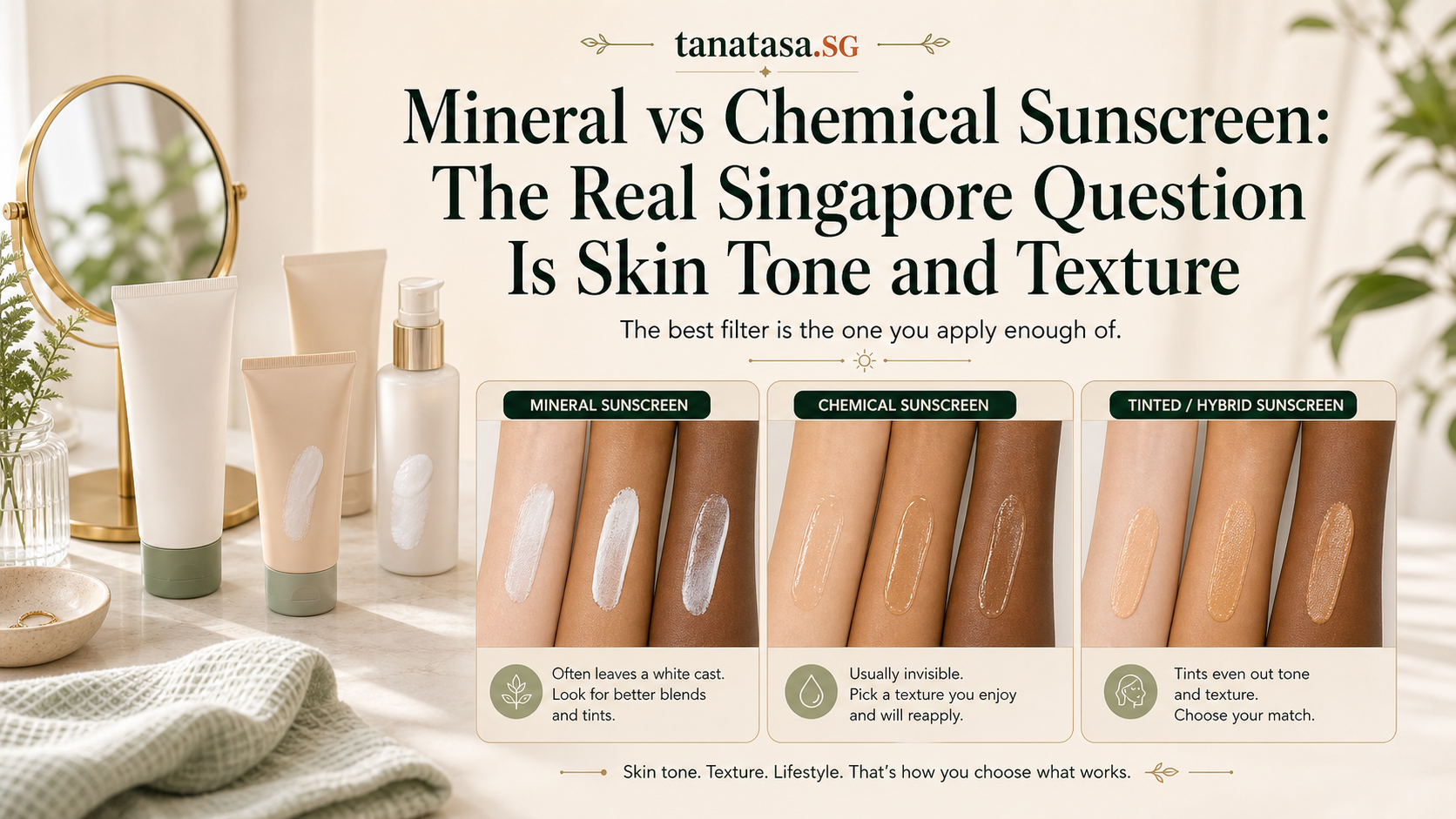
Many children's sunscreens use zinc oxide or titanium dioxide. These mineral filters can be well tolerated by some children and may be less likely to sting eyes for certain users. They can also leave a white cast and feel thicker.
Chemical-filter sunscreens may be lighter and easier to spread, but some can sting eyes or bother reactive skin. Hybrid formulas exist too.
There is no single perfect filter category for every child. The best sunscreen is one that protects, does not cause repeated irritation, and can be applied generously.
Eye sting matters a lot
Children often rub their eyes, sweat, swim, and touch their faces. A sunscreen that migrates into the eyes can turn application into a daily battle.
If eye sting is a problem, try avoiding application too close to the lash line, using a stick carefully around the orbital area, choosing a formula known for better eye comfort, adding a hat or sunglasses, or switching textures.
Do not dismiss complaints as drama. If sunscreen burns a child's eyes, the routine will fail quickly.
Water resistance matters for play
Children playing outdoors often sweat, run, swim, and wipe their skin. For pool, beach, sports, or water play, water-resistant sunscreen is usually more practical than a delicate daily face sunscreen.
Water-resistant does not mean waterproof forever. Reapply after swimming, towel drying, heavy sweating, and according to product directions.
For family outings, set reminders or tie reapplication to natural breaks: after swimming, after lunch, before returning to the playground, or after changing clothes.
Texture affects cooperation
Adults may tolerate a sticky sunscreen because they understand why it matters. Children often will not. If a product feels greasy, smells too strong, leaves thick white streaks, or takes too long to apply, cooperation drops.
Lotions can give good coverage but take time. Sticks are useful for faces and small areas but can be underapplied if used too lightly. Sprays are quick for bodies but need generous use and rubbing in, and should not be inhaled.
The best format may be a combination: lotion before leaving home, stick for face touch-ups, spray for body reapplication used carefully.

Do not forget clothing and shade
For children, sunscreen should not carry the whole job. Hats, sunglasses, rash guards, sleeves, shade, umbrellas, and timing make outdoor protection easier.
At the pool or beach, covered swimwear can reduce the amount of skin that needs repeated sunscreen. At playgrounds, hats and shaded breaks can help. For school or sports, practical clothing may matter as much as the sunscreen bottle.
The less exposed skin you need to manage, the easier the routine becomes.
Patch test if skin is reactive
If a child has sensitive or eczema-prone skin, test a new sunscreen on a small area first where practical. Watch for itching, rash, burning, swelling, or worsening dryness.
Avoid applying sunscreen over broken, infected-looking, or badly irritated skin without advice. If reactions keep happening, speak with a healthcare professional rather than buying random new bottles.
Children's skin comfort matters. Protection and tolerance need to work together.
Family sunscreen can be practical
Some families prefer one sunscreen everyone can use. That can work if the formula suits the child and adults, and if it is appropriate for the activity.
Other families need separate products: a gentle kids' sunscreen, an adult face sunscreen for daily work, and a water-resistant body sunscreen for outdoor days. That is not excessive if it helps people use enough product.
The right setup is the one that reduces fighting, improves application, and matches real routines.
School, daycare, and outings need simple systems
For school or daycare, sunscreen routines depend on what adults are allowed to apply, what the child can manage independently, and how much outdoor time is expected. A perfect product at home may not help if nobody reapplies it during the day.
For older children, a clearly labelled stick or small tube may be easier to carry, but they still need to know where to apply it: face, ears, neck, arms, and other exposed areas. For younger children, hats, covered clothing, and shade may be more dependable than expecting self-application.
If the child has a long outdoor activity, communicate with caregivers where appropriate. The routine should be simple enough that it can actually happen.
The practical view
Kids' sunscreen is not automatically magical, and adult sunscreen is not automatically wrong for every older child. Look beyond the label.
For children, prioritise tolerance, eye comfort, water resistance when needed, easy application, and enough product. Add hats, clothing, shade, and timing instead of expecting sunscreen to do everything alone.
The best sunscreen for a child is one that gets applied properly, reapplied when needed, and does not turn every outdoor day into a negotiation.