Centella, Cica, Mugwort: Calming Ingredients Explained Simply
Calming skincare can be useful, but it cannot fix every rash or reaction. Here is how to understand centella, cica, mugwort, and soothing products more realistically.

# Centella, Cica, Mugwort: Calming Ingredients Explained Simply
Centella, cica, mugwort, heartleaf, panthenol, aloe, madecassoside, calming ampoules, barrier gels: soothing skincare has become its own category. For people with sensitive, acne-prone, or over-treated skin, this can be genuinely helpful.
It can also become confusing. A product may say calming, but still contain fragrance. A cica cream may feel too heavy. A mugwort essence may do very little. A soothing serum may help mild redness but not a persistent rash.
Calming ingredients are useful when expectations are realistic.
What calming skincare is supposed to do
Calming skincare usually aims to reduce the feeling or appearance of irritation: redness, tightness, stinging, dryness, heat, or discomfort. It may support the skin barrier, add hydration, or make a routine feel less aggressive.
It is not the same as medical treatment for eczema, rosacea, infection, allergy, or dermatitis. It may support comfort, but it cannot diagnose what is happening.
If the skin is swollen, painful, oozing, spreading, or repeatedly flaring, do not keep buying calming products instead of getting advice.
Centella and cica are closely related
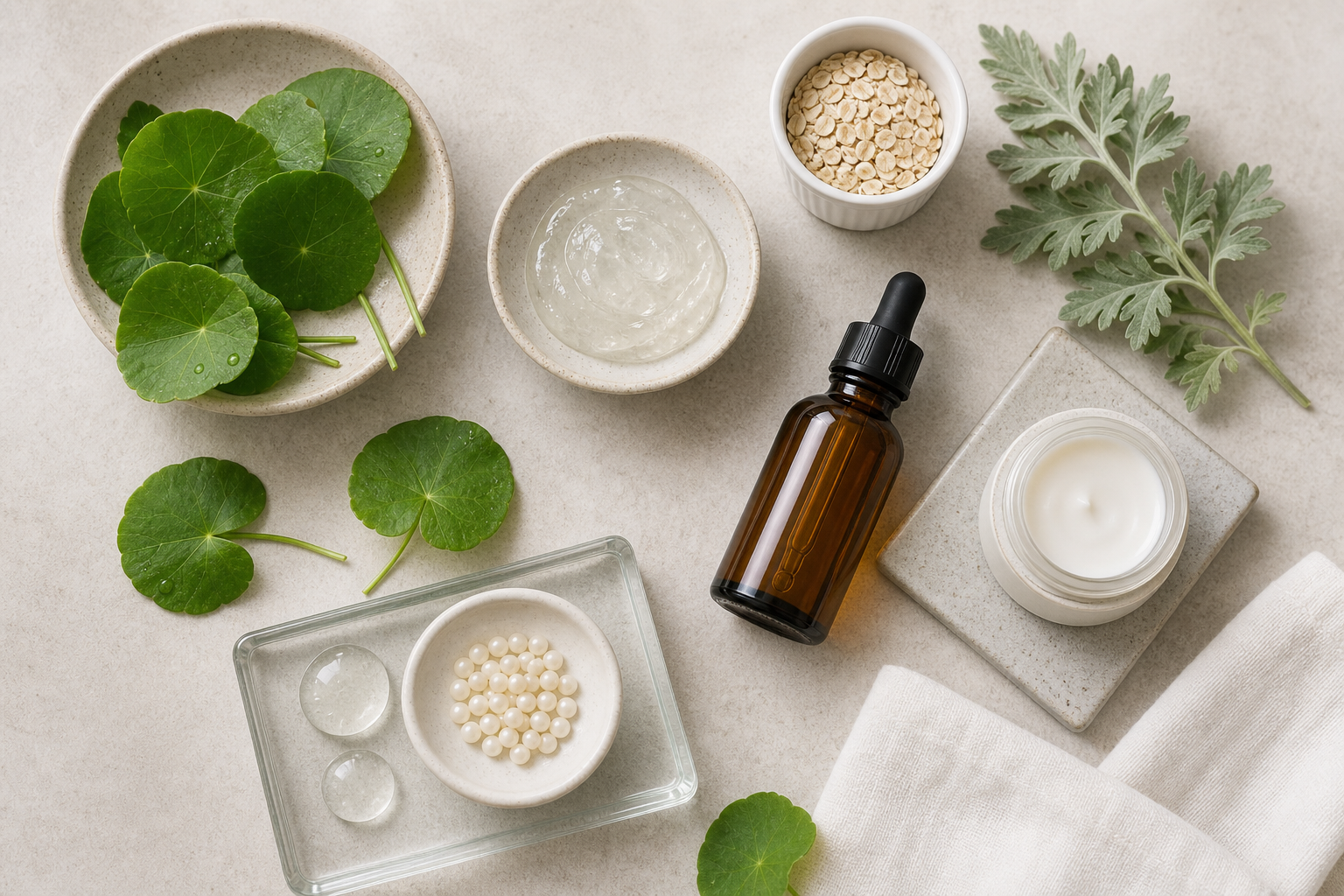
Centella asiatica is a plant extract used in many soothing products. "Cica" is often used as a marketing word for centella-based or barrier-support products. Related compounds include madecassoside, asiaticoside, madecassic acid, and asiatic acid.
Centella products are popular because they can fit into sensitive-skin routines and often pair well with barrier-support ingredients.
But not every cica product is gentle. The full formula matters. A cica cream can still contain fragrance, essential oils, exfoliating ingredients, or a texture that clogs some users.
Mugwort is another soothing-style ingredient
Mugwort appears often in Korean skincare, especially essences, masks, and calming serums. It is marketed for soothing, comfort, and redness-prone skin.
Some people love mugwort because it feels light and calming. Others notice no difference. Some sensitive users may react depending on the formula or personal allergy tendency.
Plant-based does not mean universally safe. If your skin reacts easily, patch test and introduce slowly.
Panthenol and barrier ingredients matter too
Calming products are not only about trendy plant extracts. Panthenol, glycerin, ceramides, cholesterol, fatty acids, allantoin, beta-glucan, colloidal oatmeal, and simple moisturising ingredients can be just as important.
Sometimes the most calming product is not the one with the prettiest botanical story. It is the one that moisturises well and does not irritate.
If your skin barrier is damaged, barrier-support ingredients may do more than a watery calming essence.
Calming does not mean weak
People often think calming products are boring or optional. But if your routine includes retinoids, acids, acne treatments, or frequent sunscreen and makeup removal, calming support can help keep the routine sustainable.
Strong actives get attention, but supportive products are what let people continue using them.
The problem is when calming products become another crowded layer instead of simplifying the routine.
When calming products help most
Calming products may help when skin feels mildly irritated from over-exfoliation, retinoid adjustment, weather changes, mask friction, shaving, sunscreen testing, or too many new products.
They may also be useful on rest nights between active treatments. A calming serum plus moisturiser can give the skin a break without feeling like you abandoned skincare.
The key is to stop the trigger too. A calming serum cannot fully compensate for daily overuse of strong actives.
When calming products are not enough
If your skin is burning, swollen, blistering, oozing, cracked, infected-looking, or worsening quickly, calming skincare is not enough. If redness and bumps keep returning around the mouth, nose, or eyes, piling on soothing products may make things worse.
If you suspect allergy, dermatitis, rosacea, eczema flare, or infection, get proper advice.
Skincare can support comfort, but medical conditions need medical thinking.
Watch the texture
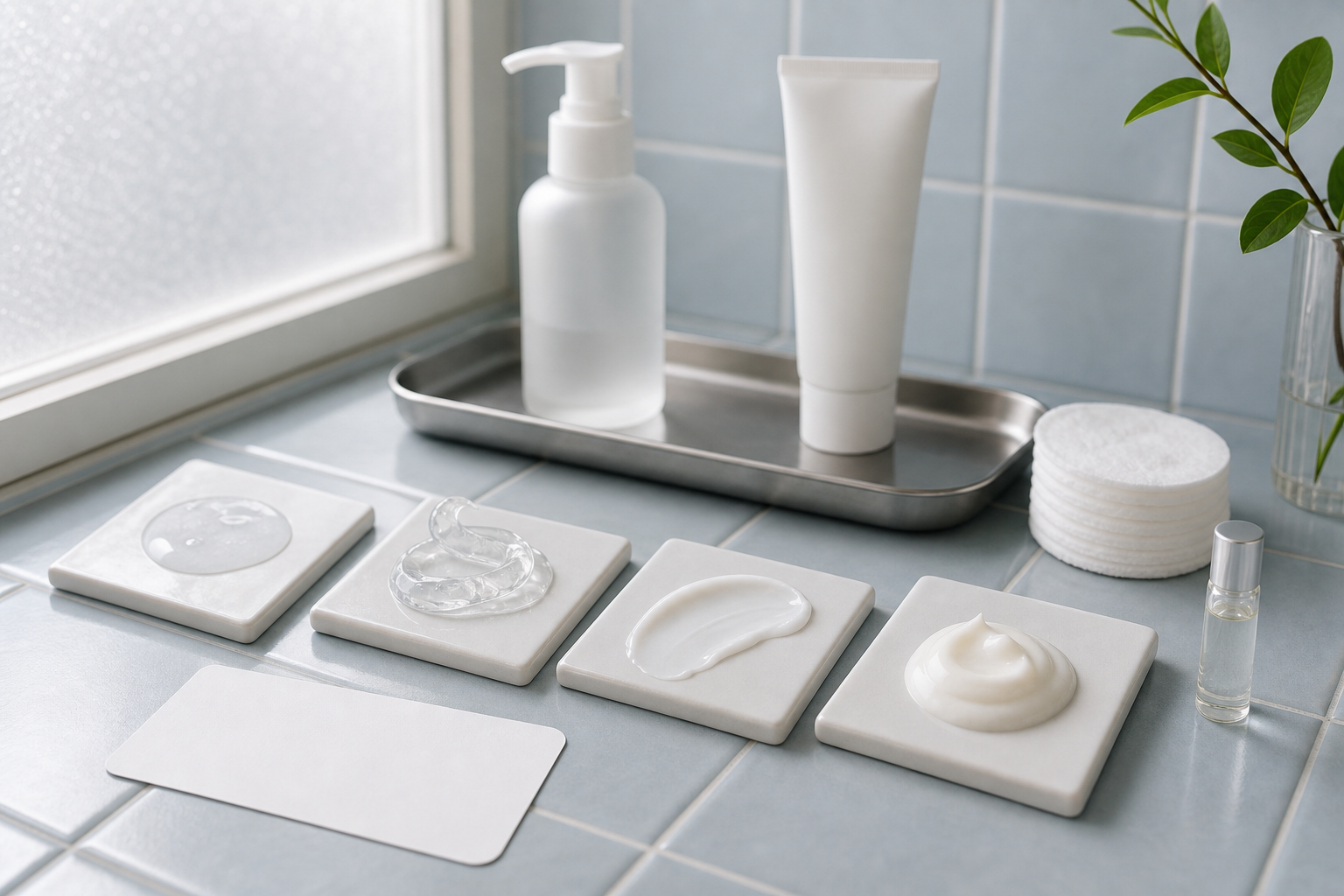
Cica creams can be rich. Mugwort essences can be watery. Centella serums can be sticky. Gel creams can feel light but not moisturising enough. Balms can protect dry areas but feel heavy on oily zones.
Choose texture based on your skin. Oily and acne-prone skin may prefer lighter soothing serums or gels. Dry or compromised skin may need a cream. Combination skin may use richer products only on cheeks or irritated patches.
Calming should not mean congesting.
Fragrance can undermine calming claims
Some soothing products smell herbal, spa-like, or fresh. That may be pleasant, but fragrance can bother sensitive skin.
If your skin is reactive, fragrance-free options may be safer. This does not mean every fragranced product is bad for everyone. It means calming claims should be checked against the ingredient list.
A product can say soothing on the front and still be unsuitable for you.
How to use calming products
Use calming products after cleansing and before moisturiser if they are watery or serum-like. Use calming creams as the moisturiser step. Keep the rest of the routine simple while testing.
If your skin is irritated, do not add three calming products at once. That makes it harder to know what helps.
One well-chosen soothing product plus a good moisturiser is often enough.
A calming routine example
For mildly irritated skin, a calming routine might be very simple: gentle cleanser at night, centella or panthenol serum if tolerated, plain moisturiser, and sunscreen in the morning. No scrub, no acid toner, no retinoid for a few nights, no new mask.
For oily irritated skin, use a light gel cream and avoid piling on heavy balms unless specific patches need them. For dry irritated skin, a richer moisturiser may matter more than multiple watery essences.
The routine should feel quieter, not more elaborate.
Too many calming products can still irritate
It sounds strange, but people can overdo soothing skincare too. A mugwort essence, cica serum, calming ampoule, barrier mist, recovery cream, sleeping mask, and soothing sheet mask may be too many steps for reactive skin.
When skin is upset, fewer products are easier to tolerate and easier to troubleshoot. Choose one calming support product and one moisturiser before adding more.
Calming is not an ingredient contest. It is a reduction in friction.
The practical view
Centella, cica, mugwort, and other calming ingredients can be useful, especially when skin is mildly irritated or recovering from active-heavy routines. But they are not magic, and they do not replace removing the trigger.
Read the full formula. Choose the right texture. Be cautious with fragrance if sensitive. Use calming products to simplify and support, not to justify doing too much.
Calm skin often comes less from one hero ingredient and more from a routine that finally stops arguing with your face.