When Skincare Needs a Doctor, Not Another Product
Skincare can support comfort, but pain, infection signs, severe acne, baby rashes, eye swelling, and persistent flares need proper care, not another product haul.
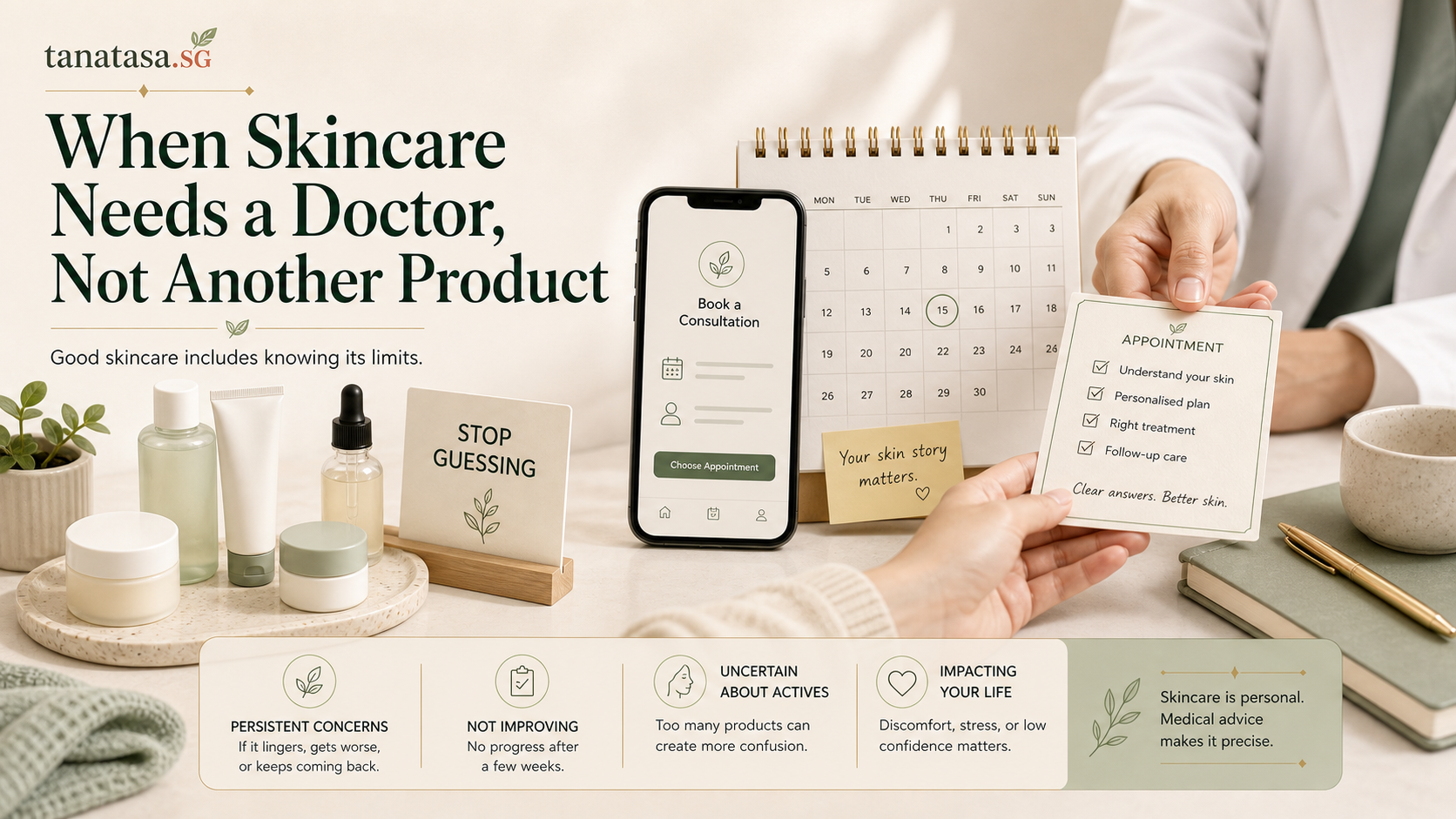
There is a point where buying another product is not the practical move. Skincare content can help you choose routines, compare ingredients, and avoid obvious mistakes. It cannot diagnose infection, prescribe acne medication, assess a baby rash, decide whether eye swelling is serious, or treat a persistent eczema flare.
Knowing when to stop shopping is part of good skincare.
This does not mean every spot needs a doctor. It means some signs should move you out of the product aisle and into proper care earlier than your cart would like.

Pain Is Not A Normal Skincare Milestone
Mild tingling from some products can happen, though it is often over-normalised. Pain is different. Burning, rawness, severe stinging, throbbing, swelling, or tenderness that does not settle should not be treated as proof that a product is working.
If a product causes intense discomfort, wash it off if appropriate, stop using it, and monitor the skin. If symptoms are severe, spreading, or involve the eyes, lips, breathing, or swelling, seek urgent medical advice.
Do not keep applying an active because the internet said "no pain, no gain". Skin is not a gym slogan.
Infection Signs Need Proper Assessment
Seek medical advice for skin that looks infected: pus, spreading redness, warmth, swelling, increasing pain, crusting that worsens, fever, red streaks, or wounds that do not heal. This is especially important for broken eczema patches, picked acne, cuts, burns, and baby skin.
Cosmetic skincare is not designed to treat infection. Applying acids, retinoids, masks, or random antiseptic products can delay proper care and make irritation worse.
If you are unsure whether something is infected, that uncertainty itself is a good reason to ask a healthcare professional.
Severe Or Scarring Acne Should Not Wait Forever
Retail acne products can help mild acne, but acne that is deep, painful, cystic, scarring, or emotionally distressing deserves medical attention. Early treatment can reduce scarring and months of trial-and-error spending.
Signs to seek help include:
Painful deep bumps.
Acne leaving pits or dark marks repeatedly.
Sudden severe acne.
Acne not improving after reasonable over-the-counter care.
Acne affecting confidence, sleep, school, work, or social life.
Acne during pregnancy where ingredient safety is uncertain.
A GP, polyclinic doctor, dermatologist, or appropriate healthcare professional can discuss options that retail shelves cannot provide.
Eczema Flares Are Not Always A Moisturiser Problem
Moisturiser is important for eczema-prone skin, but persistent flares may need more than body lotion. If skin is cracked, bleeding, oozing, infected-looking, very itchy, affecting sleep, or recurring despite a simple routine, get advice.
Steroid fear is common online, and it can make people avoid proper treatment. Topical steroids and other medicines should be used under appropriate guidance, not feared blindly or used casually. Cosmetic products can support the barrier, but they should not pretend to replace medical eczema care.
If a product claims to cure eczema while presenting itself as a cosmetic, be cautious.
Baby Skin Gets A Lower Threshold
Baby rashes are common, but babies also deserve a lower threshold for advice. Seek medical help if the rash spreads quickly, looks infected, is blistering, oozing, bleeding, paired with fever, causes significant discomfort, or does not improve.
Do not keep rotating baby creams because each one says gentle. Too many changes can make it harder to know what is helping. Bring product names, photos, and a timeline when seeking care.
For newborns, very young babies, or any symptom that worries you, ask earlier rather than later.
Eye-Area Reactions Deserve Respect
The eye area is not a place to experiment aggressively. Swelling around the eyes, eyelid rash, severe itching, pain, vision changes, or reactions that keep returning should be assessed.
The cause may not be eye cream. Sunscreen, nail products, hair products, fragrance, cleanser, shampoo, makeup, lash glue, or hand transfer can all affect eyelids. Repeatedly buying new eye creams without identifying the trigger can make the cycle longer.
If eyes are swollen or painful, get proper advice.
Sudden Widespread Rashes Are Different From Routine Irritation
A small area of irritation after a new product is one thing. A sudden widespread rash, hives, swelling, fever, or symptoms beyond the area where the product was applied is different. Seek medical advice promptly, especially if symptoms are progressing.
If there are signs of severe allergic reaction, breathing difficulty, facial swelling, or feeling faint, seek emergency care.
Skincare troubleshooting should never delay urgent care.
Product Reactions Need A Timeline
If you suspect a product reaction, stop the likely trigger and simplify. Do not add new actives to "fix" the reaction. Keep a record:
Product name.
Date started.
Where applied.
How often used.
Other products used.
When symptoms appeared.
Photos if possible.
This helps a healthcare professional and helps you avoid repeating the same mistake.
What To Bring When You Seek Help
Bring or note:
Photos over time.
Product names and ingredient lists if available.
Timeline of symptoms.
Existing conditions.
Medicines or treatments already used.
Any recent facials, peels, lasers, hair dye, or new products.
Whether symptoms itch, hurt, burn, ooze, or spread.
The goal is not to prove you did everything right. The goal is to get a clearer answer faster.
Where To Start In Singapore
Depending on severity and access, people may start with a GP, polyclinic, pharmacist for minor product-selection advice, dermatologist, or urgent care if symptoms are serious. For severe allergic symptoms or urgent infection concerns, seek urgent medical help.
The right route depends on the problem. A persistent rash, scarring acne, or baby skin concern is different from choosing between two moisturisers.
Bottom Line
Good skincare includes knowing its limits. Pain, infection signs, severe or scarring acne, persistent eczema, baby rashes, eye swelling, sudden widespread reactions, and symptoms that keep returning should not be solved by another cart.
Sometimes the smartest product decision is not buying one. Get the skin properly assessed, then use skincare to support the plan instead of guessing around it.