Is Expensive Skincare Worth It? Singapore's Retail Tiers Explained
The drugstore vs luxury framing does not translate to Singapore. Here is how to think about the actual retail tiers available here, and where price genuinely correlates with quality.

The "expensive vs drugstore" framing for skincare does not translate cleanly to Singapore. In markets like the US or UK, the divide is relatively clear: drugstore brands (sold in pharmacies and supermarkets) versus department store or specialty retailer brands. Singapore does not have the same retail structure, and the quality gap between price tiers is not consistent in the way the framing implies.
Singapore has its own distinct skincare retail landscape, and understanding it changes how you think about where to spend and where to save. The short answer: price correlates with quality in some product types and barely at all in others. Being specific about which is which is far more useful than any blanket rule.
The Singapore skincare retail landscape
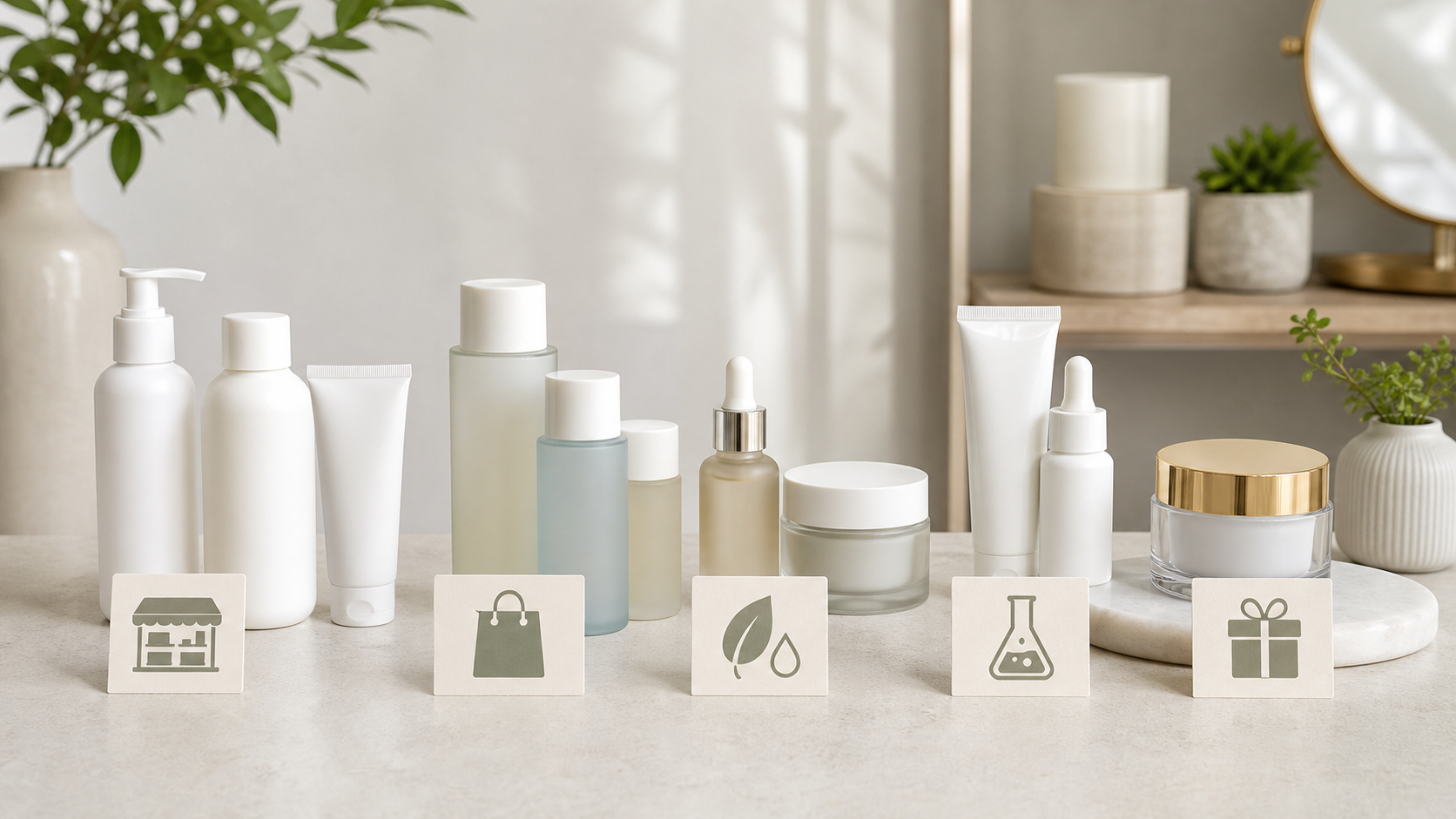
Before evaluating value, it helps to understand the tiers available here.
Pharmacy chains: Watsons, Guardian, Unity
These are the closest equivalent to what Western markets call "drugstore". They carry a mix of local brands, Japanese and Korean mass-market labels, and some European brands. Price range roughly S$10 to S$60 for most products. Quality is highly variable. Some excellent, well-formulated products sit on these shelves alongside products with much less to recommend them. Hada Labo, Biore, Cetaphil, and Eucerin are pharmacy-tier in Singapore and represent genuinely good value.
Korean and Japanese beauty channels
K-beauty and J-beauty deserve their own category. Standalone stores (Innisfree, Etude, The Face Shop), multi-brand Korean beauty retailers, and online platforms (Shopee, Lazada with brand-direct stores, Olive Young via forwarding) give access to a broad range of well-formulated products at mid-range prices. Korean and Japanese brands have historically been formulated for hot, humid summers, which makes many of them unusually well-suited to Singapore. This tier spans roughly S$20 to S$80 and punches above its price class in many categories.
Mid-range international brands
Brands like The Ordinary, Paula Choice, CeraVe, La Roche-Posay, and Avene fall in this range, typically sold at Sephora, Watsons, Guardian, or brand-direct. These brands tend to be evidence-oriented, ingredient-transparent, and well-formulated. Price range S$20 to S$120. This is where the best value-for-efficacy frequently sits for targeted actives.
Clinical and dermatologist brands
Brands like SkinCeuticals, Medik8, Obagi, and some ranges from Avene or La Roche-Posay at higher concentrations sit in this tier. Often recommended directly by dermatologists, they tend to have stronger formulations, better delivery systems for difficult actives, and clinical evidence behind specific products. Price range S$80 to S$300+. The premium is sometimes genuinely justified, sometimes less so.
Luxury brands
The top tier: SK-II, La Mer, La Prairie, Estee Lauder, Dior, Sulwhasoo. Available at department stores, airports, and standalone boutiques. Price range S$100 to S$800+ per product. The pricing is driven by brand equity, packaging, fragrance, heritage, and marketing. Some products are genuinely excellent. Many charge a significant premium for factors that have no bearing on your skin.
What you are actually paying for at higher price points
Understanding what drives the price of a skincare product helps assess whether it is worth paying.
Research and clinical testing: developing and validating a genuinely novel delivery system or proving that a specific formulation produces clinical outcomes costs real money. Brands that invest here can legitimately charge more for specific products. The challenge is that most luxury brands do not make their clinical data public or peer-reviewed, making it hard to verify claims.
Active ingredient concentration: higher levels of stable actives cost more to source and formulate. A vitamin C serum at 15% L-ascorbic acid costs more to produce than one at 5%. A retinol with sophisticated encapsulation costs more than a basic formula. Sometimes the premium price reflects genuinely better formulation.
Delivery systems: stabilised vitamin C, encapsulated retinol, liposomal peptides - these delivery systems improve both efficacy and tolerability but add cost. When a mid-range brand offers encapsulated retinol at S$80 versus a basic formulation at S$30, some of the premium may be real.
Packaging: inert, airtight packaging that protects unstable actives from light and air is a genuine functional cost. However, elaborate glass bottles with gold embossing and heavy outer boxes add to the price without benefiting your skin. The luxury feel of packaging is often a significant cost driver that provides nothing beyond aesthetics.
Fragrance and sensory experience: a large portion of luxury skincare development budgets goes into how a product smells and feels during application. A beautiful texture and subtle scent are legitimate pleasures. They are not skin benefits, and they cost money to develop.
Marketing, counters, and brand building: the elaborate counters in Takashimaya and Marina Bay Sands, the celebrity endorsements, the gift-with-purchase packaging - all of this is paid for by the price you pay. It has no bearing on what the product does to your skin.
Product types where price matters
Vitamin C serums
Stability is the central challenge with vitamin C. L-ascorbic acid (LAA) - the most potent and bioactive form - oxidises rapidly when exposed to air, light, and heat. An oxidised vitamin C product (yellow or brown in colour) has largely lost its efficacy. The packaging must be airtight and opaque. The formula must maintain a low pH to allow penetration. Getting all of this right in a way that remains stable on a Singapore shelf through warehouse and retail storage takes real formulation investment.
This is one of the categories where the premium can be legitimate. A S$30 vitamin C serum in a clear pump bottle that has been sitting in a warm Watsons stockroom may deliver far less active vitamin C than a well-packaged, properly stabilised formula at S$120. The Ordinary vitamin C offerings versus SkinCeuticals C E Ferulic (one of the most-studied vitamin C serums in dermatology, with patents on its specific formulation) represent genuinely different things, not just brand markup.
Practical guidance: for vitamin C, prioritise dark glass or opaque airtight packaging, look for formulas with additional stabilisers (vitamin E, ferulic acid), and do not buy more than you can use within three months of opening. A S$60 well-packaged formula you finish quickly is often better value than a S$150 luxury one you use until it oxidises.
Retinoids
Encapsulation matters for retinol. An encapsulated 0.3% retinol that releases slowly on the skin can outperform an unencapsulated 0.5% on both tolerability and sustained efficacy. The delivery technology costs money to develop. Mid-tier brands like Medik8 and Paula Choice have invested seriously in retinol formulation and offer products that perform better than their price might suggest against luxury alternatives.
The encapsulated retinol market is also where some Korean brands have made meaningful advances at competitive price points. Looking for "encapsulated retinol" or "time-released retinol" on the label and cross-referencing with ingredient analysis is worthwhile at this tier.
Sunscreen
A sunscreen you will actually wear in Singapore humidity every day is worth more than a technically superior formula you abandon because the texture is wrong. That said, formulating a lightweight, non-greasy, non-white-cast SPF 50 that holds up in heat and sweat does cost more than a basic thick mineral cream.
The sweet spot for Singapore is often Korean SPF, which was developed for hot and humid Korean summers and translates well to year-round tropical conditions. Products from Missha, Skin Aqua, Beauty of Joseon, and Anessa (Japanese, but similar formulation ethos) offer excellent textures at S$20-45, which is meaningfully lower than most European premium sunscreens while being better suited to Singapore conditions.
Clinical-grade actives with specialist delivery
PDRN serums, growth factor formulas, and peptide complexes where the delivery system determines efficacy are worth scrutinising more carefully than commodity actives. If penetration is the limiting factor (as it often is for large-molecule actives), then the delivery system is the product. Clinical-tier brands that can explain and demonstrate their delivery mechanism may be worth the premium for targeted concerns. For general use, the simpler actives with proven surface-level efficacy are more reliable choices.
Product types where price matters much less
Basic moisturisers
The core job of a moisturiser is to deliver humectants (glycerin, hyaluronic acid) to the skin surface and prevent excessive water loss. These ingredients are widely available commodity materials. A well-formulated S$15 Hada Labo Gokujyun lotion achieves this as effectively as a S$250 luxury moisturiser with the same core humectant function - which is most of them. The difference is texture, fragrance, and brand experience, not measurable skin outcome.
This is perhaps the clearest "save here" category. Spend money on your actives (vitamin C, retinol, targeted treatments). Keep your moisturiser simple and affordable.
Cleansers
Cleansers are on the skin for under a minute before being rinsed off. The amount of any active ingredient that can meaningfully interact with skin in that time is minimal. A gentle, appropriately pH-balanced cleanser at S$20 cleans skin as effectively as one at S$120. If the formula is gentle and suits your skin type, the price of the cleanser has no bearing on your outcome.
The only exception: cleansing oil formulas where specific emollients might affect feel and the dissolution of certain sunscreens. Even here, the difference between a S$25 and S$80 cleansing oil is negligible for outcome.
Toners and essences (basic hydrating versions)
A basic hydrating toner - glycerin and water with perhaps some panthenol or centella - is cheap to produce. A S$12 Korean toner and a S$90 branded essence with the same core function produce nearly identical hydration outcomes. Pay more only when the toner contains meaningful concentrations of actives (AHAs, BHAs, niacinamide at effective percentages) that justify the cost.
Sheet masks
Sheet masks deliver actives in prolonged contact with the skin (15-20 minutes), but the permeability of the skin limits how much can actually be absorbed in that window. The difference between a S$2 Korean sheet mask and a S$20 luxury sheet mask in actual skin outcome is minimal for most uses. They are a pleasant experience and useful for targeted occasions (hydration before an event, calming after sun exposure), but the premium price in this category is largely for the experience rather than the outcome.
How to evaluate ingredient value
Reading an ingredient list takes a few minutes and gives you more useful information than any marketing copy.
Ingredients are listed in descending order of concentration. The first five to ten ingredients make up the bulk of the formula. An active ingredient listed near the bottom of a 30-ingredient list is likely present at trace concentration - included for label claims rather than meaningful effect. This is called "fairy dusting."
A product marketed on its snail mucin, PDRN, or peptide content should have those ingredients in the top half of the list to be meaningful. A luxury moisturiser that lists a featured botanical in position 28 out of 30 ingredients is using that botanical as a claim, not as an active.
Useful resources available in Singapore: INCIdecoder.com explains every ingredient in plain English with safety and function notes. COSDNA flags comedogenicity and irritation concerns. Both are free. Spending ten minutes on one of these before buying a new product is often more useful than reading reviews.
The dupe question in Singapore
Product dupes - alternatives that aim to replicate the effect of more expensive products at a lower price - are worth approaching with some precision.
Dupes work when: the hero function of the expensive product relies on commodity actives (niacinamide, glycerin, ceramides, hyaluronic acid) that are widely available, the concentration is comparable, and the formulation is genuinely similar. CeraVe versus luxury ceramide creams is a well-supported comparison.
Dupes do not work when: the expensive product relies on patented delivery technology, a specific synergistic formula, or a clinical-grade active at concentrations not achievable in mass-market production. A S$20 "vitamin C dupe" of SkinCeuticals C E Ferulic in a pump bottle with an unstable formula is not a dupe - it is a different product.
On Shopee and Lazada: the dupe conversation gets complicated when products are not from authorised retailers. Counterfeit skincare is a documented problem on these platforms. Buy through brand-official stores or authorised retailers to ensure you are getting what is on the label.
The Singapore verdict: where to spend and where to save
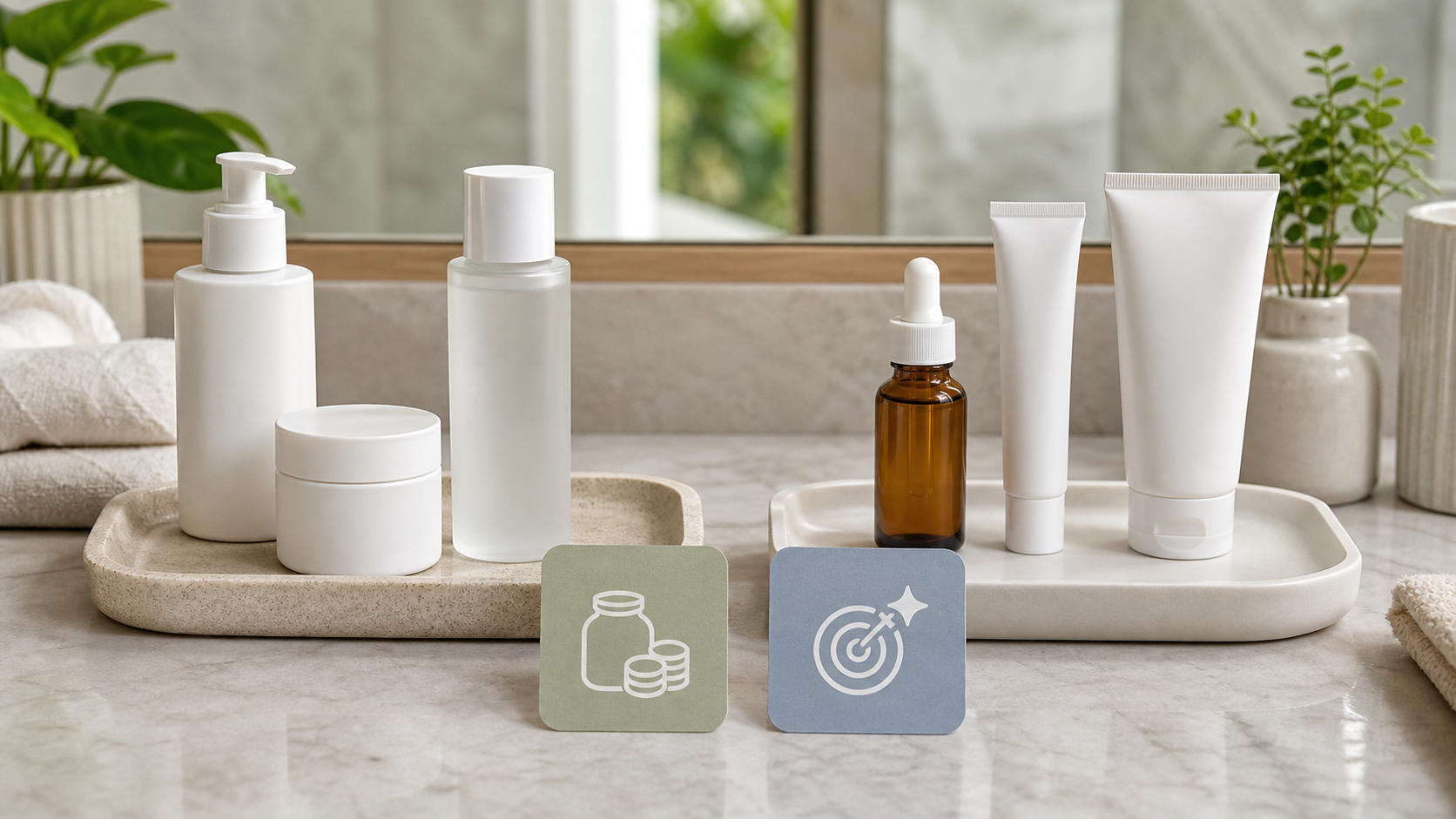
Save confidently: cleanser, basic moisturiser, hydrating toner, sheet masks. Korean and Japanese pharmacy-tier products deliver excellent value here. Hada Labo, Cosrx, Cetaphil, CeraVe in this category are as good as what is available at any price point for basic function.
Spend modestly but thoughtfully: sunscreen (Korean SPF in the S$25-45 range is the sweet spot for Singapore), niacinamide serums (The Ordinary, Cosrx, and Skin1004 are all well-formulated at low cost), BHA exfoliants, ceramide products.
Spend more deliberately when justified: vitamin C serums where packaging and formulation stability are worth paying for, retinoids where encapsulation is the differentiating factor, any specialist active where the delivery system determines whether it works.
Be sceptical of the premium: luxury moisturisers and essences where the hero function is basic hydration, any product where the featured active is listed at the bottom of a long ingredient list, products where the price premium is clearly going to packaging, counter real estate, and brand heritage rather than formulation quality.
The question to ask about any skincare purchase is not "is this the best?" but "does the premium over a simpler alternative represent a real difference in what it does to my skin?" For most product types in most routines, the answer is no.