When Your Skin Barrier Is Tired of Your Routine
When skin stings, flakes, burns with moisturiser, or looks shiny-tight, the answer may not be another active. It may be a barrier reset.
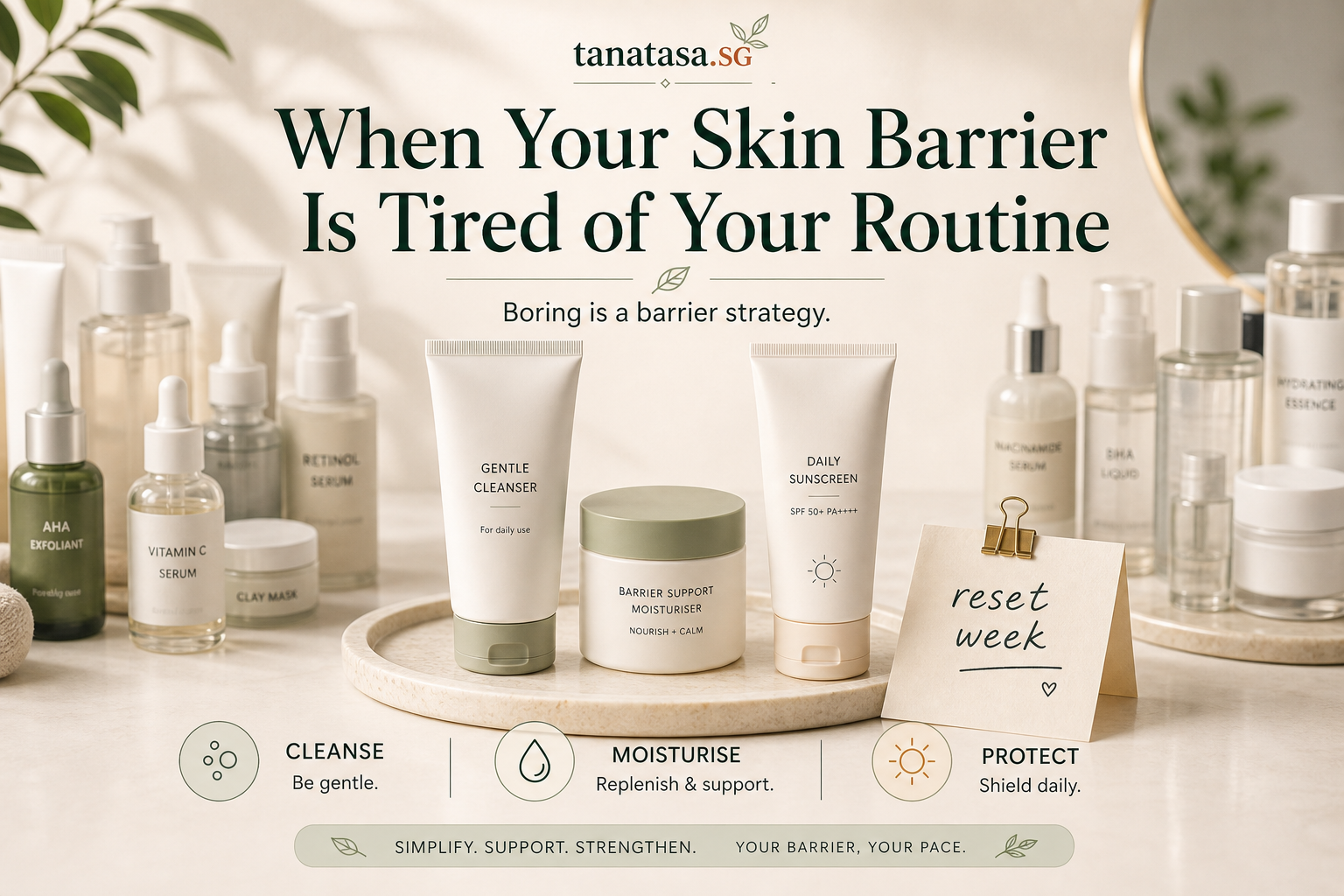
A tired skin barrier often announces itself in a way that feels confusing. The face looks shiny but dry. Moisturiser suddenly stings. Sunscreen burns. Skin flakes around the mouth and nose. Products that used to be fine now feel spicy. Breakouts appear, but the skin also feels raw. The first instinct is to buy something stronger.
That instinct is understandable. It is also often the wrong move.
When the skin barrier is irritated, the goal is not to win a fight with more actives. The goal is to reduce friction long enough for the skin to calm down. Barrier repair is not glamorous, but it is the reason the rest of the routine can work.
What The Skin Barrier Does
The skin barrier helps keep water in and irritants out. When it is working well, skin feels more comfortable, tolerates products better, and recovers more predictably. When it is stressed, everyday products can suddenly sting because the surface is less able to handle them.
Barrier trouble can come from many things: over-cleansing, exfoliating too often, retinol used too aggressively, benzoyl peroxide, strong vitamin C, scrubs, facial treatments, harsh masks, frequent shaving, picking, weather changes, air-conditioning, illness, or simply changing too many products at once.
The important point is that barrier stress is often cumulative. One product may not be the villain. The routine load may be too high.
Signs Your Barrier Needs A Break
Common signs include:
Burning or stinging from plain moisturiser.
Tight, shiny skin that still feels dry.
Flaking or rough patches.
Redness that appears easily.
Itching or sensitivity after normal products.
Increased breakouts with irritation.
Sunscreen suddenly feeling uncomfortable.
Skin around the mouth, nose, or eyes becoming reactive.
These signs do not always mean barrier damage, and persistent symptoms should be assessed properly. But they are strong clues that adding another active is not the first step.

Stop The Pressure Points
The first reset move is to pause the products most likely to keep the cycle going.
Temporarily stop exfoliating acids, retinoids, scrubs, peels, strong vitamin C, strong acne spot treatments, fragranced masks, and anything that burns repeatedly. If you are using prescription treatment, check with your healthcare professional before stopping or changing it.
Do not keep testing new products to find the one magical repair item. Every new product is another variable. The barrier reset should be boring on purpose.

Keep The Routine Small
A basic reset routine usually looks like this:
Morning:
Gentle cleanse or rinse if cleansing is too much.
Moisturiser.
Sunscreen that your skin can tolerate.
Night:
Gentle cleanse.
Moisturiser.
Optional occlusive layer on dry areas if suitable.
That is enough for many people. The point is to reduce stimulation, not to build a ten-step "barrier repair routine" that becomes another source of irritation.
If sunscreen stings during a barrier flare, try a different gentle formula, use protective shade, hats, and avoid unnecessary sun exposure while the skin recovers. Do not simply skip UV protection and continue actives.
Choose Supportive Textures
Barrier-support products usually focus on humectants, emollients, and occlusives: ingredients that attract water, soften skin, and reduce water loss. You may see glycerin, hyaluronic acid, ceramides, panthenol, petrolatum, dimethicone, squalane, fatty alcohols, cholesterol, or simple plant oils depending on the formula.
The exact ingredient list matters less than whether the formula feels comfortable and does not sting. For some people, a gel cream is enough. For others, especially flaky or tight areas, a richer cream or ointment layer may help.
Avoid assuming "natural" means safer during a barrier flare. Essential oils, botanical extracts, and fragrance can be irritating for some people, especially when the skin is already reactive.
How Long Should A Reset Take?
There is no universal timeline. Mild irritation may calm in a few days. A more stressed barrier may take one to three weeks or longer. If symptoms are severe, worsening, oozing, swollen, infected-looking, or persistent, seek medical advice instead of waiting indefinitely.
A good sign is when plain moisturiser no longer stings, sunscreen feels tolerable again, flaking reduces, and skin feels less tight. Do not restart actives the first morning your skin looks slightly better. Give it a little more time than your impatient brain wants.
Reintroduce One Product At A Time
When skin is calm, bring products back slowly. Start with the product that matters most to your concern, not the product you miss most emotionally.
For example:
If acne is the main issue, restart one acne treatment at low frequency.
If texture is the main issue, restart retinol slowly.
If pigmentation is the main issue, choose one brightening product and keep sunscreen consistent.
If exfoliation caused the problem, do not restart at the same schedule.
Use one active for a while before adding another. If irritation returns, you will know what changed.
Do Not Repeat The Same Frequency
One of the most common reset mistakes is restarting at the exact routine that caused the issue. If nightly retinol plus acid toner caused stinging, do not return to nightly retinol plus acid toner as soon as skin calms.
Restart lower:
Once or twice a week instead of daily.
Over moisturiser instead of bare skin.
Smaller amount.
Fewer active categories.
More recovery nights.
This is not losing progress. It is building a routine your skin can actually maintain.
Barrier Repair Versus Product Allergy
Barrier irritation and allergic contact dermatitis can overlap in how they feel to a shopper, but they are not the same. If you repeatedly react to a specific product, fragrance, preservative, sunscreen, hair dye, or topical ingredient, you may need medical assessment or patch testing.
Seek care if you have swelling, blistering, intense itch, spreading rash, eye involvement, oozing, or a reaction that does not settle. Do not keep experimenting with similar products if the pattern is getting clearer and worse.
Singapore Routine Traps
The most common local routine traps are not exotic. They are ordinary:
Cleansing after every sweaty moment with a harsh cleanser.
Using exfoliating pads because skin feels "dirty".
Sleeping in strong air-conditioning without enough moisturiser.
Adding retinol while still using acne actives.
Buying several new products during a sale and opening all of them.
Doing a facial, then testing new actives at home.
None of these make someone careless. They are just easy patterns to fall into when products are accessible and routines feel urgent.
Bottom Line
When the skin barrier is tired, the smartest routine is usually smaller. Stop the pressure points, keep cleansing gentle, moisturise properly, use tolerable sunscreen, and wait until the skin is truly calm before reintroducing actives.
Barrier repair is not a detour from good skincare. It is the foundation that allows good skincare to work without turning your face into a reaction log.


