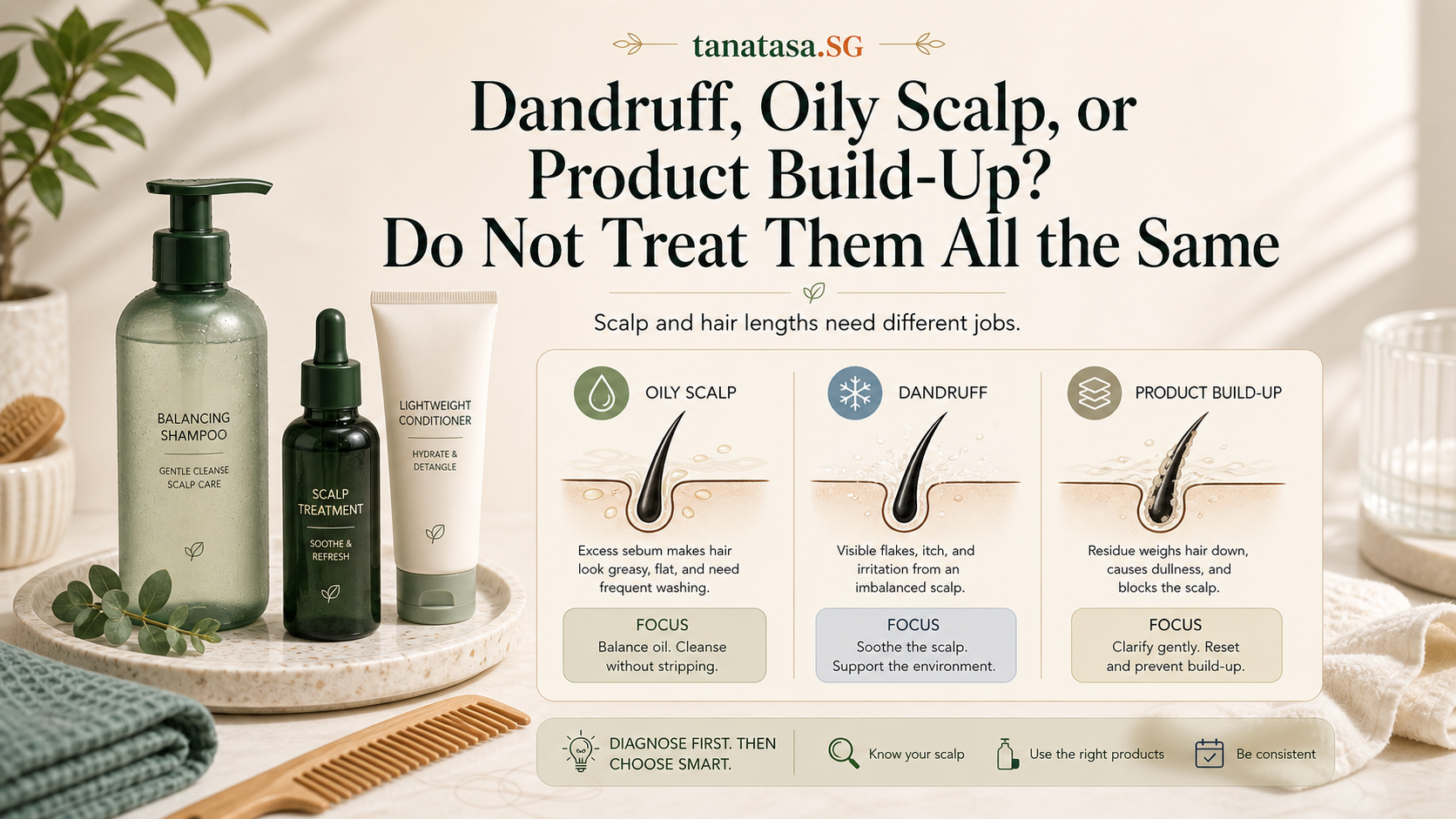
Scalp Acne, Dandruff, or Product Build-Up? How to Tell
Scalp bumps and flakes can come from acne, dandruff, follicle irritation, product build-up, sweat, or hair-care habits. Here is how to read the pattern.

# Scalp Acne, Dandruff, or Product Build-Up? How to Tell
Scalp problems are easy to ignore until they become itchy, flaky, sore, or visible at the hairline. Then the guessing begins. Is it scalp acne? Dandruff? Product build-up? Folliculitis? Dry scalp? Hair oil? Sweat? Shampoo that is too harsh?
The scalp is skin, but it is skin covered by hair, oil, sweat, styling products, and sometimes helmets, caps, scarves, or humid weather routines. That makes patterns harder to read.
The first step is not buying the strongest shampoo. It is figuring out what kind of problem you are seeing.

Scalp acne can feel like pimples
Scalp acne may appear as tender bumps, small pimples, clogged follicles, or sore spots under the hair. It may be worse near the hairline, crown, nape, or areas where sweat and product collect.
It can be influenced by oil, sweat, occlusive hair products, helmets, hats, friction, and not washing often enough for your scalp.
If bumps feel like pimples and are not mainly flaky, acne or follicle congestion may be part of the picture.
Dandruff is usually about flakes and itch
Dandruff often shows as flakes, itch, oiliness, or scalp irritation. It may be mild and powdery or more greasy and stubborn. Some people also get redness or scaling around the hairline, eyebrows, ears, or nose folds.
Dandruff is not simply dry scalp. It often involves oil and scalp yeast-related activity, which is why anti-dandruff shampoos can help.
If your main issue is flakes and itch rather than pimples, dandruff-focused care may be more relevant than acne products.
Product build-up feels different
Product build-up can happen when styling creams, oils, dry shampoo, leave-ins, sunscreen, sweat, and sebum accumulate. The scalp may feel coated, itchy, heavy, or not clean even after washing. Hair may look flat, greasy, or dull.
Build-up can also irritate follicles and contribute to bumps.
If symptoms started after adding hair oil, leave-in conditioner, scalp serum, dry shampoo, or styling product, consider that product as a suspect.
Washing frequency is personal
Some scalps need frequent washing. Others become dry or irritated with daily shampoo. There is no universal schedule.
If you sweat heavily, use styling products, wear helmets or caps, or have an oily scalp, washing too infrequently may worsen bumps and build-up. If your scalp is dry or eczema-prone, harsh daily washing may worsen itch.
The right frequency is the one that keeps your scalp comfortable without stripping it.
Shampoo choice matters
For dandruff, anti-dandruff shampoos with ingredients such as ketoconazole, zinc pyrithione where available, selenium sulfide, salicylic acid, or other dandruff-targeting agents may help depending on product access and suitability.
For build-up, a clarifying shampoo used occasionally may help, but overuse can dry the scalp and hair.
For scalp bumps, a gentle but thorough shampoo routine may be enough for mild cases, while persistent painful bumps may need proper advice.
Contact time matters for treatment shampoos
Many treatment shampoos need brief contact time on the scalp before rinsing. If you apply and rinse immediately, the product may not work as intended.
Follow the label directions. Use on the scalp, not just the hair lengths. Rinse thoroughly.
Do not leave strong shampoos on far longer than directed because you think more is better. Irritated scalp can become itchier.

Hair products can cause face and back issues too
Hair products do not stay politely on the hair. Conditioner, oils, leave-ins, and styling creams can touch the forehead, temples, neck, shoulders, and back.
If you have breakouts near the hairline, jaw, neck, shoulders, or upper back, hair products may be part of the pattern.
Rinse conditioner well. Wash the back after hair treatments. Keep heavy oils away from acne-prone areas if they seem to trigger bumps.
Do not scratch aggressively
Itchy scalp invites scratching, but scratching can break the skin and worsen inflammation. It can also create scabs that feel like bumps, making the original problem harder to identify.
Keep nails gentle. Treat the itch pattern rather than repeatedly scraping the scalp.
If the scalp is painful, bleeding, crusting, or oozing, get advice.
When it may need medical care
Seek advice if scalp bumps are painful, pus-filled, spreading, causing hair loss, crusting, bleeding, or not improving. Also get help for severe dandruff, thick scaling, persistent itch, or symptoms that involve the face and ears.
Scalp psoriasis, seborrheic dermatitis, folliculitis, eczema, fungal infections, and other conditions can overlap in appearance.
The scalp is not easy to diagnose from a mirror and a search result.
A practical reset
For one to two weeks, simplify. Use a suitable shampoo consistently. Pause heavy scalp oils, dry shampoo overload, and new leave-ins. Rinse thoroughly. Wash after heavy sweating if needed. Keep conditioner mainly on lengths if your scalp is oily or bump-prone.
If flakes dominate, try a dandruff-focused shampoo according to directions. If build-up dominates, consider occasional clarifying. If painful bumps dominate, do not keep escalating random hair products.
Track what changes.
Pattern examples
If your scalp has sore isolated bumps after wearing a helmet or sweating heavily, friction and follicle irritation may be involved. If the scalp has flakes, itch, and oiliness that returns quickly after washing, dandruff-style care may be more relevant. If the hair feels coated and heavy after styling products, build-up may be part of the issue.
If bumps cluster around the hairline and forehead, think about hair products, sunscreen, makeup removal, and sweat. If the nape is irritated, think about collars, helmets, hair products, and shaving or trimming habits.
Patterns do not diagnose, but they help you stop treating every scalp issue the same way.
Shampoo troubleshooting plan
Change only one thing at a time. If you suspect build-up, use a clarifying shampoo occasionally and reduce heavy styling products. If you suspect dandruff, use a dandruff shampoo according to directions for several weeks. If you suspect harsh cleansing, switch to a gentler shampoo and reduce aggressive scrubbing.
Track itch, flakes, bumps, oiliness, and soreness. A scalp routine needs enough consistency to show whether it is working.
Do not rotate five shampoos randomly and expect clarity.
The practical view
Scalp acne, dandruff, and product build-up can overlap, but they are not the same. Pimples, flakes, itch, oiliness, and coated feeling point in different directions.
Read the pattern. Adjust washing frequency. Use treatment shampoos properly. Watch hair products that touch the face and back. Avoid scratching. Get advice for painful, spreading, pus-filled, scaly, or hair-loss-related symptoms.
Scalp care is skincare with hair in the way. It deserves the same calm troubleshooting and patience.