Dandruff, Oily Scalp, or Product Build-Up? Do Not Treat Them All the Same
Oily roots, dandruff, flakes, sweat, irritated scalp, and product build-up can look like one hair problem, but they need different shopping decisions.
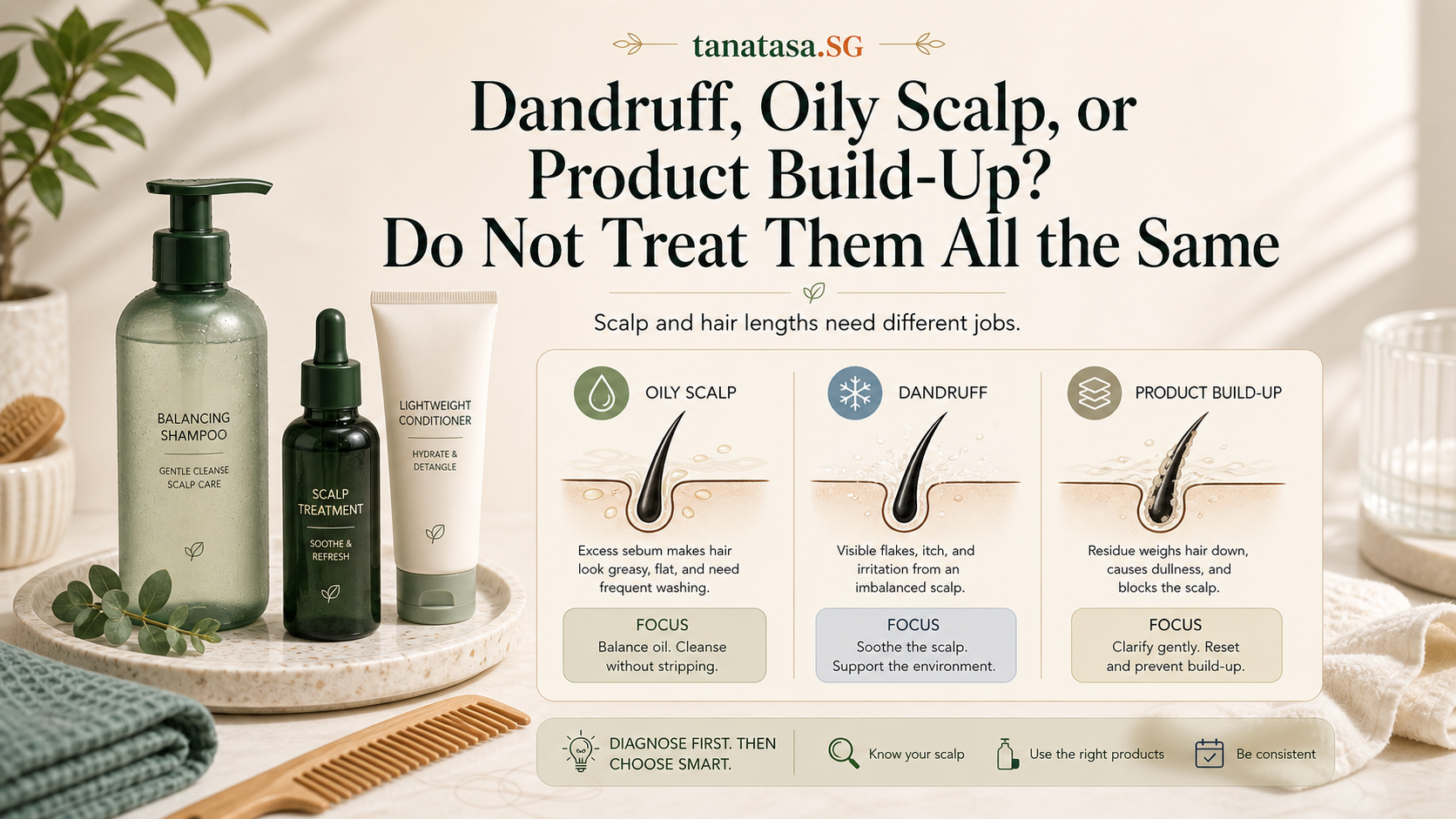
Scalp problems often get collapsed into one complaint: my hair gets oily so fast. But oily roots, dandruff, sweat, styling residue, dry flakes, irritated scalp, and product build-up are not the same problem. Treating all of them with harsher washing can leave the scalp unhappy and the hair lengths dry.
The better starting point is to separate the scalp from the hair lengths. The scalp is skin. The lengths are hair fibre. They live in the same routine, but they do not always need the same product strategy.
Once you make that distinction, shampoo shopping becomes much less random.

Oily Roots Are Usually A Scalp-Cleansing Problem
If your scalp feels greasy or heavy by the end of the day, focus shampoo on the scalp. Massage gently with fingertips, not nails, and rinse thoroughly. Conditioner should usually stay from mid-length to ends unless the product is specifically designed for scalp use.
People often apply conditioner too close to the roots, then blame the shampoo for not working. Heavy leave-ins, hair oils, masks, sunscreen near the hairline, and styling products can also make roots feel coated.
Oily roots do not automatically mean you need the harshest clarifying shampoo every day. You may need better placement, better rinsing, or a shampoo texture that cleans without making the scalp feel stripped.
Sweat Is Not The Same As Oil
In Singapore routines, sweat can make the scalp feel dirty even when oil production is not the main issue. After workouts, outdoor errands, commuting, or helmet use, the scalp may feel uncomfortable because sweat, salt, and product residue are sitting there.
Some people need more frequent washing. That is fine. The key is to keep the wash gentle enough for the frequency. If you wash often with a very harsh shampoo, the hair lengths may become rough while the scalp still feels reactive.
If you need to wash frequently, treat conditioner as non-negotiable for the lengths.
Dandruff Is Not Just Dry Scalp
Dandruff often appears as recurring flakes with itch or scalp discomfort. It is not always caused by dryness. In many cases, dandruff relates to scalp oil, yeast activity, and inflammation. That is why simply applying oil to the scalp can sometimes make things worse.
Anti-dandruff shampoos can help, but they need to be used consistently and according to directions. Many people try once or twice, switch too quickly, and never know whether the product had enough time to work.
If the scalp is painful, very inflamed, oozing, bleeding, or not improving, seek medical advice. Persistent scalp issues may need proper diagnosis.
Dry Flakes Need A Different Read
Not every flake is dandruff. Dry flakes can happen from over-washing, harsh shampoo, scalp irritation, weather changes, or product reaction. These flakes may feel different from oily dandruff flakes, and the scalp may feel tight rather than greasy.
If flakes started after a new shampoo, hair dye, scalp serum, fragrance-heavy product, or frequent clarifying wash, consider irritation. The answer may be to simplify, not to add more medicated products immediately.
This is where timeline matters. What changed before the flakes started?
Product Build-Up Is Often About Placement
Hair oil, leave-in conditioner, dry shampoo, styling cream, gel, hairspray, sunscreen near the hairline, and masks can all build up. Sometimes the scalp feels dirty because product is sitting there, not because it is producing too much oil.
Common build-up clues:
Hair feels coated soon after washing.
Roots look flat even when clean.
Shampoo does not lather as usual.
Scalp feels itchy after styling products.
The hairline breaks out or feels congested.
The fix may be using less product, keeping products away from the roots, rinsing better, or using a clarifying wash occasionally. It is not always a reason to scrub the scalp daily.
Hair Lengths Need Protection From Scalp Decisions
The scalp may need more cleansing while the ends need more conditioning. Do not punish the ends because the roots are oily.
Apply shampoo mainly to the scalp. Let the rinse carry enough cleanser through the lengths unless there is heavy product there. Apply conditioner from mid-length to ends. Use hair oil sparingly on the ends if needed, not as a scalp treatment unless the product is designed for that.
This one change helps many routines: scalp products for scalp, conditioning products for lengths.

Anti-Dandruff Shampoo Needs Method
If using an anti-dandruff shampoo, read directions. Some need contact time before rinsing. Some are used several times a week at first, then less often for maintenance. Some can be drying, so conditioner on the lengths becomes more important.
Do not judge only by how the hair feels after one wash. Judge by scalp itch, flake reduction, comfort, and whether the product can fit your routine.
If one active type does not work, another may be needed, but persistent problems should not become endless shelf experimentation.
When To Seek Medical Advice
Get advice if you have:
Painful scalp.
Thick scaling.
Bleeding, oozing, or sores.
Hair loss patches.
Severe itch affecting sleep.
Redness spreading beyond the scalp.
No improvement after reasonable anti-dandruff use.
Symptoms after hair dye or chemical treatments.
Scalp conditions can overlap. Psoriasis, seborrhoeic dermatitis, eczema, fungal infection, contact dermatitis, and other issues can look similar to a shopper. A correct diagnosis can save time and hair damage.
A Practical Shopping Map
If roots are oily:
Choose a scalp-focused shampoo.
Keep conditioner away from roots.
Rinse thoroughly.
Watch leave-in placement.
If flakes are recurring and itchy:
Consider anti-dandruff shampoo.
Use consistently as directed.
Avoid coating the scalp with random oils.
If hair feels coated:
Check styling product build-up.
Reduce product amount.
Consider occasional clarifying.
If ends are dry:
Condition mid-lengths and ends.
Use oil sparingly.
Do not over-cleanse the lengths.
Bottom Line
Dandruff, oily scalp, sweat, build-up, and dry hair lengths should not be treated as one problem. The scalp needs the right cleansing or treatment. The lengths need protection and conditioning.
Good scalp care is not about washing harder. It is about identifying the pattern, using the right product for the right zone, and getting proper help when the scalp is inflamed, painful, or persistent.
Compare the exact shampoo before buying
Browse the dandruff-care collection to compare the product name, stated use, bottle size, directions and current availability. A brand may sell ordinary shampoo, anti-dandruff shampoo and conditioner in similar packaging; these are not interchangeable.
Before ordering, check the formula and its own instructions. Some dandruff shampoos need time on the scalp before rinsing. Follow the individual label rather than borrowing a schedule from a different product. The American Academy of Dermatology explains how to use dandruff shampoo.
For broader washing and conditioning choices, compare the hair-care collection. This guide cannot diagnose the cause of flaking; seek professional advice for persistent or concerning symptoms.


