Fragrance in Skincare: When It Matters and When It Does Not
Fragrance is not automatically bad, but it can matter for sensitive or reactive skin. Learn how to read labels, spot patterns, and choose calmly.

# Fragrance in Skincare: When It Matters and When It Does Not
Fragrance in skincare is one of those topics that can become extreme very quickly. Some people avoid it completely. Others love a beautiful scent and see no problem. Both experiences can be true because skin tolerance is personal.
Fragrance is not automatically bad. Many people use fragranced skincare without issues. But fragrance can matter a lot if your skin is sensitive, reactive, eczema-prone, or already irritated. It can also become relevant when you are trying to identify why products keep stinging, itching, or causing redness.
The goal is not to fear every scented product. The goal is to know when fragrance is worth questioning.
What fragrance does in skincare
Fragrance is added to make a product smell pleasant, fresh, luxurious, clean, botanical, or distinctive. It can make skincare more enjoyable. It can also hide the natural smell of ingredients.
Fragrance does not usually provide the main skincare benefit. A moisturiser moisturises because of its humectants, emollients, and barrier-supporting ingredients, not because it smells calming. A cleanser cleans because of surfactants, not because it smells like citrus.
This matters because if fragrance irritates your skin, removing it usually does not remove the product’s core function.

Fragrance versus fragrance-free
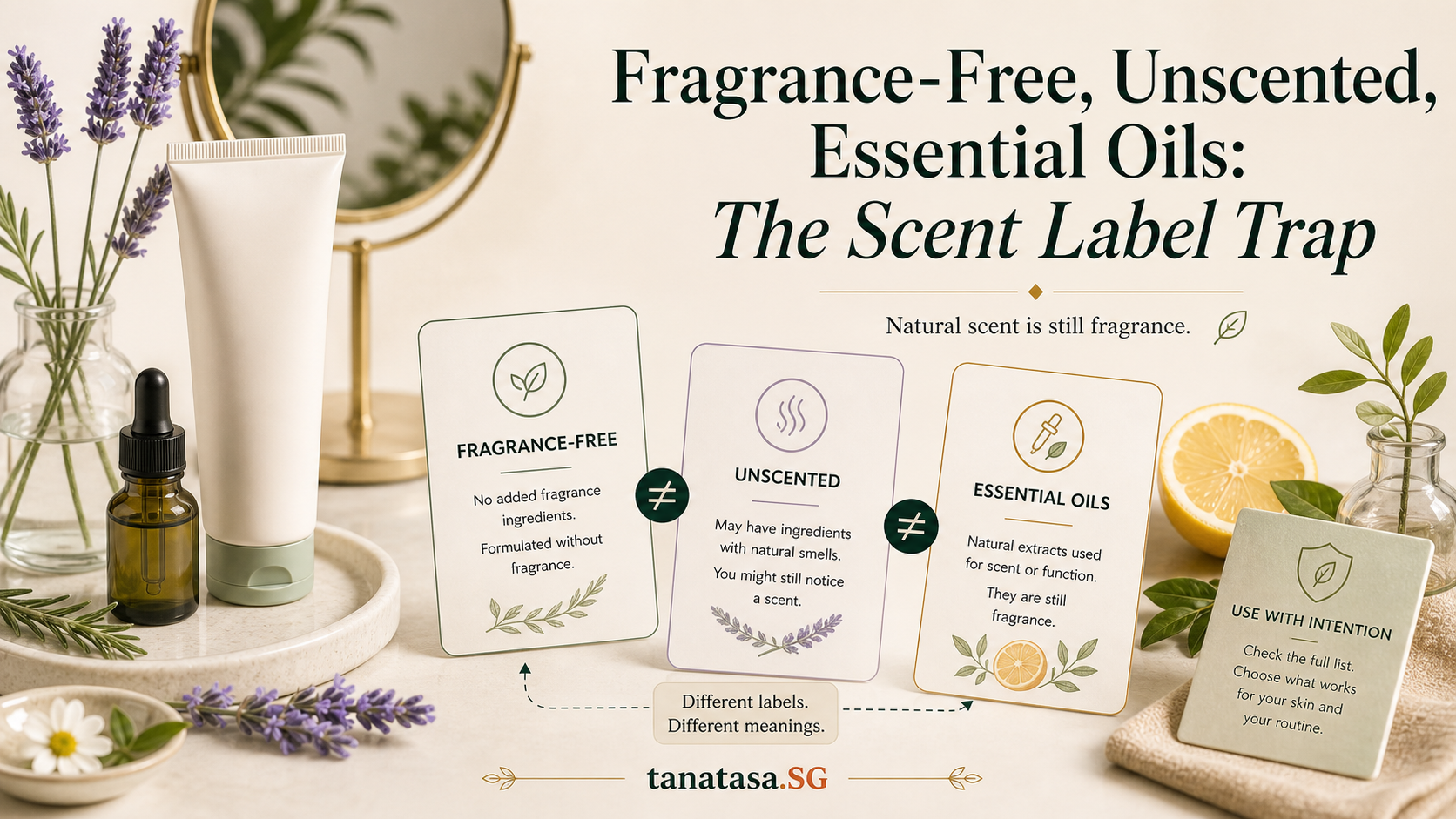
Fragrance-free usually means the product does not contain added fragrance ingredients designed to scent the formula. Unscented can be trickier: some unscented products may contain masking fragrance to hide ingredient smells.
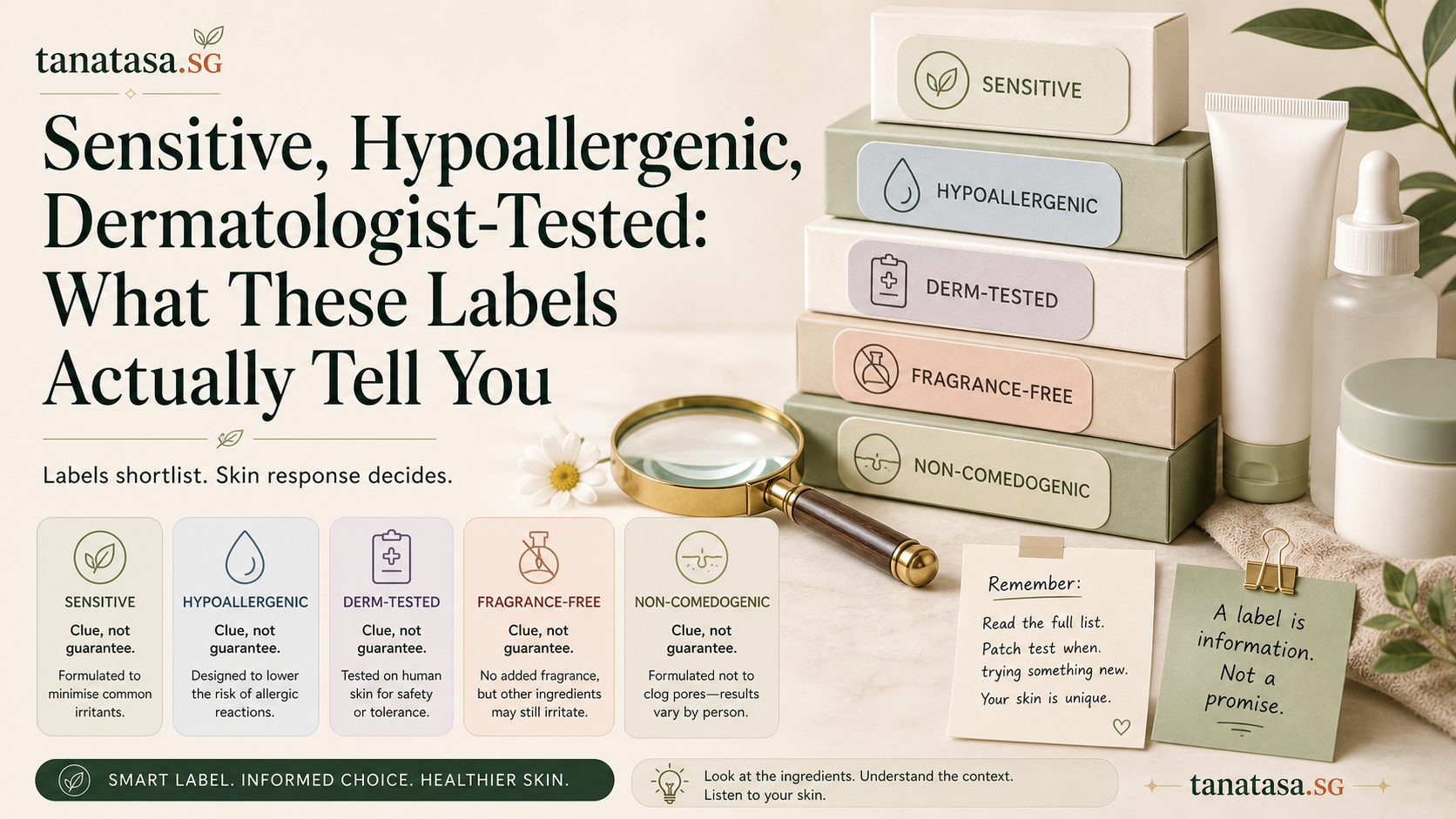
If you are very sensitive, fragrance-free is often a safer label than unscented. Still, labels are not perfect. Patch testing and personal tolerance matter.
Look at the ingredient list for words such as fragrance, parfum, aroma, essential oil names, limonene, linalool, citronellol, geraniol, eugenol, and similar fragrance allergens. These are not automatically harmful, but they are clues.
Essential oils count too
Some people assume essential oils are gentler because they sound natural. But essential oils can still irritate sensitive skin. Citrus oils, lavender oil, peppermint oil, tea tree oil, eucalyptus oil, and many botanical fragrance components can cause problems for some people.
Natural does not always mean low-risk. Synthetic does not always mean harsh. The skin reacts to chemistry, not marketing language.
If your skin is reactive, treat essential oils as fragrance unless you know you tolerate them.
When fragrance may not matter much
If your skin is healthy, comfortable, and you have used fragranced products for years without issues, fragrance may not be a priority concern. A lightly fragranced body lotion or cleanser may be fine for you.
This is especially true for rinse-off products, which stay on the skin for a shorter time. However, rinse-off fragrance can still bother very sensitive skin or areas with eczema.
The point is balance. Fragrance is not a villain for everyone.
When fragrance matters more
Fragrance becomes more worth avoiding when:
Your skin stings easily.
You have eczema, rosacea, or recurring facial rashes.
Products often make you itchy.
Your barrier is damaged.
You are using strong actives.
You are testing a new routine and need fewer variables.
Eye area or neck skin reacts easily.
You cannot identify what keeps irritating your skin.
In these situations, fragrance-free products make troubleshooting easier.
Delayed reactions can be confusing
Fragrance irritation does not always happen immediately. A product may smell lovely and feel fine on day one, then cause itching, redness, or rash after repeated use. This delayed pattern can make fragrance harder to identify.
If irritation appears after adding a scented product, stop it and observe. Do not keep adding more products to fix the reaction. Simplify first.
A skincare diary can help if your skin reacts often. Track what changed, where the reaction appears, and how quickly it happens.
Fragrance in face versus body products
The face, neck, and eye area are often more reactive than arms or legs. You may tolerate fragranced body wash but not fragranced face cream. You may enjoy scented hand cream but react to scented eye cream.
This is normal. Tolerance can vary by body area.
If you love scent, keep it where your skin tolerates it. For the face and neck, especially if reactive, fragrance-free is often the calmer choice.
Fragrance in cleansers
Fragranced cleansers can be fine for some people, but they can sting if the skin barrier is compromised. Since cleansers are rinsed off, they may be less risky than leave-on products, but harsh surfactants plus fragrance can be a difficult combination for sensitive skin.
If your face feels tight or itchy after cleansing, review both the cleansing strength and the fragrance.
Fragrance in moisturisers and serums
Leave-on products stay on the skin longer, so fragrance has more time to irritate. If you are sensitive, moisturisers and serums are good places to choose fragrance-free.
This is especially true for barrier-repair products. A calming cream that smells strong may not be calming for everyone.

How to test scented products
If you want to use a fragranced product, test it slowly. Apply to a small area for several days before using it widely. Avoid testing during a barrier flare, after exfoliation, or when your skin is already irritated.
If the product causes itching, redness, burning, or bumps, stop. Do not try to force tolerance because the product smells nice.
How to shop more calmly
If your skin is sensitive, make fragrance-free your default for face moisturiser, treatment serums, eye-area products, and recovery creams. If your skin is resilient, choose based on preference but stay observant.
Do not buy an entire scented routine at once. If irritation happens, you will not know which product caused it.
When comparing products, remember that scent is part of the experience, not proof of quality. A plain-smelling product can be excellent. A beautiful-smelling product can be unsuitable.
The bottom line
Fragrance in skincare is not automatically bad, and fragrance-free is not automatically perfect. But fragrance is a common variable worth controlling when skin is sensitive, irritated, or hard to understand.
If your skin is calm and scented products work for you, enjoy them thoughtfully. If your skin stings, itches, reddens, or reacts easily, choose fragrance-free basics and reduce the number of possible triggers.
The best skincare choice is not the one that smells most luxurious. It is the one your skin can live with comfortably.