How to Simplify a 10-Step Routine Without Losing Results
A long routine can feel luxurious, but it can also hide irritation, duplication, and wasted money. Here is how to simplify skincare without throwing away what works.

# How to Simplify a 10-Step Routine Without Losing Results
A 10-step routine can feel comforting. There is a cleanser, toner, essence, serum, ampoule, eye cream, moisturiser, oil, mask, sunscreen, and maybe a few special treatments. Each product has a reason for being there, at least when you bought it.
But long routines can become difficult to read. If your skin improves, which product helped? If your skin reacts, which one caused it? If your face feels sticky, tight, bumpy, or constantly irritated, the routine may be doing too much.
Simplifying does not mean giving up results. It means making the routine easier to understand and repeat.
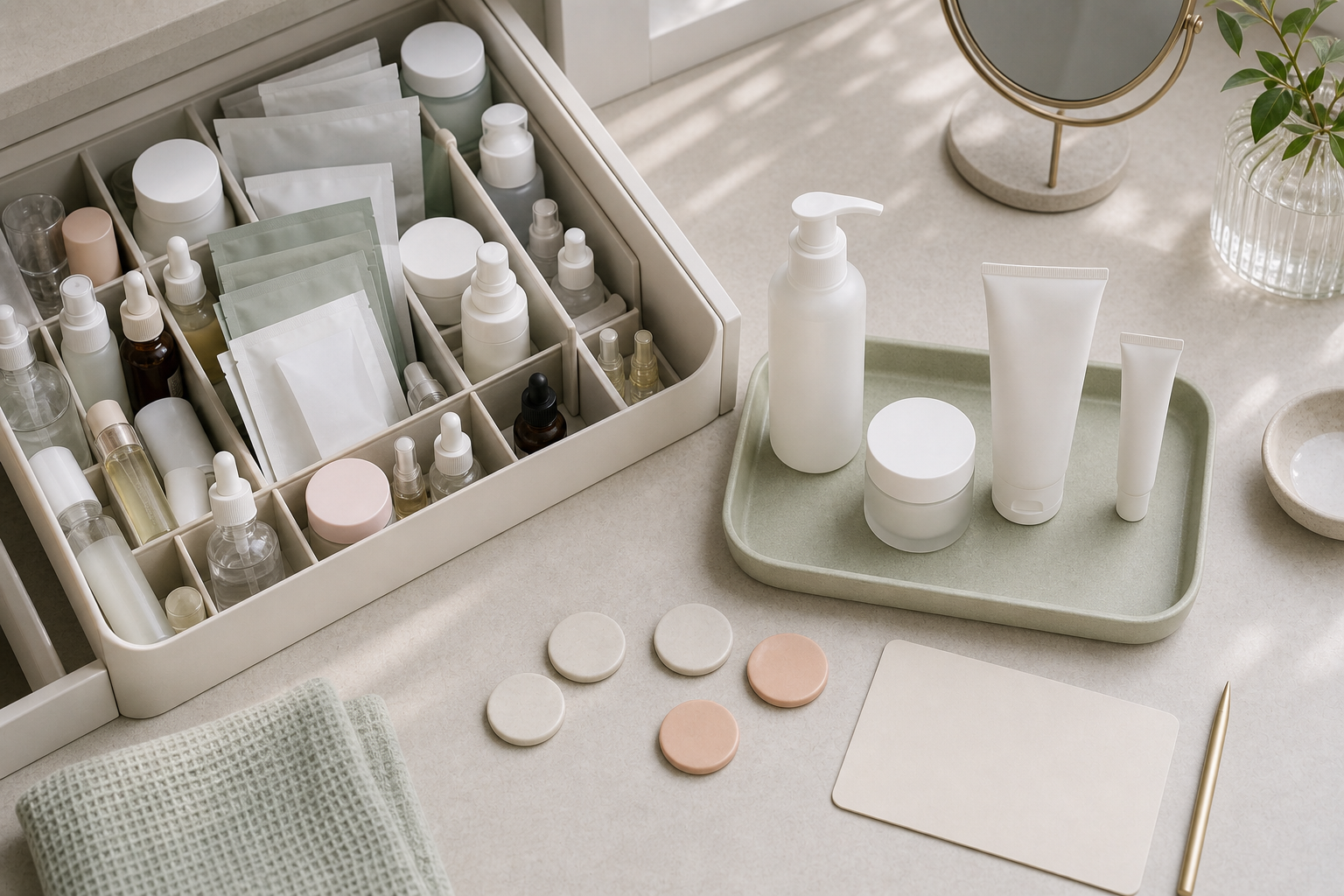
Start with the non-negotiables
Most routines need only a few core jobs: cleanse, moisturise if needed, protect in the morning, and treat specific concerns if there is a clear reason.
That might mean cleanser, moisturiser, sunscreen, and one treatment product. For many people, that is enough.
Everything else should earn its place. Hydrating toner, essence, ampoule, oil, mask, and eye cream may be useful, but they are not automatically essential.
Identify duplicate steps
Long routines often contain duplicates. A hydrating toner, hydrating essence, hyaluronic acid serum, moisturiser, and sleeping mask may all be trying to hydrate. A niacinamide toner, brightening serum, and tone-up cream may overlap. Multiple calming products may do similar jobs.
Duplication is not always bad, but it should be intentional.
If two products solve the same problem, keep the one that works better, layers better, and costs less to maintain.
Separate treatment from comfort
Some products treat a concern. Others make the routine feel nicer. Both can be valid, but they should not be confused.
A retinoid may treat acne or texture. A vitamin C serum may support dullness. A BHA may help clogged pores. A hydrating essence may improve comfort. A facial oil may make dry skin feel better.
When simplifying, keep at least one product that targets your main concern and enough comfort products to tolerate it.
Do not remove all moisturising support while keeping every active.
Pause, do not panic-throw
If you own many products, you do not need to throw everything away immediately. Pause products methodically.
Remove one or two non-essential layers for two weeks and observe. If your skin stays the same or improves, those products may not be necessary. If your skin becomes worse, bring back the product that clearly helped.
This is calmer than deleting the whole routine overnight and not knowing what changed.
Watch for hidden irritants
A long routine can hide irritation because no single product seems responsible. Fragrance in one product, acids in another, retinol in another, exfoliating cleanser, and drying toner can combine into a barrier problem.
If your skin stings when applying moisturiser, simplify around irritation first. Pause exfoliants, retinoids, strong vitamin C, masks, and scrubs. Use gentle cleanser, moisturiser, and sunscreen until the skin calms.
You can rebuild later.
Keep sunscreen practical
Morning routines often become too layered, making sunscreen pill or feel heavy. If your sunscreen is uncomfortable, simplify the layers underneath before replacing it.
Use fewer serums. Skip heavy moisturiser if your sunscreen is moisturising enough. Let layers settle. Avoid facial oil under sunscreen unless your skin truly needs it and the products layer well.
Sunscreen should not be the final victim of an overcomplicated morning routine.
Night routine can carry more treatment
If you need actives, night is often the better place for them. Retinoids, exfoliating acids, acne treatments, and richer moisturisers may fit better when you do not need makeup or sunscreen on top.
But night routines can also become overloaded. You do not need every active every night.
Use treatment nights and rest nights. Your skin can improve without being pushed daily.
Eye cream is optional
Eye cream can be useful if the texture suits the eye area and solves a specific problem like dryness or makeup creasing. But many eye creams are basically small moisturisers.
If your facial moisturiser works around the eyes without irritation, you may not need a separate eye cream. If your eye area is sensitive, a dedicated bland eye product may help.
Do not keep eye cream only because routines are "supposed" to have one.
Masks should have a purpose
Sheet masks, sleeping masks, clay masks, wash-off masks, and exfoliating masks can be enjoyable. But they should not constantly disrupt the routine.
Use hydrating masks when the skin needs extra comfort. Use clay masks cautiously if oily areas benefit. Be careful with peeling masks if you already use actives.
If a mask leaves your skin red or tight every time, the glow may not be worth it.
Build the simplified routine
Start with morning: cleanse or rinse, one optional serum if needed, moisturiser if needed, sunscreen.
Then night: cleanse, one treatment or recovery step, moisturiser.
Add extras only when they clearly improve the routine. A hydrating essence may return if skin misses it. A calming serum may stay for retinoid nights. An oil may be reserved for dry patches.
The simplified routine should feel complete, not deprived.
A simple product audit
Write down every product in your routine and give each one a job. Cleanser: remove sunscreen. Toner: hydrate. Serum: fade marks. Moisturiser: reduce tightness. Sunscreen: protect. Mask: comfort once a week.
If a product does not have a clear job, place it in the pause category. If several products have the same job, choose the best one. If a product has a job but irritates your skin, it may need replacing rather than keeping.
This audit often reveals that the routine is not really 10 steps. It is four useful steps plus six hopeful ones.
What to keep first
Keep products that your skin clearly misses when removed. Keep sunscreen if it works. Keep a moisturiser that makes your skin comfortable. Keep a treatment that has shown visible benefit over time. Keep a cleanser that removes the day without stripping.
Pause products that are pleasant but not necessary, products that duplicate others, products that only work occasionally, and products you are using because they were expensive.
Expensive products can still be wrong products. The receipt does not need to control your face.
Rebuild slowly if needed
After two to four weeks on a simpler routine, add back only one product at a time. Give each returning product enough time to prove whether it helps. If your skin becomes worse after adding something back, you have learned something useful.
Rebuilding slowly prevents the same crowded routine from returning by habit. It also helps you appreciate which products were actually carrying the results.
The practical view
Simplifying a 10-step routine is not about rejecting skincare. It is about making skincare legible again.
Keep the core jobs. Remove duplicates. Separate treatment from comfort. Pause products methodically. Protect the barrier. Add back only what earns its place.
Your skin does not know how many steps you used. It knows whether the routine helps, irritates, or overwhelms it.
