Pregnancy and Baby Skincare: What to Check Before Adding to Cart
Pregnancy, postpartum, and baby skincare are categories where gentle-looking packaging is not enough. Suitability, claims, seller clarity, and proper advice matter.
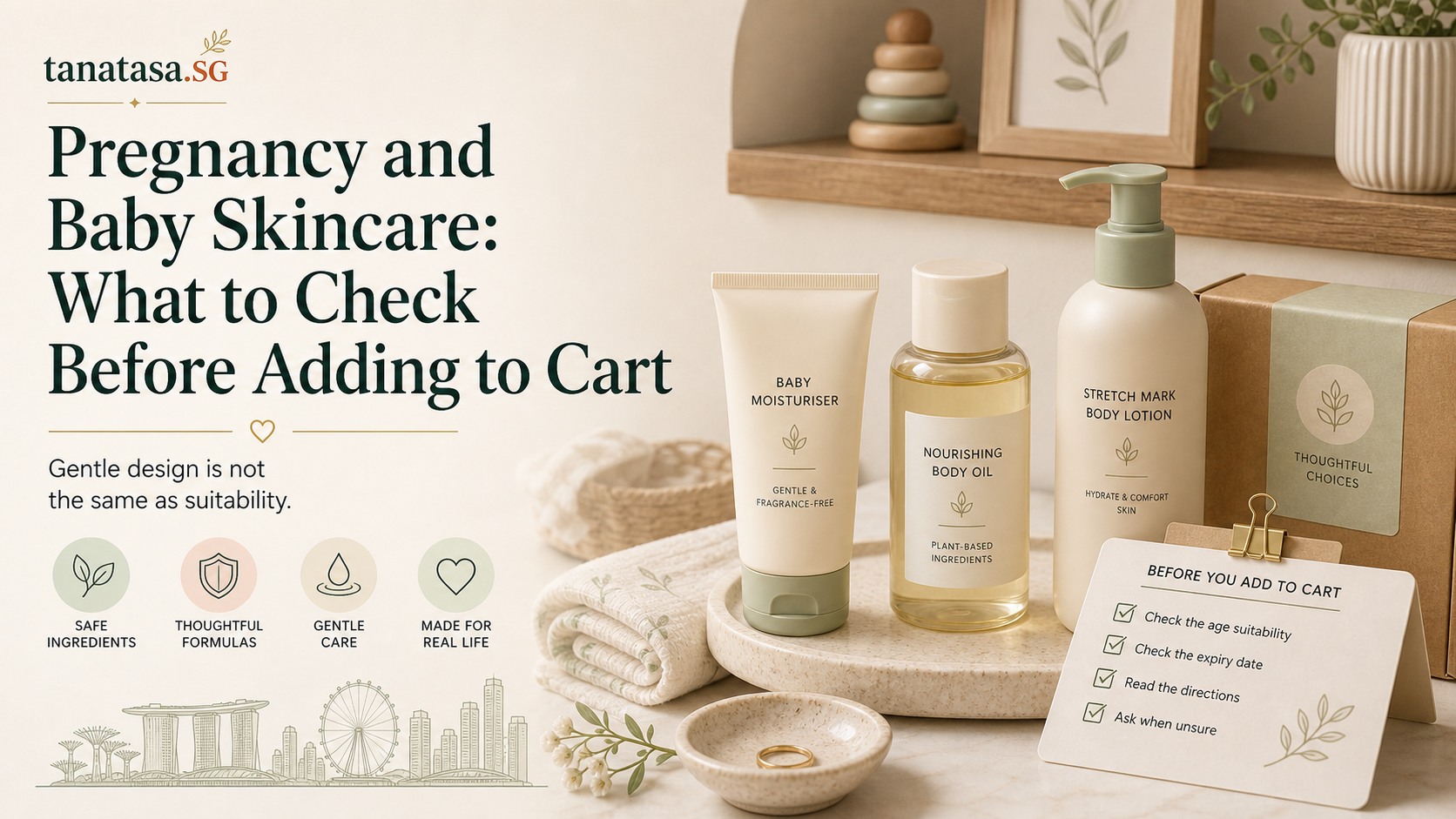
Pregnancy and baby skincare shopping often looks gentle before you read anything. Soft colours, rounded bottles, words like pure, mild, natural, mummy-safe, newborn-safe, calming, and nourishing. The design is reassuring because the category is emotional. That does not make the products wrong. It means shoppers need to be clearer, not less careful.
Pregnancy, postpartum, and baby care are moments where the routine should be simple, suitable, and easy to trust. The goal is not to buy the most sentimental product. The goal is to know what the product is for, who it is for, what claims it is making, and when proper advice is needed.
This guide is not medical advice. It is a shopping framework for reading products more carefully before adding them to cart.
Pregnancy Skincare Should Be Clear About The Job
Pregnancy can change how skin feels. Some people experience dryness, itch, acne, pigmentation, sensitivity, or stretch marks. Some people have very little skin change. The routine should respond to the actual concern, not to the idea that every pregnant person needs a new shelf.
For body comfort, simple moisturisers, body lotions, oils, and creams may help with dryness and massage. They can make skin feel more comfortable. They cannot guarantee prevention or removal of stretch marks. Stretch marks are influenced by skin stretching, genetics, and body changes. A cream can support comfort; it should not promise control over biology.
For facial skincare, be especially careful with strong actives. Retinoids, high-strength exfoliating acids, aggressive peels, and treatment-like products deserve caution. If you are unsure whether an ingredient is appropriate during pregnancy or breastfeeding, ask a doctor, pharmacist, or relevant healthcare professional rather than relying on a product title.
Postpartum Skin Does Not Need Panic Buying
Postpartum skin and hair changes can be frustrating. Sleep changes, hormonal shifts, breastfeeding, stress, recovery, and time constraints can all affect routines. The temptation is to buy products that promise fast correction.
Start with the basics first: gentle cleansing, moisturiser, sunscreen, and body care that you can actually repeat. If pigmentation, acne, hair shedding, eczema, or irritation becomes persistent or distressing, get advice. Postpartum shoppers are often short on time; a clearer answer can save months of trial-and-error.
If breastfeeding, also think about where products are applied. Strong fragrance, essential oils, or irritating products around the chest may not be ideal. Product suitability is not only about the ingredient list in isolation; it is also about how the product is used.
Baby Skin Is Not Just Smaller Adult Skin
Baby skincare should be simple. Cleanse gently when needed, moisturise if skin is dry, and use products clearly intended for the baby's age and use case. Avoid assuming adult body care is fine because it is moisturising or natural.
Look for clear product identity: baby wash, baby lotion, nappy cream, moisturising cream, balm, sunscreen where age-appropriate, or specific care category. Follow directions. Do not layer many products just because each one says gentle.
Fragrance deserves extra thought. Some families enjoy lightly scented baby products and tolerate them well. But if baby skin is dry, rashy, eczema-prone, or irritated, fragrance-free products make troubleshooting easier.
Baby Rashes Need The Right Escalation
Not every baby rash is an emergency, but baby skin symptoms should not be treated as a shopping puzzle forever. Seek medical advice if the skin is cracked, oozing, bleeding, swollen, infected-looking, spreading quickly, paired with fever, very painful, or if the baby seems very uncomfortable. Also get advice if a rash keeps returning despite a simple routine.
Do not rotate through many creams while the skin gets worse. Bring photos, product names, timeline, and any possible triggers when asking for help. That information is more useful than guessing from memory.
"Natural" Is Not Enough
Natural marketing is common in pregnancy and baby categories. Natural origin does not automatically mean safer. Essential oils, botanical extracts, lanolin, nut oils, fragrance components, and plant-derived ingredients can be fine for many people and unsuitable for others.
The question is not whether an ingredient sounds gentle. The question is whether the formula is appropriate for the user, the body area, the skin condition, and the frequency of use.
For sensitive situations, simple and boring usually beats beautifully botanical.
Claims Should Stay Realistic
Be careful with claims that sound too certain:
Prevents stretch marks completely.
Removes stretch marks permanently.
Cures eczema.
Eliminates baby rash overnight.
Safe for all stages and all babies without context.
Doctor-approved without useful details.
Steroid-free used as fear marketing when the product is only cosmetic.
Some claims are reasonable. "Helps moisturise dry skin" is different from "cures eczema". "Soothes the feeling of dryness" is different from "treats inflammation". A cosmetic product should not pretend to replace medical care.
Marketplace Checks Matter More Here
For pregnancy and baby care, seller clarity matters. A cheap listing is not helpful if expiry, variant, packaging, or source is unclear.
Before buying online, check:
Is the seller official, authorised, or clearly reputable?
Is the product the correct age/use version?
Is the expiry reasonable?
Are size and variant clear?
Does the photo match the selected option?
Are instructions and warnings visible or described?
Is the price explainable?
Parallel imports may be genuine, but imported baby or pregnancy products can have different labels, language, or versions. That may be fine if you understand what you are buying. It is less fine if the listing leaves you guessing.
Keep The Routine Small
Pregnancy routine:
Gentle cleanser.
Moisturiser as needed.
Sunscreen.
Body moisturiser or oil for comfort if desired.
Professional advice for strong actives or persistent concerns.
Baby routine:
Gentle wash when needed.
Simple moisturiser for dryness.
Nappy-area product if relevant.
Fragrance-free options when troubleshooting.
Medical advice for worrying or persistent symptoms.
The routine does not need to be aesthetic. It needs to be suitable.
Bottom Line
Pregnancy and baby skincare should be bought with a little more calm and a little less marketing trust. Gentle design is not the same as suitability. Natural language is not the same as safety. A discount is not useful if the seller is unclear.
For these categories, choose simple products, clear labels, reliable sellers, realistic claims, and proper advice when the concern is medical. The best cart is often smaller than the one the category tries to sell you.