Neck, Chest, and Hands: The Sunscreen Areas People Forget
The face gets most of the SPF attention, but the neck, chest, and hands collect daily sun too. Here is how to protect them without making the routine annoying.

# Neck, Chest, and Hands: The Sunscreen Areas People Forget
Most sunscreen advice focuses on the face. That makes sense: the face is visible, sensitive, and often where pigmentation, acne marks, and texture changes bother people first. But the face is not the only area exposed to daylight. The neck, chest, and hands quietly collect sun too, often with less protection and less skincare.
This is why the face can look carefully cared for while the neck or hands show uneven tone, roughness, or dark spots earlier than expected. It is not because those areas are doomed. It is because they are easy to forget.
The good news is that protecting them does not require a complicated body-care routine. It mostly requires remembering that sunscreen should not stop at the jawline.
Why these areas matter
The neck, chest, and hands are exposed during ordinary days. Walking to lunch, driving, waiting outside, sitting near windows, holding a phone, carrying bags, and wearing open collars all expose skin beyond the face.
These areas also have different skin characteristics. The neck can be sensitive and prone to irritation. The chest can develop pigmentation, rough texture, or congestion from sweat and clothing friction. The hands are washed frequently, touched constantly, and exposed while commuting, driving, or holding things outdoors.
They do not always need the same products as the face, but they do need a practical protection plan.
The jawline stopping point
A common sunscreen mistake is applying SPF neatly to the face and stopping at the jaw. This creates a sharp habit line: face protected, neck forgotten. Over time, the neck may develop more uneven tone or texture than the face.
A better habit is to treat the face and neck as one protection area. After applying sunscreen to the face, apply more to the front and sides of the neck. Do not rely only on leftover product from your fingers. The neck needs its own amount.
Remember the sides of the neck and the area under the ears. These spots are often missed because people apply sunscreen while looking straight into a mirror.
The chest depends on clothing
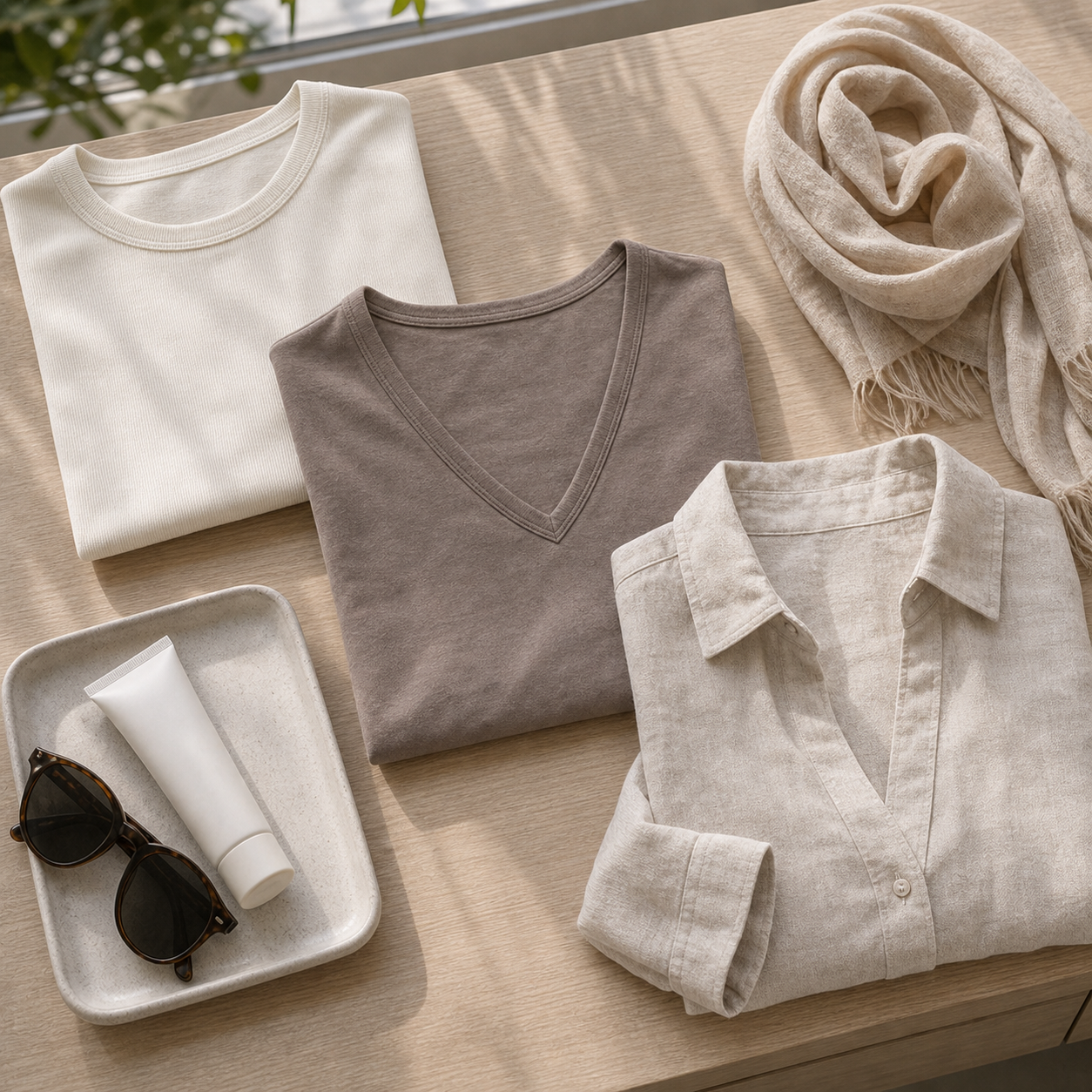
Chest sunscreen depends on what you are wearing. A crew-neck top covers more. A V-neck, scoop neck, camisole, linen shirt, or open collar exposes more. If the chest is visible, it needs sunscreen when you are out in daylight.
This is especially relevant for people who spend time outdoors during lunch, commute in daylight, drive, or sit near windows. The upper chest can develop uneven pigmentation and fine lines because it receives frequent incidental sun.
The fix is simple: before leaving, look at the neckline. Apply sunscreen to whatever skin is visible. If you change clothes later, recheck exposure.

Hands are washed, wiped, and forgotten
Hands are tricky because sunscreen does not stay on them well. We wash them, sanitise them, wipe them, hold bags, touch phones, and handle food. Even if you apply sunscreen in the morning, it may not remain evenly on the hands for long.
Still, protecting hands matters. They are often exposed while walking, driving, or holding things outdoors. Dark spots and uneven tone on the hands are common because daily exposure adds up.
A practical habit is to apply sunscreen to the backs of the hands after finishing the face and neck. Then reapply after washing if you are going outdoors again. A sunscreen stick or small tube in your bag can make this easier.
Texture matters more than ambition
The best neck, chest, and hand sunscreen is one you will actually use. A rich, sticky sunscreen may be protective but annoying under collars, jewellery, hair, or bags. If it transfers to clothes or makes your neck feel uncomfortable, you may stop using it.
For the neck, look for lightweight, comfortable textures. If facial sunscreen is too expensive to use generously on the neck and chest, consider a separate body sunscreen that feels elegant enough for daily use.
For the chest, choose a sunscreen that does not feel greasy under clothing. Let it set before dressing if possible.
For hands, a non-greasy formula matters because you still need to touch your phone, keyboard, steering wheel, or bag.
Face sunscreen versus body sunscreen
You can use facial sunscreen on the neck, chest, and hands if the price and texture make sense. You can also use body sunscreen if it is comfortable and does not irritate.
The neck may be more reactive than the arms or legs, so patch test if you are using a fragranced or very water-resistant body sunscreen there. The chest can also react to heavy formulas, especially if you are prone to clogged pores or heat-related breakouts.
A practical setup might be:
Facial sunscreen for face and neck.
Lightweight body sunscreen for chest, arms, and hands.
Sunscreen stick for hand reapplication outdoors.
There is no need to make one product do every job perfectly.
Do not forget reapplication
The neck and chest need reapplication if you are outdoors for extended periods, sweating, wiping, or wearing clothing that rubs the area. Hands need reapplication even more because of washing and touch.
Before outdoor lunch or errands, reapply to the backs of the hands, exposed chest, and neck. This can be quicker than reapplying the full face over makeup.
If you drive or spend time in vehicles, hands and forearms are easy to overlook. Keep sunscreen accessible if this is part of your routine.
Clothing is part of sun protection
Sunscreen is not the only tool. Collars, sleeves, scarves, hats, umbrellas, and shade all reduce exposure. For the chest and neck, clothing can be especially helpful because it does not sting, pill, or need reapplication.
If you know you will be outdoors longer, choose clothing that covers more skin or bring a light layer. This is not about dressing fearfully. It is about making protection easier.
Sunglasses also help protect the delicate eye area, while hats reduce how much direct sun reaches the forehead, scalp parting, and upper face.
Common missed spots
When applying sunscreen beyond the face, check these areas:
Sides of the neck.
Back of the neck if hair is tied up.
Under the jaw.
Around the collarbones.
Upper chest exposed by clothing.
Backs of hands.
Fingers and knuckles.
Wrist area around watches or bracelets.
Tops of ears if hair is short or tied back.
These small areas are easy to miss because they are not always front-and-centre in the mirror.
What if sunscreen stains clothing?
Some sunscreens can leave marks on collars or light fabrics. This is more common with richer formulas, tinted sunscreens, and some filter systems. To reduce transfer, let sunscreen set before dressing, use thinner layers, and choose less greasy textures for the neck and chest.
If staining is a recurring problem, reserve that sunscreen for the face and choose a different formula for body areas near clothing.
Sensitive necks need a calmer approach
The neck can react quickly to fragrance, strong actives, and heavy formulas. If your neck stings or develops bumps, simplify. Avoid applying retinoids, exfoliating acids, or strong vitamin C down the neck unless your skin is used to it. Choose gentle moisturiser and a sunscreen that does not sting.
If sunscreen irritates the neck but is fine on the face, the formula may not suit that area. Use a different sunscreen there or rely more on clothing while testing options.
Persistent rash, itching, swelling, or burning should be treated carefully. Stop the triggering product and seek medical advice if symptoms do not settle.
A realistic daily habit
A repeatable routine can be very simple:
Morning: apply sunscreen to face, then neck, then visible chest, then backs of hands.
Before outdoor lunch: reapply to hands and exposed chest or neck if needed.
After handwashing before going outside: reapply to backs of hands.
Outdoor day: use sunscreen plus clothing, hat, sunglasses, and shade.
Night: cleanse exposed areas properly, especially if sunscreen was water-resistant.
This is not a separate beauty ritual. It is an extension of the SPF habit you already have.
The bottom line
The face should not get all the sunscreen attention. The neck, chest, and hands are exposed during ordinary days and often show the result of missed protection over time.
Do not make it complicated. Apply sunscreen past the jawline. Match chest protection to your neckline. Reapply on hands when you wash and go outside. Use clothing and shade when they make life easier.
The best routine is not perfect coverage performed once in a while. It is decent, repeatable protection in the places daily life actually exposes.

