Body Care After Showering: Why Skin Can Still Feel Dry Indoors
Body skin can still feel dry when showers are frequent, body wash is too stripping, or the day is spent in air-conditioned rooms. Timing and texture matter.
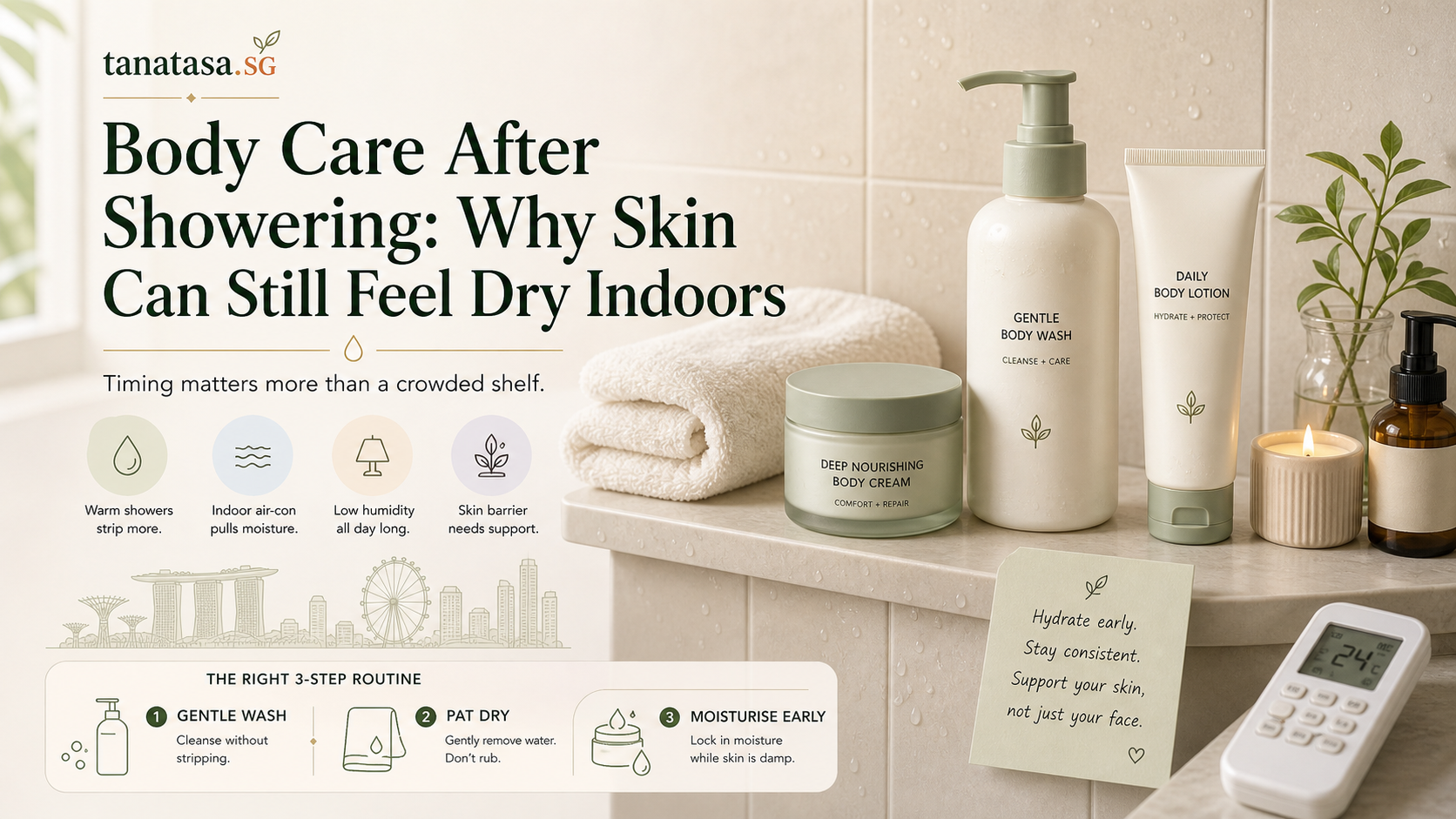
Body care is easy to ignore until the skin starts complaining. Legs itch at night. Hands feel rough. Arms look dry after showering. Shins get flaky. The body wash smells nice but leaves skin tight. Moisturiser exists somewhere in the house, but nobody uses it because it feels sticky.
The fix is usually not a luxurious ten-step body routine. It is better shower habits, earlier moisturising, and a texture you can repeat without negotiating with yourself every night.
Body skin can feel dry even when the weather outside is warm. The routine around it matters more than the forecast.
Showering Changes The Skin Surface
Showering cleans the skin, but it also removes some oil from the surface. That is normal. The problem begins when hot water, long showers, strong body wash, scrubbing tools, and repeated washing remove more than the skin comfortably tolerates.
If you shower more than once a day, the effect adds up. A morning shower, post-gym shower, and evening shower may feel necessary, but the skin may need a gentler cleanser or more consistent moisturising to keep up.
The goal is clean skin, not squeaky skin. Squeaky-clean body skin often means the cleanser has gone further than necessary.
Body Wash Should Match Frequency
A fragranced, foamy, strong body wash may be fine for some people. But if you wash often or have dry, itchy, eczema-prone, or sensitive skin, a gentler body wash may be more useful than a more exciting one.
Pay attention to how skin feels ten minutes after showering. If it feels tight, itchy, or powdery before you even get dressed, the wash may be too stripping, the water may be too hot, or the routine may need moisturiser sooner.
You do not have to give up every scented product. But if you are troubleshooting body itch, start with the cleanser and fragrance level. Rinse-off products can still matter, especially when used daily.

Moisturise While Skin Is Still Slightly Damp
Body moisturiser usually works better when applied soon after showering, while the skin is still slightly damp. This helps reduce water loss and makes the product spread more easily.
Waiting until skin is fully dry, tight, and itchy can make the same lotion feel less effective. If you hate the feeling of moisturiser, try using less product earlier rather than more product later.
Keep the moisturiser near where you actually use it. A body lotion hidden in a drawer is decorative. A pump bottle near the bathroom or bedside is a routine.
Lotion, Cream, Balm, Or Oil?
Texture decides whether body care happens.
Lotions are lighter and easier for daytime or people who dislike sticky skin. Creams are richer and often better for dry legs, arms, and night routines. Balms and ointments can help very dry patches but may feel too heavy for full-body use. Oils can feel pleasant but often work best layered over damp skin or used for massage; they are not always enough alone if the skin needs water-binding ingredients.
You do not need one perfect product for every situation. A lighter lotion for daytime and a richer cream for night can make sense. For households, a large pump format may be more realistic than a small jar everyone forgets.

Air-Conditioned Rooms Count
Many dry-skin complaints come from indoor life: office air-con, bedroom air-con, long hours at a desk, and sleeping with cool dry air moving over the skin. The day outside may be warm, but the skin spends many hours indoors.
If your legs itch mostly at night or your hands feel rough after office hours, think about indoor exposure and handwashing frequency. Body care is not only a post-beach problem. It is also an after-shower and before-bed habit.
For night routines, richer textures may be easier because you are not heading out immediately. For morning routines, choose something that absorbs fast enough for clothes.
Hands Need Their Own Strategy
Hands are washed more often than the rest of the body. Dishwashing, sanitiser, office air-con, cleaning products, and frequent handwashing can make them rough even when the rest of the body is fine.
A hand cream near the sink, desk, or bedside is more useful than one luxury tube hidden in a bag. If hands crack, bleed, or sting repeatedly, switch to gentler hand wash where possible and moisturise after washing.
Persistent hand eczema or painful cracking needs proper care, not just nicer hand cream.
Itch Is A Signal
Mild dryness can often be managed with gentler washing and consistent moisturising. But persistent itch, broken skin, bleeding, oozing, swelling, intense night itch, or recurring eczema flares should not be treated as a normal body-care inconvenience.
If the skin is cracked, infected-looking, worsening, or affecting sleep, seek medical advice. Cosmetic body care can support comfort, but it cannot diagnose or treat every skin condition.
A Practical Body-Care Routine
Keep it simple:
Use lukewarm water where possible.
Avoid scrubbing dry areas aggressively.
Choose body wash based on skin feel, not only scent.
Pat dry instead of rubbing hard.
Moisturise while skin is slightly damp.
Use lighter lotion for daytime if rich cream feels too much.
Use richer cream at night for dry legs, arms, or rough areas.
Keep hand cream where handwashing happens.
The best body-care product is the one that gets used often enough to matter.
Bottom Line
Body care does not need to feel indulgent to be effective. Frequent showers, strong body wash, delayed moisturising, handwashing, and air-conditioned rooms can all make skin feel dry or itchy.
Fix the routine before chasing a miracle product: gentler cleansing, earlier moisturising, sensible textures, and proper advice when itch or broken skin goes beyond ordinary dryness.